If you’ve noticed visible, discolored veins popping up on your legs, you aren’t alone. As we age, or after periods of prolonged standing or pregnancy, our veins can start to show signs of wear and tear.
For many patients in Mangaluru, seeing these veins brings up a lot of questions. Are they just a cosmetic annoyance, or are they a sign of a serious circulatory problem? The answer depends entirely on whether you are looking at spider veins or varicose veins.
While they share similar causes—weakened valves that allow blood to pool—they are two very different conditions. Let’s clear up the medical confusion so you know exactly when it’s time to seek treatment.
The easiest way to tell the two apart is by simply looking at and feeling your skin.
Spider Veins (Mild & Cosmetic)
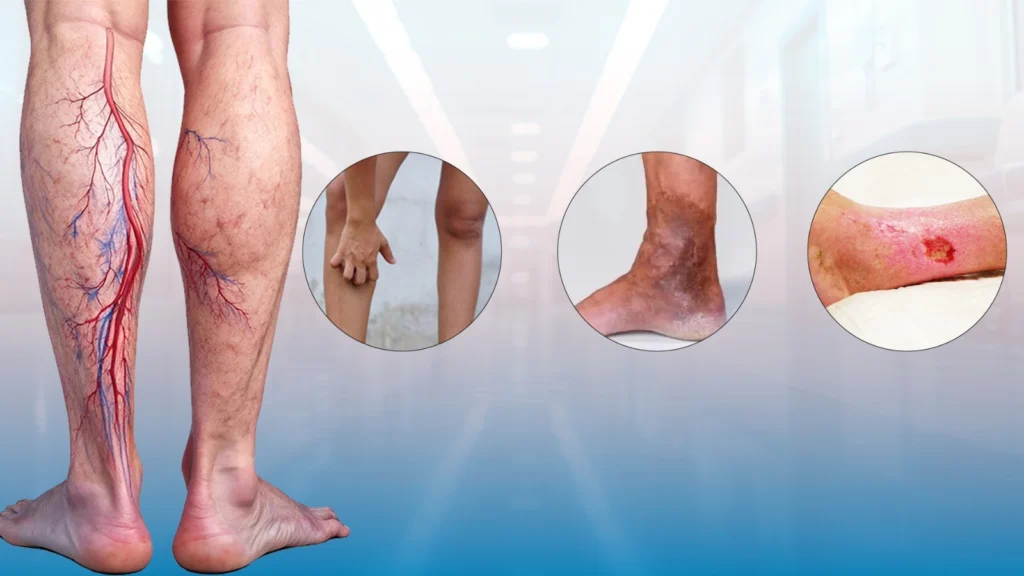
Size & Shape: These are tiny, thread-like veins that measure less than 1 millimeter wide. They often branch out from a central point, looking like a spider’s web or tree branches.
Color: Usually bright red, blue, or purple.
Texture: They are flat and sit flush with the surface of your skin. You cannot feel them if you run your hand over your leg.
Location: Most common on the thighs, calves, ankles, and sometimes the face.
Varicose Veins (Severe & Structural)
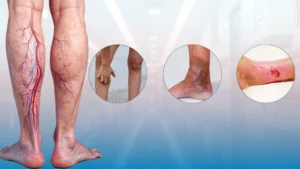
Size & Shape: These are large, thick, and swollen blood vessels (typically 3 millimeters or wider) that look like twisted cords or ropes.
Color: Usually dark blue, green, or flesh-colored.
Texture: They physically bulge out from the skin. You can easily feel their raised, bumpy texture.
Location: Most commonly found on the calves, the back of the knees, and the inner thighs.
Spider veins rarely cause physical discomfort. If they do, it is usually limited to a very mild, localized itching or burning sensation. Varicose veins, on the other hand, are a clear sign of chronic venous insufficiency (poor blood circulation) and often come with highly disruptive symptoms.
You should pay close attention if you experience any of these warning signs:
Leg Heaviness: Your legs feel incredibly tired, heavy, or “weighed down,” especially at the end of the day.
Throbbing and Aching: A deep, dull ache or sharp throbbing pain around the bulging veins.
Swelling (Edema): Noticeable swelling around your ankles and lower calves after sitting or standing for long periods.
Muscle Cramping: Sudden, painful cramps in your legs, often occurring at night.
While spider veins are primarily a cosmetic issue that you can choose to treat for aesthetic reasons, ignoring varicose veins can lead to severe health complications.
When blood is constantly pooling and creating high pressure inside the vein, it creates a state of chronic inflammation in your lower legs. If left untreated, this can result in:
Venous Leg Ulcers: The skin around your ankles can break down, forming painful, open sores that are incredibly difficult to heal.
Spontaneous Bleeding: Because the skin over a bulging varicose vein becomes stretched and thin, even a minor bump or scratch can cause significant bleeding.
Blood Clots: Pooled blood is more likely to clot. This can cause painful superficial clots (thrombophlebitis) or, more dangerously, Deep Vein Thrombosis (DVT), which requires immediate medical emergency care.
The good news is that you no longer have to endure painful vein-stripping surgeries to find relief.
At MedgoPlus Health Care, we specialize in advanced, minimally invasive treatments for both spider and varicose veins. Using state-of-the-art Endovenous Laser Treatment (EVLT) and Sclerotherapy, our vascular specialists treat the diseased veins from the inside out.
No general anesthesia required.
No large incisions or stitches.
Walk-in, walk-out procedures taking under an hour.
Don’t wait for your leg pain to turn into a serious complication.
Ready to restore the health and comfort of your legs?
Copyright © 2025 Medgoplushealth- All Rights Reserved
WhatsApp us