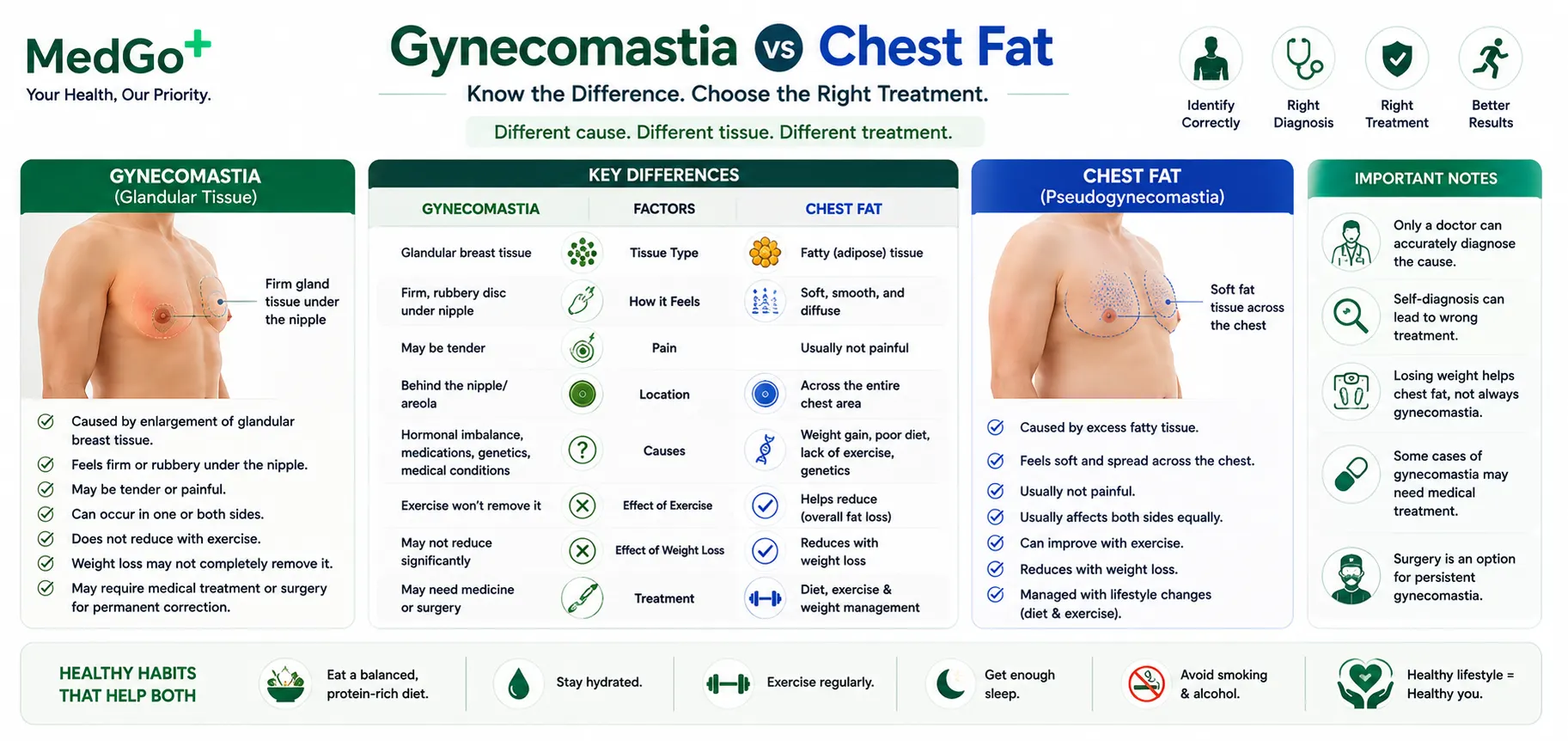
Many men notice extra fullness around the chest and wonder whether it is simply body fat or gynecomastia. Although the two can look similar, they involve different types of tissue and may require different approaches.
Gynecomastia is an enlargement of glandular breast tissue. Chest enlargement caused primarily by excess fat is often called pseudogynecomastia. Obesity can also occur alongside true gynecomastia, so some men have both glandular tissue and excess fat.
The appearance alone cannot always determine the cause. A healthcare professional can examine the chest and, when necessary, recommend further evaluation.
Gynecomastia vs Chest Fat: Quick Comparison
- Gynecomastia: enlargement of glandular breast tissue.
- Chest fat: enlargement caused mainly by excess adipose tissue.
- Gynecomastia often produces firmer tissue beneath or around the nipple.
- Chest fat usually produces softer, more diffuse fullness.
- Weight loss can reduce excess chest fat.
- Weight loss may not completely remove established glandular gynecomastia.
- Some people have both gynecomastia and excess chest fat.
- A doctor’s examination is the safest way to determine the difference.
What Is Gynecomastia?
Gynecomastia is an enlargement of glandular breast tissue in males. It can occur at different ages and is commonly associated with changes in the balance or effects of hormones such as estrogen and testosterone.
Gynecomastia can affect one or both sides of the chest. The tissue is often located beneath the nipple and areola and may feel firmer than surrounding fatty tissue.
Gynecomastia is usually benign, but a new breast lump or unusual breast change should still be assessed by a healthcare professional.
What Is Chest Fat?
Chest fat refers to excess adipose tissue around the chest. When male breast enlargement is primarily caused by fat rather than glandular tissue, doctors may use the term pseudogynecomastia.
Chest fat commonly occurs as part of overall weight gain, although the amount of fat stored around the chest varies from person to person.
Unlike glandular gynecomastia, excess fat generally feels softer and more diffuse rather than forming a distinct firm area beneath the nipple.
What Is the Main Difference Between Gynecomastia and Chest Fat?
The main difference is the type of tissue causing the enlargement.
- Gynecomastia involves glandular breast tissue.
- Pseudogynecomastia involves excess fatty tissue without enlargement of the breast gland.
- Gynecomastia may feel like a firm disc or rubbery area beneath the nipple.
- Chest fat tends to feel soft and spread more diffusely across the chest.
- Both conditions can occur at the same time.
These differences are useful clues but are not a substitute for a clinical examination.
How Does Gynecomastia Usually Feel?
Gynecomastia often produces a firm or rubbery area of tissue beneath the nipple or areola. It may be tender, particularly when the condition develops relatively recently.
The tissue may be present on one side or both sides. The size and shape can vary considerably between individuals.
Do not try to diagnose yourself solely by pressing the chest. A healthcare professional can perform a more appropriate examination.
How Does Chest Fat Usually Feel?
Fat is generally softer and more diffuse than glandular tissue. Instead of feeling like a defined firm area underneath the nipple, excess fat tends to blend into the surrounding chest tissue.
However, body composition varies considerably, and some people have both fat and glandular tissue. This can make the distinction difficult without a medical examination.
Can Gynecomastia and Chest Fat Look the Same?
Yes. Both conditions can cause a rounded or enlarged chest appearance, particularly when there is significant excess tissue.
This is why appearance alone is not always enough to distinguish them. A doctor considers the distribution and consistency of the tissue, the history, medications, health conditions and other physical findings.
Can You Have Both Gynecomastia and Chest Fat?
Yes. A person can have true gynecomastia together with excess chest fat.
In this situation, losing body fat may reduce the fatty component while some glandular tissue remains.
This combination is important when discussing treatment because different tissues may require different approaches.
Does Weight Loss Remove Chest Fat?
If the chest enlargement is primarily caused by excess fat, overall weight loss can reduce the amount of fat stored around the chest.
The amount of change varies because genetics determine where each person stores and loses fat.
There is no reliable way to selectively burn only chest fat. Overall fat loss occurs through a sustained calorie deficit combined with appropriate nutrition and physical activity.
Does Weight Loss Remove Gynecomastia?
Weight loss can reduce the fatty component of an enlarged chest, but it may not eliminate established glandular gynecomastia.
If a person has both excess fat and gynecomastia, losing weight may improve the overall chest contour while leaving some firm glandular tissue behind.
Cleveland Clinic notes that weight loss may decrease pseudogynecomastia, whereas exercise and weight loss generally cannot remove glandular enlargement caused by hormonal factors.
Can Exercise Get Rid of Gynecomastia?
Exercise is excellent for overall health and can help reduce body fat, but exercise cannot directly remove enlarged glandular breast tissue.
Chest exercises such as push-ups and bench presses can strengthen the underlying muscles and improve overall chest appearance, particularly when excess fat is also being reduced.
However, exercise does not selectively remove glandular tissue.
Can Chest Exercises Remove Chest Fat?
Chest exercises strengthen the pectoral muscles but do not selectively burn fat from the chest.
To reduce excess chest fat, overall body fat generally needs to decrease through a sustainable nutrition and exercise plan.
- Strength training.
- Regular aerobic activity.
- A balanced diet.
- Adequate protein.
- Consistent sleep.
- Long-term lifestyle habits.
Gynecomastia vs Chest Fat: Appearance Differences
There are some common visual patterns, although they are not diagnostic by themselves.
- Gynecomastia may produce a more prominent nipple or areola area.
- Gynecomastia may create a firm area directly beneath the nipple.
- Chest fat tends to create more generalized fullness.
- Chest fat may decrease as overall body fat decreases.
- Gynecomastia may remain despite significant weight loss.
- Both conditions can produce sagging or excess skin when enlargement is substantial.
Does Gynecomastia Cause Nipple Sensitivity?
Gynecomastia can sometimes cause tenderness or sensitivity around the nipple, particularly when it develops recently.
Chest fat alone does not necessarily cause nipple tenderness, although the skin and tissues can still become uncomfortable from friction, pressure or other causes.
New or persistent breast pain should be discussed with a healthcare professional rather than automatically attributed to gynecomastia.
Why Does Gynecomastia Develop?
Gynecomastia can develop when the balance or effects of estrogen and testosterone favor growth of breast glandular tissue.
- Normal hormonal changes during puberty.
- Hormonal changes with aging.
- Certain medications.
- Some medical conditions.
- Liver, kidney or thyroid disorders in some cases.
- Hormone-related conditions.
- Certain supplements or substances.
The cause is not always identified. Do not stop a prescribed medicine because you suspect it is causing gynecomastia. Discuss it with your doctor first.
What Causes Chest Fat?
Chest fat is generally associated with increased body fat, although the amount of fat stored in the chest varies between individuals.
- Overall weight gain.
- Low physical activity.
- Long-term excess calorie intake.
- Genetic differences in fat distribution.
- Age-related changes in body composition.
Some people can have noticeable chest fat even when they are not significantly overweight.
How Do Doctors Diagnose Gynecomastia?
Diagnosis usually begins with a medical history and physical examination. The doctor may ask about when the enlargement started, whether it is painful, medications and supplements, medical conditions, weight changes and other symptoms.
During examination, the doctor assesses the chest tissue, including its location, consistency, symmetry and relationship to the nipple and areola.
When the findings are uncertain or concerning, the doctor may recommend imaging such as ultrasound or mammography and, in selected situations, blood tests or other investigations.
Can I Diagnose Gynecomastia at Home?
You may notice clues such as a firm area beneath the nipple, but you should not rely on a home self-examination to determine whether you have gynecomastia.
Chest fat, gynecomastia and other breast conditions can overlap in appearance. A proper medical examination is the safest way to determine the cause.
When Should a Man With Chest Enlargement See a Doctor?
Most gynecomastia is benign, but certain breast findings require medical assessment.
- A new or rapidly growing breast lump.
- A hard or fixed lump.
- A lump that is clearly off-center from the nipple.
- Nipple discharge, particularly bloody discharge.
- Nipple retraction.
- Skin dimpling or significant skin changes.
- Swollen lymph nodes in the armpit.
- Persistent or significant pain.
- One-sided enlargement that is new or unusual.
These findings do not automatically mean cancer, but they should be assessed rather than assumed to be ordinary gynecomastia or chest fat.
Is Gynecomastia Cancer?
Gynecomastia itself is benign and is not breast cancer. However, men can develop breast cancer, although it is much less common than gynecomastia.
A hard, eccentric or fixed lump, nipple discharge, skin changes or enlarged lymph nodes require medical evaluation.
Do not assume that every male breast lump is gynecomastia.
Can Gynecomastia Go Away on Its Own?
Some forms of gynecomastia can improve without surgery. This is particularly true for gynecomastia associated with normal hormonal changes during puberty.
Whether it resolves depends on the underlying cause, how long it has been present and the individual patient.
Persistent gynecomastia should be evaluated when it causes concern, discomfort or significant distress.
Can Diet Remove Gynecomastia?
There is no specific food or diet proven to directly remove established glandular gynecomastia.
A healthy diet can help reduce excess body fat and improve overall health. This may reduce the fatty component of the chest, but it does not selectively dissolve glandular breast tissue.
Avoid products marketed as guaranteed natural cures for gynecomastia unless they have been medically evaluated and recommended by a qualified professional.
Gynecomastia vs Chest Fat: Does the Treatment Differ?
Yes. Treatment depends on what is causing the chest enlargement.
If It Is Mainly Chest Fat
- Nutrition and calorie management.
- Regular physical activity.
- Strength training.
- Gradual overall weight loss when appropriate.
- Management of contributing health conditions.
If It Is True Gynecomastia
- Identify and address an underlying cause when possible.
- Review medications with a doctor when relevant.
- Observe the condition when appropriate.
- Consider medical treatment in selected cases.
- Consider surgery for persistent or significant cases when appropriate.
Treatment should be based on a clinical assessment rather than appearance alone.
When Is Gynecomastia Surgery Considered?
Surgery may be considered when gynecomastia is persistent, causes significant physical or emotional discomfort, or does not respond to appropriate management of an underlying cause.
The surgical approach depends on the tissues present. Liposuction may be useful for excess fat, while glandular tissue may require direct surgical excision. Some patients need a combination of techniques.
A plastic surgeon or appropriately qualified surgeon can assess the chest and recommend the most suitable approach.
Can Liposuction Treat Gynecomastia?
Liposuction removes excess fatty tissue and can be useful when fat contributes significantly to chest enlargement.
However, liposuction does not remove firm glandular breast tissue. When true gynecomastia is present, direct excision of glandular tissue may also be required.
Some patients therefore undergo a combination of liposuction and glandular tissue excision.
Can Gynecomastia Return After Surgery?
Recurrence is uncommon when the underlying cause is appropriately addressed and the abnormal tissue is adequately treated, but new chest enlargement can occur if the underlying hormonal, medication-related or weight-related factors continue.
Significant weight gain can also increase the amount of fatty tissue around the chest.
Maintaining a stable healthy weight and addressing relevant medical causes can help support a lasting result.
What About Chest Fat After Weight Loss?
After significant weight loss, some people are left with loose skin or residual fat around the chest. This can make the chest appear enlarged even after overall body fat has decreased.
This is different from automatically assuming that persistent fullness is gynecomastia. A clinical examination can determine whether glandular tissue, residual fat, loose skin or a combination is responsible.
Can Building Chest Muscle Hide Gynecomastia?
Building the pectoral muscles can improve the overall shape and definition of the chest, but it does not remove glandular breast tissue.
For some people, improving overall body composition makes the chest look better. For others with significant glandular enlargement, the underlying tissue remains noticeable despite good muscle development.
Common Myths About Gynecomastia and Chest Fat
Myth 1: Every Enlarged Male Chest Is Just Fat
Not necessarily. Glandular gynecomastia can cause male breast enlargement even in people who are lean.
Myth 2: Push-Ups Can Remove Gynecomastia
Exercise strengthens the chest muscles but does not directly remove glandular breast tissue.
Myth 3: Losing Weight Always Removes Gynecomastia
Weight loss can reduce excess fat but may not remove established glandular tissue.
Myth 4: Gynecomastia Always Requires Surgery
No. Treatment depends on the cause, duration, symptoms and individual circumstances. Some cases can be observed or managed without surgery.
Myth 5: A Male Breast Lump Is Always Gynecomastia
No. Most male breast enlargement is benign, but unusual lumps and other warning signs require medical assessment.
A Simple Way to Think About It
- Soft, diffuse fullness + overall excess body fat → chest fat may be contributing.
- Firm tissue beneath the nipple → gynecomastia may be contributing.
- Both soft and firm tissue → both fat and glandular tissue may be present.
- New, hard, fixed or unusual lump → medical evaluation is important.
These are general clues, not a self-diagnosis. A doctor should make the final assessment.
When Should You Consider a Gynecomastia Consultation?
Consider speaking with a healthcare professional if chest enlargement persists despite healthy lifestyle changes, causes tenderness, affects your confidence or appears to involve a firm area beneath the nipple.
A consultation can help determine whether the enlargement is primarily glandular tissue, fat, loose skin or a combination.
How MedGoPlus Can Help
If you are unsure whether your chest enlargement is gynecomastia or excess fat, a qualified healthcare professional can help assess the cause and discuss appropriate next steps.
MedGoPlus can help patients connect with qualified healthcare professionals for consultations, evaluation and guidance regarding gynecomastia, weight management and treatment options through available consultation services.
If you notice a new hard or fixed lump, nipple discharge, skin changes, nipple retraction or rapidly increasing one-sided enlargement, seek medical evaluation rather than assuming it is simply chest fat.
The Bottom Line
Gynecomastia and chest fat are not the same condition. Gynecomastia involves enlargement of glandular breast tissue, while pseudogynecomastia is primarily caused by excess fat.
Weight loss can reduce excess chest fat, but it may not eliminate established glandular gynecomastia. Exercise can improve overall body composition and chest muscle definition, but it does not directly remove glandular tissue.
Because both conditions can occur together and can look similar, a proper medical examination is the best way to determine what is causing your chest enlargement.
Medical Disclaimer
This article is intended for general health education and does not replace an in-person medical evaluation. Chest enlargement in men can have several causes. If you notice a new, hard, fixed or unusual breast lump, nipple discharge, skin changes or rapidly increasing one-sided enlargement, consult a qualified healthcare professional.
Take Control of Your Health with MedGoPlus
Book doctor consultations, manage your health needs, and access convenient healthcare services anytime, anywhere with the MedGoPlus App.
Scan to download
Download the MedGoPlus App