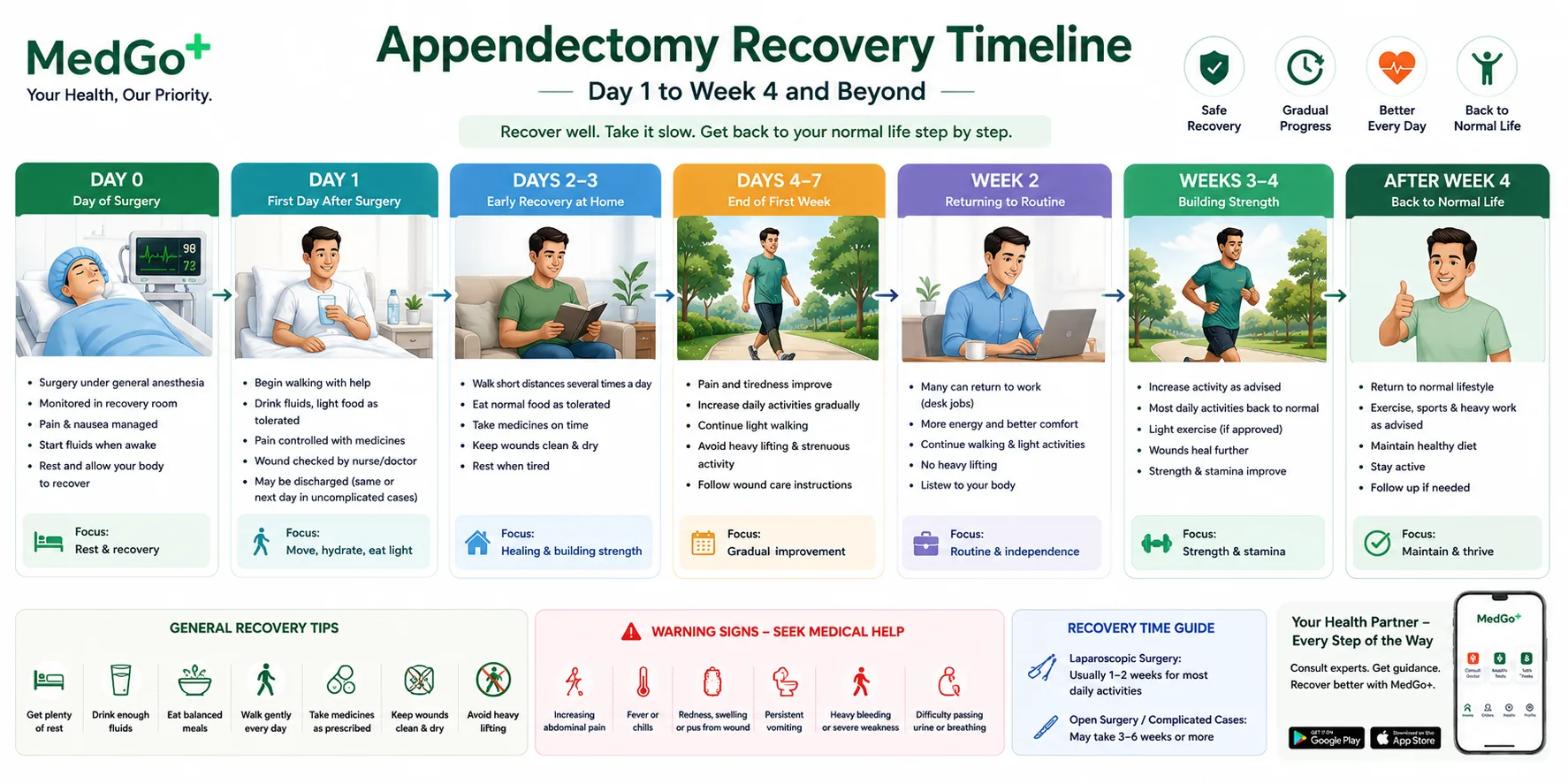
Recovery after an appendectomy is usually straightforward when the appendix is removed before it ruptures. Many people gradually return to normal activities within one to two weeks, although full recovery can take longer depending on the type of surgery, overall health and whether complications were present.
Recovery is generally faster after laparoscopic keyhole surgery than after open surgery. If the appendix has ruptured, an abscess has formed or there is significant abdominal infection, recovery may take considerably longer.
This guide provides a general timeline. Your surgeon’s instructions should always take priority because your recovery plan depends on your individual operation and medical condition.
Appendectomy Recovery Timeline at a Glance
- Day 0: Wake from anesthesia, pain control, fluids and initial monitoring.
- Day 1: Begin walking, drinking and eating as tolerated; wound monitoring continues.
- Days 2–3: Gradually increase movement and continue wound and medication care.
- Days 4–7: Pain and tiredness should generally begin improving; continue light activity.
- Week 2: Many people can return toward normal daily activities and some work.
- Weeks 3–4: Strength and stamina continue to improve; activity can gradually increase according to surgical advice.
- After Week 4: Most uncomplicated cases are approaching normal activity, although individual recovery varies.
What Determines How Fast You Recover?
There is no single recovery time that applies to every appendectomy patient.
- Laparoscopic or open surgery.
- Whether the appendix ruptured.
- Whether an abscess or peritonitis was present.
- Your age and general health.
- Other medical conditions.
- Your level of physical activity before surgery.
- Whether you developed a postoperative complication.
- The physical demands of your work.
Laparoscopic surgery generally allows a faster recovery than open abdominal surgery. Complicated appendicitis can significantly extend the recovery period.
Day 0: The Day of Appendix Surgery
Immediately after the appendectomy, you will spend time in a recovery area while the effects of general anesthesia wear off.
- Your blood pressure, heart rate and oxygen levels are monitored.
- Your pain is assessed and treated.
- Nausea is treated if necessary.
- Your abdominal wounds are checked.
- You gradually become more awake after anesthesia.
- Fluids may be given through an intravenous line.
- You may begin drinking when your healthcare team considers it appropriate.
You may feel tired, sleepy, mildly dizzy or nauseated after anesthesia. These effects usually improve as the medicines wear off.
Day 1: First Day After Surgery
The first day focuses on making sure you are recovering safely and beginning gentle movement.
- Get out of bed with assistance if needed.
- Take short walks.
- Drink fluids as tolerated.
- Gradually return to food as tolerated.
- Take prescribed pain medicines.
- Monitor the surgical wounds.
- Pass urine normally.
- Follow your surgeon’s activity instructions.
Many patients with uncomplicated laparoscopic appendectomy may be ready for discharge around this stage, depending on the hospital and their recovery.
Days 2–3: Early Recovery
Once you are home, the priority is controlled movement, adequate fluids, nutrition, pain management and wound care.
- Walk around the house for short periods.
- Rest when tired.
- Take medicines exactly as prescribed.
- Drink enough fluids unless your doctor has restricted them.
- Eat foods you tolerate comfortably.
- Keep your wounds clean according to instructions.
- Avoid heavy lifting and strenuous exercise.
It is normal to feel more tired than usual during the first few days.
Days 4–7: End of the First Week
By the end of the first week, many patients with uncomplicated surgery notice gradual improvement in pain, movement and energy.
- Continue short, regular walks.
- Gradually increase normal household activity.
- Continue wound care.
- Continue prescribed medicines.
- Avoid strenuous exercise.
- Avoid heavy lifting unless your surgeon has cleared it.
- Monitor bowel function.
Some soreness around the incision sites may still be present, particularly when changing position, coughing or stretching.
Week 1: What Should You Be Able to Do?
By the end of the first week, recovery varies considerably. Many people can walk comfortably around the house and perform light daily activities.
- Walk independently if medically appropriate.
- Prepare simple meals.
- Perform light personal care.
- Take short outdoor walks if comfortable.
- Sleep in a comfortable position.
- Gradually reduce reliance on pain medicine if pain is improving.
Do not compare your recovery with another patient. Complicated appendicitis and open surgery can require substantially more recovery time.
Week 2: Returning to Normal Activities
Many people begin returning toward their normal routine during the second week after uncomplicated appendectomy.
- Increase walking gradually.
- Resume light household activities.
- Return to desk-based work if you feel well enough and your surgeon agrees.
- Continue avoiding strenuous activity until cleared.
- Continue paying attention to wound healing.
- Maintain adequate nutrition and hydration.
Some patients return to work within one to two weeks, while people with physically demanding jobs may need additional time.
Week 3: Building Strength Again
During the third week, many patients with uncomplicated surgery feel substantially better and can gradually increase normal activity.
- Increase walking distance gradually.
- Resume more normal daily activities as tolerated.
- Continue avoiding activities your surgeon has restricted.
- Monitor for persistent or worsening pain.
- Continue protecting the healing abdominal wounds.
Do not use the calendar alone to decide when to return to heavy lifting or strenuous exercise. Your surgical approach and individual recovery matter.
Week 4: Returning Toward Normal
By around four weeks, many patients with uncomplicated laparoscopic surgery are approaching their normal routine.
- Normal walking is usually comfortable.
- Energy levels are generally improving.
- Incisions should be healing.
- Most routine daily activities can be resumed as tolerated.
- Exercise can be increased according to your surgeon’s instructions.
Recovery can be significantly slower after open surgery or complicated appendicitis, so some patients may still need activity restrictions at this stage.
What Happens After Week 4?
Many people with uncomplicated appendectomy have returned close to their normal routine by this point. However, full energy and abdominal strength may take longer to return.
If you still have significant pain, severe fatigue, wound problems or digestive symptoms that are not improving, contact your healthcare team.
Pain After Appendix Surgery
Some pain and soreness are expected after appendectomy. Pain should generally improve gradually rather than become progressively worse.
- Take prescribed pain medicine as directed.
- Use comfortable positions when resting.
- Support the abdomen when coughing if advised.
- Walk gently.
- Avoid movements that cause significant pain.
After laparoscopic surgery, some patients experience temporary shoulder discomfort caused by the gas used during the procedure.
How Long Does Appendix Surgery Pain Last?
Pain is usually most noticeable during the first several days and should gradually improve during the following one to two weeks.
The exact duration varies. Open surgery and complicated appendicitis can cause pain for longer.
Pain that becomes increasingly severe instead of improving should be assessed by a healthcare professional.
Walking After Appendectomy
Walking is an important part of recovery. Once your medical team says it is safe, begin with short walks and gradually increase your distance.
- Start with short walks.
- Walk several times a day if comfortable.
- Increase distance gradually.
- Avoid pushing through significant pain.
- Rest when tired.
- Stay hydrated.
Early movement helps you regain strength and reduces the problems associated with prolonged inactivity.
When Can I Exercise After Appendectomy?
Gentle walking can usually begin early, but strenuous exercise and heavy lifting should wait until your surgeon clears you.
For laparoscopic surgery, some guidance recommends limiting physical activity during the first several days. After open abdominal surgery, restrictions are generally longer. :contentReference[oaicite:1]{index=1}
- Walking: usually introduced early as tolerated.
- Light activity: gradually increased as pain improves.
- Running: wait until cleared by your healthcare team.
- Gym workouts: restart gradually after clearance.
- Heavy lifting: follow your surgeon’s specific restriction.
- Contact sports: wait until your surgeon confirms it is safe.
When Can I Return to Work?
Many people return to work within one to two weeks after uncomplicated appendectomy. The timing depends on your symptoms, surgery type and job requirements. :contentReference[oaicite:2]{index=2}
Desk or Office Work
Some people can return around one to two weeks after uncomplicated laparoscopic surgery if they are comfortable and able to sit and move normally.
Physical or Manual Work
Jobs involving heavy lifting, prolonged standing or strenuous physical activity may require more time away from work.
When Can I Drive After Appendix Surgery?
Do not drive while you are affected by general anesthesia or medicines that impair your alertness.
You should also be able to sit comfortably, control the vehicle and perform an emergency stop without significant pain before returning to driving. Follow your surgeon’s advice and any applicable insurance requirements. :contentReference[oaicite:3]{index=3}
Wound Care After Appendectomy
Laparoscopic appendectomy usually leaves several small wounds, while open surgery produces a larger incision.
- Keep wounds clean according to your discharge instructions.
- Follow dressing instructions.
- Do not pick at skin glue or wound closures.
- Watch for increasing redness or swelling.
- Watch for pus or unusual drainage.
- Report worsening wound pain or fever.
Some wounds may feel itchy, numb, firm or slightly raised while healing. These sensations can occur as scar tissue develops. :contentReference[oaicite:4]{index=4}
When Can I Shower After Appendectomy?
The timing depends on how your wounds were closed and the instructions from your surgical team.
Some hospitals allow showering relatively soon after surgery when the wound closure permits it. Follow the specific instructions given at discharge rather than using a generic timeline.
Avoid soaking wounds in a bath or swimming pool until your surgical team confirms that the wounds have healed sufficiently.
Diet After Appendix Surgery
Most people can gradually return to their usual diet after an uncomplicated appendectomy as tolerated.
- Drink adequate fluids.
- Choose foods you tolerate comfortably.
- Include protein-rich foods.
- Eat fruits and vegetables as tolerated.
- Increase fibre if constipation develops.
- Avoid foods that clearly worsen nausea or digestive discomfort.
Appendix removal does not normally require permanent dietary restrictions. :contentReference[oaicite:5]{index=5}
Constipation After Appendectomy
Constipation can occur after surgery because of reduced activity, changes in diet, dehydration and some pain medicines.
- Drink adequate fluids unless medically restricted.
- Walk regularly.
- Include fibre as tolerated.
- Do not strain excessively.
- Ask your healthcare team or pharmacist whether a mild laxative is appropriate.
Changes in bowel habits, including constipation or loose stools, can occur for several days after appendectomy. :contentReference[oaicite:6]{index=6}
Sleep After Appendix Surgery
You may sleep more than usual during the first few days because of the surgery and effects of anesthesia.
- Choose a comfortable sleeping position.
- Avoid pressure directly on painful wounds.
- Use pillows for support if helpful.
- Take pain medicine according to instructions.
- Maintain a regular sleep schedule as you recover.
Feeling Tired After Appendectomy
Fatigue is common during the early recovery period. Surgery, anesthesia, infection and interrupted sleep can all contribute.
Energy should generally improve gradually. Rest when needed but continue gentle movement rather than remaining in bed all day.
Persistent or worsening exhaustion, particularly when accompanied by fever, increasing pain or other symptoms, should be discussed with your healthcare team.
Appendectomy Recovery After a Ruptured Appendix
Recovery after a ruptured appendix is usually slower than recovery after uncomplicated appendicitis.
- You may need a longer hospital stay.
- Antibiotics may be required for longer.
- An abscess may need drainage.
- Pain and fatigue may last longer.
- Return to work may take longer.
- Exercise restrictions may last longer.
- Additional follow-up may be required.
There is no single recovery timeline for complicated appendicitis. Your surgeon will base the plan on the infection, operation and your progress.
Laparoscopic vs Open Appendectomy Recovery
Laparoscopic Appendectomy
- Several small incisions.
- Usually less postoperative wound discomfort.
- Generally faster recovery.
- Often earlier return to normal activities.
Open Appendectomy
- Larger abdominal incision.
- Usually longer wound healing.
- Activity restrictions may last longer.
- Recovery can be slower.
Laparoscopic surgery generally has a shorter recovery time, but the best surgical approach depends on the individual patient and operative findings. :contentReference[oaicite:7]{index=7}
When Should Pain Be Getting Better?
Pain should generally trend downward as the days pass. You may still have soreness during movement, coughing or changing position during the first week.
Pain that suddenly becomes much worse after initially improving is different from normal healing and should be assessed.
Warning Signs During Recovery
Contact your healthcare team if you develop symptoms suggesting infection or another postoperative complication.
- Increasing abdominal pain.
- Persistent or high fever.
- Increasing redness around an incision.
- Increasing swelling around the wound.
- Pus or foul-smelling drainage.
- Persistent vomiting.
- Increasing abdominal swelling.
- Worsening pain that is not controlled by prescribed medicines.
- Difficulty passing urine.
- Shortness of breath.
- Calf pain or swelling.
- Severe weakness or feeling increasingly unwell.
These symptoms do not necessarily mean there is a serious complication, but they warrant medical assessment.
When Should I Go to the Emergency Department?
Seek urgent medical attention for severe or rapidly worsening abdominal pain, significant bleeding, difficulty breathing, fainting, severe weakness or other symptoms suggesting a serious complication.
After appendectomy, fever accompanied by worsening abdominal pain, increasing wound redness or pus, persistent vomiting or rapidly increasing abdominal swelling should also be assessed promptly.
Can I Return to Normal Life After Appendix Removal?
Yes. Most people can return to normal daily life after recovering from appendectomy. Removing the appendix does not normally require permanent changes to diet, exercise or lifestyle. :contentReference[oaicite:8]{index=8}
The temporary restrictions are mainly related to allowing the abdominal wounds and deeper tissues to heal safely.
A Simple Recovery Plan
- Follow your surgeon’s instructions.
- Take medicines exactly as prescribed.
- Walk gently and regularly.
- Drink enough fluids.
- Eat nutritious foods as tolerated.
- Keep your wounds clean and follow dressing instructions.
- Avoid heavy lifting until cleared.
- Return to work gradually.
- Increase exercise gradually.
- Attend follow-up when recommended.
- Do not ignore worsening symptoms.
Recovery Timeline: What Is Normal?
Days 0–1
Sleepiness, abdominal soreness, mild nausea and fatigue can occur. Begin fluids, food and gentle movement as tolerated.
Days 2–3
Continue walking, eating and drinking. Pain should generally be manageable and gradually improving.
Days 4–7
Light daily activities can usually increase gradually. Incisions continue healing.
Week 2
Many uncomplicated patients can move toward normal daily routines and may return to work depending on their job and recovery.
Weeks 3–4
Strength and energy generally continue improving. Activity can gradually increase according to your surgeon’s advice.
After Week 4
Many uncomplicated cases are close to normal, although individual recovery can take longer.
How MedGoPlus Can Help
Recovering after appendix surgery can raise many questions, especially about pain, diet, wound care, exercise and returning to work. MedGoPlus can help patients connect with qualified healthcare professionals through available consultation services for postoperative guidance and follow-up.
If your recovery is not progressing as expected or you develop worsening pain, fever, wound problems or other concerning symptoms, speak with your healthcare team promptly.
The Bottom Line
Most people recover well after an uncomplicated appendectomy. The first few days focus on pain control, hydration, nutrition, wound care and gentle movement. During the first one to two weeks, activity can gradually increase as symptoms improve.
Laparoscopic surgery generally allows a faster recovery than open surgery, while a ruptured appendix, abscess or other complication can significantly extend recovery.
There is no need to rush recovery. Follow your surgeon’s activity restrictions, listen to your body and seek medical advice if symptoms are getting worse rather than better.
Medical Disclaimer
This article is intended for general health education and does not replace an examination, diagnosis or individualized medical advice. Recovery varies between patients. Follow the specific instructions provided by your surgeon and healthcare team.
Take Control of Your Health with MedGoPlus
Book doctor consultations, manage your health needs, and access convenient healthcare services anytime, anywhere with the MedGoPlus App.
Scan to download
Download the MedGoPlus App