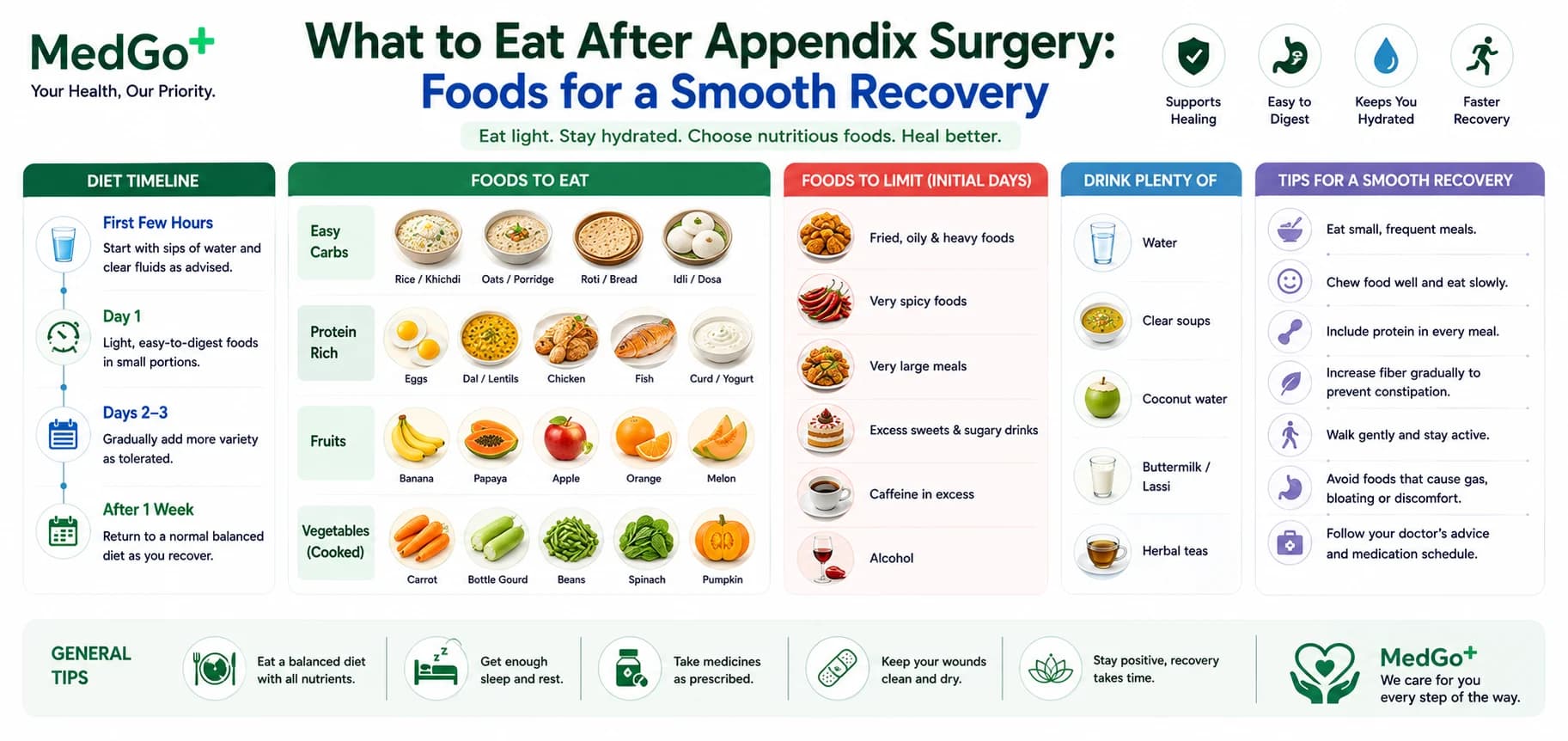
Eating well after appendix surgery can help support wound healing, maintain strength and make recovery more comfortable. Most people can gradually return to their usual diet after an uncomplicated appendectomy, but appetite and digestion may take some time to return to normal.
During the first few days, the best approach is usually to focus on fluids, foods you tolerate comfortably and gradually increasing the amount and variety of food. There is generally no permanent special diet required after the appendix is removed.
If you had a ruptured appendix, an abscess, peritonitis or another complication, your diet may be advanced more slowly according to your surgeon’s instructions.
Appendix Surgery Diet: Quick Guide
- Start with fluids when your healthcare team says it is safe.
- Begin with small portions if your appetite is low.
- Choose foods that are easy for you to tolerate.
- Include protein to support tissue healing.
- Eat fruits and vegetables as tolerated.
- Drink enough fluids unless your doctor has restricted them.
- Gradually increase fibre to help prevent constipation.
- Return to your normal balanced diet as your appetite improves.
Why Nutrition Matters After Appendix Surgery
Surgery places additional demands on the body. Your body needs adequate energy, protein, fluids, vitamins and minerals to support tissue repair and recovery.
- Protein supports tissue repair and wound healing.
- Carbohydrates provide energy for recovery.
- Healthy fats provide energy and essential fatty acids.
- Vitamins and minerals support normal body functions.
- Fluids help maintain hydration.
- Fibre can support normal bowel function.
Good nutrition does not replace medical treatment, but it can support the recovery process.
What Can I Eat Immediately After Appendix Surgery?
Immediately after surgery, you may not feel hungry because of anesthesia, pain medicines or nausea. Your healthcare team will decide when it is appropriate to start drinking and eating.
- Water.
- Clear fluids if recommended.
- Light soups.
- Small amounts of easily tolerated food.
- Other foods recommended by your hospital team.
Do not force yourself to eat a large meal immediately after surgery. Start gradually and increase your intake as you feel better.
What to Eat on Day 1 After Appendix Surgery
If you are tolerating fluids and your healthcare team has allowed food, you can gradually introduce small meals.
- Rice or soft rice dishes.
- Khichdi.
- Oatmeal or porridge.
- Soft cooked vegetables.
- Banana.
- Toast or soft bread.
- Curd or plain yogurt if tolerated.
- Light soups.
- Eggs if tolerated.
- Soft chicken or fish if appropriate.
You do not have to eat only liquids after uncomplicated appendix surgery. If you feel well and tolerate food, you can gradually progress toward a normal diet.
Best Protein Foods After Appendix Surgery
Protein is particularly important during recovery because it provides amino acids needed for tissue maintenance and repair.
- Eggs.
- Chicken.
- Fish.
- Plain yogurt or curd.
- Milk if tolerated.
- Paneer in moderate portions.
- Dal.
- Lentils.
- Beans.
- Tofu.
- Soy-based foods.
- Nuts and seeds in appropriate portions.
Choose protein sources that are easy for you to digest and fit your normal dietary pattern.
Fruits to Eat After Appendix Surgery
Fruits can provide fluids, carbohydrates, fibre and important micronutrients during recovery.
- Bananas.
- Apples or stewed apples.
- Papaya.
- Oranges and other citrus fruits if tolerated.
- Pears.
- Melons.
- Berries.
- Other fresh fruits that you tolerate comfortably.
If you are experiencing nausea or loose stools, choose fruits that you tolerate well and introduce higher-fibre foods gradually.
Vegetables After Appendix Surgery
Vegetables can provide fibre, vitamins and minerals. During the first few days, cooked vegetables may be easier to tolerate than large amounts of raw vegetables.
- Carrots.
- Pumpkin.
- Bottle gourd.
- Spinach and other cooked leafy greens.
- Beans.
- Peas.
- Potatoes.
- Sweet potatoes.
- Other well-cooked vegetables.
As your digestion returns to normal, you can gradually include a wider variety of vegetables.
Rice, Roti and Other Carbohydrates
Carbohydrates provide energy during recovery. There is generally no need to completely avoid rice, roti or other carbohydrate-containing foods after appendix surgery.
- Rice.
- Soft roti or chapati.
- Oats.
- Porridge.
- Potatoes.
- Sweet potatoes.
- Whole grains as tolerated.
- Other minimally processed carbohydrate sources.
If you have poor appetite, smaller meals may be easier than trying to eat a large portion.
Can I Eat Dal After Appendix Surgery?
Yes. Dal, lentils and other legumes can provide protein, fibre and other nutrients. If you are not used to eating large amounts of legumes, start with smaller portions because they can sometimes cause gas or bloating.
Choose well-cooked dal and increase the amount gradually according to your tolerance.
Can I Eat Eggs After Appendix Surgery?
Yes. Eggs are a convenient source of protein and can be included when you are able to tolerate normal food.
Boiled, poached or lightly cooked eggs may be easier to tolerate than heavily fried preparations during the early recovery period.
Can I Eat Chicken and Fish After Appendix Surgery?
Yes. Chicken and fish can provide high-quality protein and can be included as your appetite returns.
- Choose grilled, baked, boiled or lightly cooked preparations.
- Avoid very oily preparations if they worsen nausea or digestive discomfort.
- Start with small portions.
- Choose lean protein when possible.
Can I Drink Milk After Appendix Surgery?
Milk can be included if you normally tolerate it. However, some people temporarily experience bloating or digestive discomfort after surgery.
If milk causes discomfort, try smaller amounts or other protein and calcium sources and discuss persistent symptoms with your healthcare team.
Can I Eat Curd or Yogurt After Appendix Surgery?
Plain curd or yogurt can be a convenient source of protein and calcium if you tolerate dairy.
Choose less-sugary options and avoid products that consistently cause bloating or diarrhea.
How Much Water Should I Drink After Appendix Surgery?
Adequate hydration is important during recovery. Drink regularly throughout the day unless your doctor has specifically restricted your fluid intake because of another medical condition.
- Water.
- Soups and broths.
- Milk if tolerated.
- Other non-alcoholic fluids.
If you are vomiting, unable to keep fluids down or becoming unusually weak or dizzy, contact your healthcare team.
Fibre After Appendix Surgery
Fibre supports normal bowel function and can be helpful if constipation develops after surgery. However, suddenly eating very large amounts of fibre can cause gas and bloating.
- Fruits.
- Cooked vegetables.
- Oats.
- Whole grains.
- Dal and lentils.
- Beans.
- Nuts and seeds as tolerated.
Increase fibre gradually and drink enough fluids unless your doctor has advised otherwise.
Constipation After Appendix Surgery
Constipation can occur after surgery because of reduced physical activity, changes in eating and drinking, dehydration and certain pain medicines.
- Drink adequate fluids.
- Walk gently and regularly.
- Gradually increase fibre.
- Eat fruits and vegetables as tolerated.
- Avoid excessive straining.
- Ask your healthcare team whether a stool softener or laxative is appropriate.
Do not take laxatives regularly without medical advice, particularly if you have significant abdominal pain or swelling.
Foods to Limit During Early Recovery
There is usually no universal list of foods that everyone must avoid after appendectomy. However, certain foods may be harder to tolerate during the first few days.
- Very oily or greasy foods.
- Deep-fried foods.
- Very spicy foods if they cause discomfort.
- Very large meals.
- Excessively sugary foods.
- Large amounts of processed foods.
- Foods that personally trigger bloating, nausea or diarrhea.
As your appetite and digestion improve, you can gradually return to your usual balanced diet.
Can I Eat Spicy Food After Appendix Surgery?
Spicy food is not automatically prohibited after appendix surgery. However, very spicy meals may worsen nausea, heartburn or digestive discomfort in some people during early recovery.
If spicy foods make you uncomfortable, wait until your digestion settles and reintroduce them gradually.
Can I Eat Fried Food After Appendix Surgery?
Fried and very greasy foods can be harder to tolerate during the early recovery period and may cause nausea, bloating or loose stools in some people.
Prefer lighter cooking methods such as steaming, boiling, grilling or baking while your appetite and digestion recover.
Can I Drink Tea or Coffee After Appendix Surgery?
Small amounts of tea or coffee may be tolerated once you are eating and drinking normally. However, caffeine can worsen stomach discomfort or affect hydration in some people.
If you notice nausea, acidity, diarrhea or other discomfort, reduce or temporarily avoid caffeinated drinks.
Can I Drink Alcohol After Appendix Surgery?
Avoid alcohol during the early recovery period, particularly while taking prescription pain medicines, antibiotics or other medicines that may interact with alcohol.
Ask your doctor when alcohol is safe based on your medicines, surgery and recovery.
What About Soft Drinks and Sugary Drinks?
Sugary drinks do not provide the same nutritional value as balanced meals and are not necessary for recovery.
Water and other nutritious fluids are generally better choices for maintaining hydration.
A Simple 1-Day Post-Appendectomy Meal Plan
Breakfast
Oatmeal or soft porridge with banana, or eggs with toast if tolerated.
Mid-Morning
Fruit, plain yogurt or another light snack.
Lunch
Rice with dal and well-cooked vegetables, or a light chicken or fish meal.
Evening
Fruit, yogurt, a light snack or another food you tolerate comfortably.
Dinner
Khichdi, rice with vegetables and protein, or soft roti with a light protein-rich dish.
This is an example rather than a prescription. Adjust portions and food choices according to your appetite, dietary preferences and medical advice.
A Simple Indian Diet After Appendix Surgery
Patients following an Indian diet can choose familiar foods while focusing on adequate protein, fluids and gradually increasing fibre.
- Moong dal khichdi.
- Soft rice with dal.
- Curd rice if dairy is tolerated.
- Idli.
- Oats or porridge.
- Soft chapati or roti.
- Well-cooked vegetables.
- Eggs.
- Light chicken or fish preparations.
- Fruits such as banana, papaya or melon.
Avoid making the diet unnecessarily restrictive. The goal is balanced nutrition and comfortable digestion.
Vegetarian Diet After Appendix Surgery
Vegetarian patients can obtain adequate protein through a combination of dairy products, lentils, beans, soy foods, tofu, paneer, nuts and seeds.
- Dal.
- Moong dal.
- Lentils.
- Chickpeas.
- Beans.
- Tofu.
- Soy products.
- Paneer.
- Curd or yogurt.
- Milk if tolerated.
- Nuts and seeds.
Non-Vegetarian Diet After Appendix Surgery
Chicken, fish and eggs can provide protein during recovery. Prefer lightly cooked preparations during the early period rather than heavily fried or very spicy dishes.
Choose portions that you can comfortably digest and gradually return to your normal eating pattern.
Foods That Support Wound Healing
No single food heals a surgical wound. A balanced diet provides the nutrients needed for normal tissue repair.
- Protein-rich foods such as eggs, fish, chicken, dal and yogurt.
- Vitamin-C-rich fruits and vegetables such as citrus fruits, guava and peppers.
- Vegetables and fruits for vitamins, minerals and fibre.
- Whole grains as tolerated.
- Healthy fats from nuts, seeds and other nutritious sources.
- Adequate fluids.
What If I Have No Appetite After Surgery?
Reduced appetite is common during the early recovery period. Instead of forcing yourself to eat large meals, try smaller portions more frequently.
- Eat small meals several times a day.
- Choose nutrient-dense foods.
- Drink fluids regularly.
- Include protein in meals or snacks.
- Eat when you feel most comfortable.
Persistent inability to eat or drink, repeated vomiting or worsening weakness should be discussed with your healthcare team.
What If I Feel Nauseous After Eating?
Nausea can occur after anesthesia, surgery or certain medicines.
- Eat smaller portions.
- Eat slowly.
- Choose simple foods you tolerate.
- Drink fluids regularly.
- Avoid very greasy or strongly flavored meals if they worsen nausea.
- Take prescribed anti-nausea medicine when instructed.
Persistent vomiting or inability to keep fluids down requires medical advice.
Diet After a Ruptured Appendix
Patients recovering from a ruptured appendix may have a slower return to normal eating because of infection, inflammation, prolonged hospitalization or additional procedures.
Your surgical team may initially recommend a specific diet or gradual progression depending on bowel function and your clinical condition.
Do not compare your diet progression with someone who had uncomplicated laparoscopic appendectomy.
Do I Need Vitamins or Supplements After Appendix Surgery?
Most people do not automatically need vitamin or mineral supplements after an uncomplicated appendectomy if they can eat a balanced diet.
Supplements may be appropriate when a doctor identifies a nutritional deficiency, poor intake or another medical reason.
Avoid taking high-dose supplements without medical advice.
How Long Should I Follow a Soft Diet?
There is no universal number of days for a soft diet after appendectomy. If you tolerate normal food comfortably, you can generally gradually return to your usual diet.
A longer modified diet may be necessary after complicated appendicitis or if your surgeon identifies bowel or digestive issues.
Common Diet Mistakes After Appendix Surgery
- Eating very large meals immediately after surgery.
- Not drinking enough fluids.
- Avoiding protein unnecessarily.
- Increasing fibre too quickly.
- Eating large amounts of fried food.
- Relying heavily on sugary drinks.
- Taking supplements without medical advice.
- Following an unnecessarily restrictive diet.
When Should I Contact My Doctor About Eating?
- Persistent vomiting.
- Unable to keep fluids down.
- Increasing abdominal swelling.
- Severe or worsening abdominal pain.
- Persistent inability to eat.
- Severe diarrhea.
- No bowel movement with increasing abdominal pain or swelling.
- Signs of dehydration.
- Fever with worsening abdominal symptoms.
How MedGoPlus Can Help
Food and nutrition are an important part of recovery after appendix surgery, but dietary needs can differ depending on the type of surgery, complications and existing medical conditions.
MedGoPlus can help patients connect with qualified healthcare professionals for postoperative guidance, including questions about diet, medicines, wound care and recovery.
If you have persistent vomiting, severe abdominal pain, fever, significant swelling or difficulty keeping fluids down, contact your healthcare team promptly rather than relying only on dietary changes.
The Bottom Line
After uncomplicated appendix surgery, most people can gradually return to a normal balanced diet as their appetite and digestion improve. Start with fluids and foods you tolerate comfortably, then increase variety and portion sizes.
Prioritize protein, nutritious carbohydrates, fruits, vegetables and adequate fluids. Increase fibre gradually, especially if constipation develops.
There is usually no permanent food restriction after appendix removal. If your appendix ruptured or you developed complications, follow the individualized diet plan provided by your surgical team.
Medical Disclaimer
This article is intended for general health education and does not replace individualized medical or dietary advice. Your diet after surgery may need to be modified based on your medical conditions, medications, surgical findings and recovery. Follow the instructions provided by your surgeon and healthcare team.
Take Control of Your Health with MedGoPlus
Book doctor consultations, manage your health needs, and access convenient healthcare services anytime, anywhere with the MedGoPlus App.
Scan to download
Download the MedGoPlus App