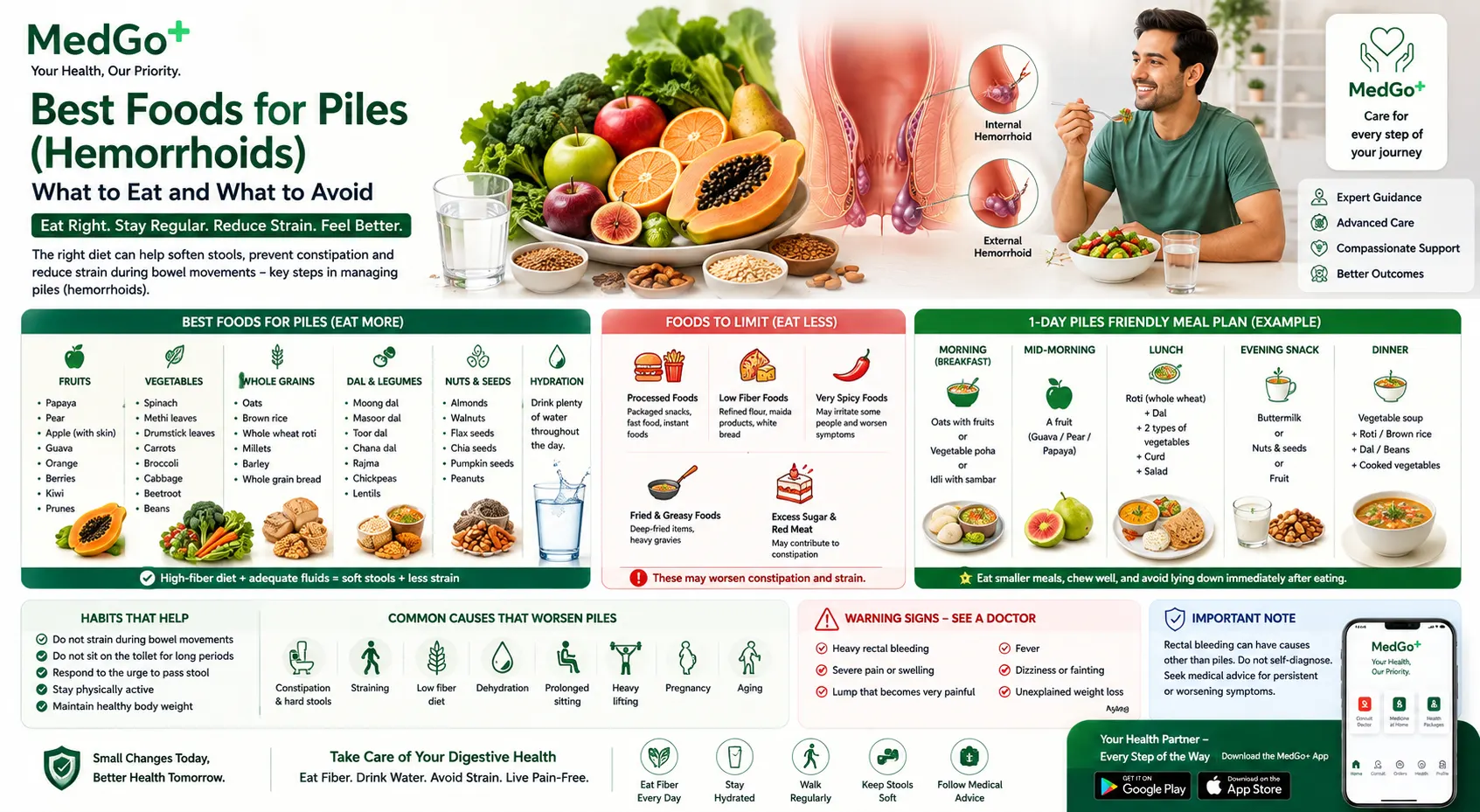
Diet plays an important role in managing piles, especially when constipation or hard stools contribute to symptoms. Eating enough fibre and drinking adequate fluids can help make stools softer and easier to pass, which may reduce straining during bowel movements.
There is no single food that cures piles. The goal is to develop eating and bowel habits that help prevent constipation, reduce straining and support regular, comfortable bowel movements.
If you have persistent rectal bleeding, severe pain or symptoms that do not improve, do not rely on diet alone. Piles can cause bleeding, but other medical conditions can also cause rectal bleeding and may require evaluation.
Why Does Diet Matter for Piles?
Constipation and straining can increase pressure around the veins and supporting tissues of the anus and lower rectum. A diet containing adequate fibre can help produce softer stools that are easier to pass.
Fibre works best when you also drink an appropriate amount of fluid. If you suddenly increase fibre without enough fluid, you may experience bloating or constipation.
For this reason, a piles-friendly eating pattern should focus on both fibre and hydration rather than a single “miracle” food.
How Much Fibre Do You Need?
Fibre needs vary from person to person. General adult recommendations are often around 22 to 34 grams of fibre per day, depending on age and sex.
If your current diet is low in fibre, increase it gradually rather than making a sudden large change. This allows your digestive system to adjust and may reduce gas and bloating.
Your doctor or dietitian can help determine an appropriate fibre target based on your health and dietary needs.
10 Best Foods for Piles
1. Fruits
Many fruits provide fibre and water and can be an easy way to increase fibre intake.
- Papaya.
- Pear.
- Apple with the skin when appropriate.
- Orange.
- Guava.
- Berries.
- Kiwi.
- Prunes or other dried fruit in suitable portions.
2. Leafy Green Vegetables
Leafy greens can contribute fibre, vitamins and minerals to a balanced diet.
- Spinach.
- Amaranth leaves.
- Drumstick leaves.
- Methi leaves.
- Other locally available leafy vegetables.
3. Oats
Oats contain soluble and insoluble fibre and can be a convenient breakfast option.
4. Whole Grains
Whole grains can provide more fibre than refined grains and can be incorporated into meals in a variety of ways.
- Whole-wheat roti.
- Oats.
- Brown rice.
- Millets.
- Whole-grain bread.
- Barley.
5. Dal and Lentils
Dal, lentils and other legumes are useful sources of fibre and plant protein.
- Moong dal.
- Masoor dal.
- Toor dal.
- Chana dal.
- Lentils.
6. Beans and Chickpeas
Beans and chickpeas can significantly contribute to daily fibre intake.
- Chickpeas.
- Rajma.
- Black beans.
- Green peas.
- Other legumes.
7. Vegetables
Vegetables are an important part of a fibre-rich diet and can be included in cooked or raw forms depending on your tolerance.
- Carrots.
- Broccoli.
- Green beans.
- Pumpkin.
- Sweet potato.
- Beetroot.
- Peas.
8. Nuts and Seeds
Nuts and seeds can provide fibre and healthy fats. Choose appropriate portions because they are calorie-dense.
- Almonds.
- Peanuts.
- Chia seeds.
- Flax seeds.
- Pumpkin seeds.
9. Sweet Potato
Sweet potatoes provide fibre and can be included as part of a balanced meal.
10. Water and Suitable Fluids
Water does not contain fibre, but adequate fluid intake helps fibre work effectively and can support softer stools.
Best Fruits for Piles
Fruits can be an easy way to increase fibre intake while also providing fluids, vitamins and minerals.
- Papaya.
- Pear.
- Apple with the skin.
- Guava.
- Orange.
- Kiwi.
- Berries.
- Prunes.
Choose whole fruit more often than fruit juice when possible because whole fruit generally provides more fibre.
Best Indian Foods for Piles
You do not need to follow a special Western diet to manage piles. Many familiar Indian foods can provide fibre and support regular bowel movements.
- Vegetable dal.
- Moong dal.
- Mixed vegetable curry prepared with moderate oil.
- Whole-wheat roti.
- Oats.
- Millet-based meals.
- Vegetable upma.
- Poha with vegetables.
- Idli with suitable vegetable or lentil accompaniments.
- Fresh fruits.
- Curd or yogurt if tolerated.
Choose preparations that are comfortable for your digestion and avoid making meals unnecessarily oily or very large.
What to Eat in the Morning for Piles
A fibre-rich breakfast can help you build a healthier bowel routine.
- Oatmeal with fruit.
- Vegetable poha.
- Vegetable upma.
- Whole-wheat toast with suitable protein.
- Idli with sambar.
- Fruit with yogurt if tolerated.
Choose an option that provides fibre and is comfortable for your digestive system.
What to Eat for Lunch If You Have Piles
- Whole-wheat roti or another whole grain.
- Dal or legumes.
- Two or more types of vegetables.
- A suitable protein source.
- Curd or yogurt if tolerated.
- Fresh fruit.
A balanced lunch can provide fibre, protein and fluids without relying on highly processed foods.
What to Eat for Dinner
- Vegetable soup.
- Dal with vegetables.
- Whole-wheat roti with vegetables.
- Brown rice with dal and vegetables.
- Lightly prepared protein with vegetables.
Avoid very large meals close to bedtime if they make you uncomfortable or disrupt your digestion.
Foods to Limit if You Have Piles
There is no universal list of foods that every person with piles must completely avoid. However, if constipation is contributing to your symptoms, foods with little or no fibre may make it harder to maintain soft stools.
- Highly processed foods.
- Fast food.
- Chips and similar low-fibre snacks.
- Large amounts of refined foods.
- Some packaged snack foods.
- Large amounts of foods that personally worsen constipation.
The goal is not to remove all enjoyable foods from your diet. Focus on improving the overall balance and fibre content of your meals.
Do Spicy Foods Cause Piles?
Spicy foods are not established as a direct cause of hemorrhoids. However, some people notice increased anal irritation or digestive symptoms after eating very spicy foods.
If spicy foods consistently worsen your symptoms, reduce them and see whether your symptoms improve.
Can I Eat Rice If I Have Piles?
Yes. Rice can be part of a healthy diet for someone with piles. The overall meal matters more than avoiding rice completely.
- Combine rice with dal or another protein source.
- Add vegetables to increase fibre.
- Choose higher-fibre rice options when you tolerate them.
- Maintain adequate fluid intake.
Can I Eat Eggs If I Have Piles?
Eggs provide protein but contain little dietary fibre. You can generally eat eggs as part of a balanced diet, but combine them with fibre-rich foods such as vegetables, whole grains or fruit.
Can I Eat Chicken or Meat If I Have Piles?
Chicken and meat can provide protein but generally contribute little fibre. If you eat them, include them as part of a balanced meal containing vegetables, legumes or whole grains.
If constipation is a problem, avoid allowing low-fibre foods to replace fibre-rich foods in your overall diet.
How Much Water Should I Drink for Piles?
Adequate fluid intake helps dietary fibre work effectively and can support softer stools.
There is no single amount of water that is appropriate for everyone. Your fluid needs depend on factors such as your health, activity level, climate and medical conditions.
People with certain heart, kidney or other medical conditions may need specific fluid limits, so follow your doctor’s advice.
How Should I Increase Fibre?
If your current diet contains little fibre, increase it gradually.
- Add one additional serving of vegetables each day.
- Replace some refined grains with whole grains.
- Add fruit to breakfast or snacks.
- Include dal, beans or lentils regularly.
- Add nuts or seeds in suitable portions.
- Drink adequate fluids as you increase fibre.
A sudden large increase in fibre can cause gas and bloating, so gradual changes are usually easier to tolerate.
A Simple 7-Day Piles-Friendly Meal Plan
Day 1
Breakfast: Oats with fruit. Lunch: Roti, dal and vegetables. Snack: Guava or pear. Dinner: Rice, dal and cooked vegetables.
Day 2
Breakfast: Vegetable poha. Lunch: Brown rice, dal and vegetables. Snack: Papaya. Dinner: Roti with vegetable curry and curd.
Day 3
Breakfast: Idli with sambar. Lunch: Roti, chickpeas and vegetables. Snack: Orange. Dinner: Vegetable soup with whole-grain bread and a suitable protein source.
Day 4
Breakfast: Oatmeal with apple. Lunch: Rice, moong dal and vegetables. Snack: Pear. Dinner: Roti, mixed vegetables and dal.
Day 5
Breakfast: Vegetable upma. Lunch: Roti, rajma and vegetables. Snack: Papaya. Dinner: Brown rice with dal and vegetables.
Day 6
Breakfast: Whole-grain toast with suitable protein and fruit. Lunch: Millet-based meal with dal and vegetables. Snack: Guava. Dinner: Vegetable soup, roti and dal.
Day 7
Breakfast: Oats with fruit and seeds. Lunch: Rice, sambar and vegetables. Snack: Orange or pear. Dinner: Roti, dal and mixed vegetables.
This is a general example and is not a personalized diet plan. People with diabetes, kidney disease, food allergies or other medical conditions may require different dietary choices.
Other Habits That Matter as Much as Food
- Do not strain during bowel movements.
- Do not sit on the toilet for long periods.
- Do not ignore the urge to have a bowel movement.
- Stay physically active.
- Treat constipation early.
- Maintain adequate fluid intake.
- Avoid regular heavy lifting when possible.
Diet works best when combined with healthy bowel and toilet habits.
Can Diet Cure Piles Permanently?
Diet can help manage and prevent hemorrhoid symptoms, particularly when constipation and straining contribute to the problem. However, diet cannot remove every type of hemorrhoid.
Large, prolapsing or persistent hemorrhoids may require medical treatment or a procedure even when a patient follows a healthy diet.
When Should You See a Doctor?
Speak with a healthcare professional if you have rectal bleeding, persistent symptoms or symptoms that do not improve after appropriate home care.
- Repeated rectal bleeding.
- Heavy bleeding.
- Severe anal pain.
- A new or persistent lump.
- Repeated hemorrhoid prolapse.
- Persistent constipation.
- Persistent diarrhea.
- Unexplained weight loss.
- Dizziness or fainting.
- Symptoms that continue despite treatment.
Important: Rectal Bleeding Should Not Be Ignored
Bright-red bleeding can occur with internal hemorrhoids, but rectal bleeding can also occur with other bowel conditions. If you have bleeding, particularly if it is persistent or unexplained, speak with a doctor rather than assuming it is simply piles.
Seek urgent medical care if you have heavy bleeding, severe pain with bleeding, dizziness, fainting, fever, abdominal pain or rapidly worsening symptoms.
How MedGoPlus Can Help
Managing piles often starts with simple changes to diet and bowel habits, but persistent symptoms may require medical assessment. MedGoPlus can help patients connect with qualified healthcare professionals through available consultation services for personalized guidance.
A doctor can help determine whether your symptoms are caused by hemorrhoids and whether you need dietary management, medicines, an office procedure or surgical treatment.
Take Care of Your Digestive Health
A fibre-rich diet, adequate hydration, regular physical activity and healthy toilet habits can help reduce constipation and straining, which are important contributors to hemorrhoid symptoms.
Focus on consistent healthy habits rather than searching for a single food that will cure piles.
Medical Disclaimer
This article is intended for general health education and does not replace an examination, diagnosis or individualized medical advice. Dietary needs vary between individuals. If you have rectal bleeding, severe pain, persistent symptoms or other concerning symptoms, consult a qualified healthcare professional.
Take Control of Your Health with MedGoPlus
Book doctor consultations, manage your health needs, and access convenient healthcare services anytime, anywhere with the MedGoPlus App.
Scan to download
Download the MedGoPlus App