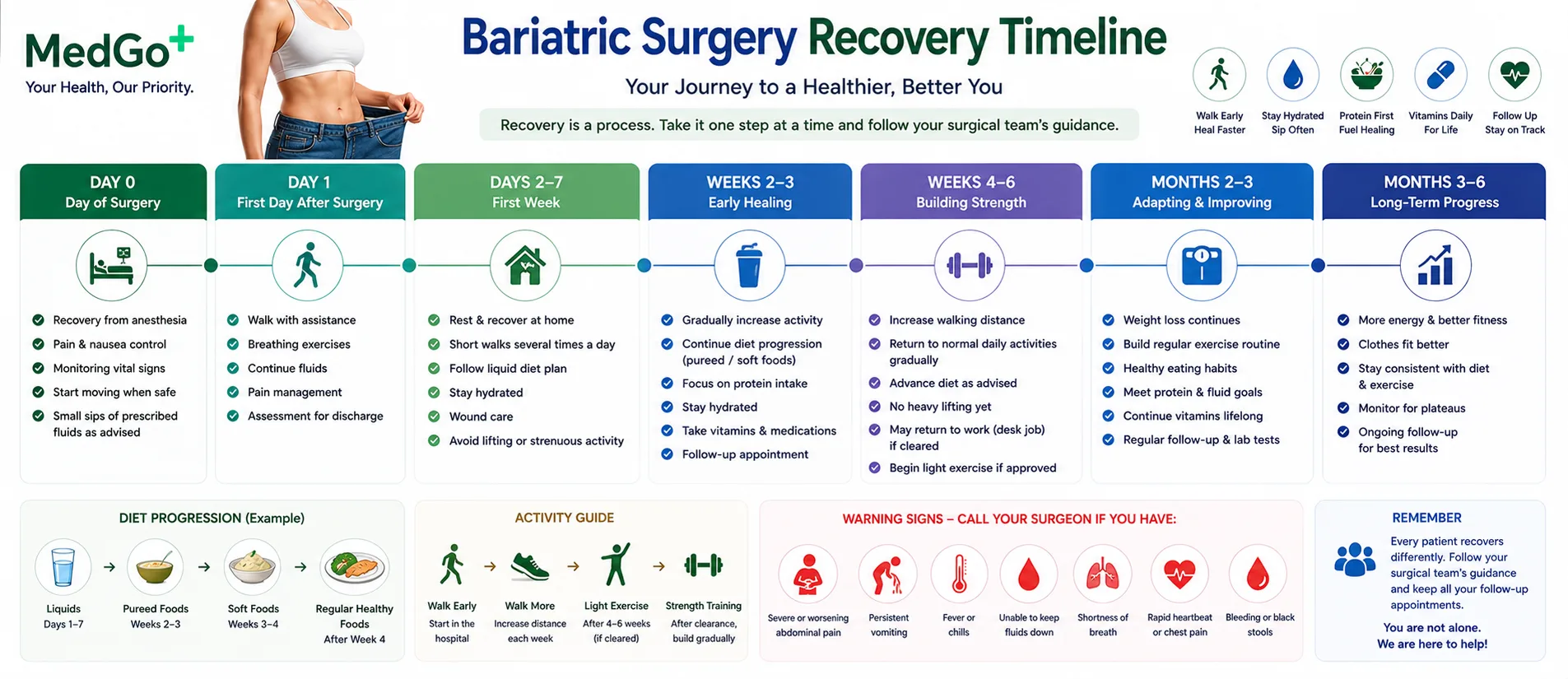
Recovery after bariatric surgery is a gradual process. The first few days focus on safe recovery from anesthesia, pain control, hydration, early movement and monitoring for complications. During the following weeks, the focus shifts toward nutrition, increasing activity, healing and adapting to your new eating pattern.
The exact recovery timeline is different for every patient. Sleeve gastrectomy, gastric bypass and other bariatric procedures have different anatomical changes and nutritional requirements. Your surgeon’s instructions should always take priority over a general timeline.
Bariatric Surgery Recovery at a Glance
- Day 0: Recovery from anesthesia, pain control and close monitoring.
- Day 1: Early walking, prescribed fluids and assessment for discharge readiness.
- First week: Rest, hydration, short walks, wound care and adherence to the prescribed diet stage.
- Weeks 2–3: Gradual increase in activity and progression of food texture according to the surgical program.
- Weeks 4–6: Increasing daily activity and gradual return toward normal routines.
- Months 2–3: Building consistent nutrition, exercise and healthy lifestyle habits.
- Months 3–6: Continued weight loss, nutritional monitoring and increasing physical fitness.
- Long term: Lifelong nutrition, supplementation, physical activity and medical follow-up.
What Happens Immediately After Bariatric Surgery?
After the operation, you will first recover in a monitored postoperative or recovery area while the effects of general anesthesia wear off.
- Blood pressure, heart rate and oxygen levels are monitored.
- Pain and nausea are treated.
- Oxygen may be provided temporarily.
- The surgical team checks your incisions and overall condition.
- Blood-clot prevention measures may be used.
- You will be encouraged to begin moving when it is safe.
- Fluid intake will follow your bariatric team’s protocol.
Day 0: The Day of Surgery
The day of surgery is mainly about safe anesthesia recovery and monitoring. You may feel sleepy, weak, bloated or uncomfortable during the first several hours.
What You May Experience
- Abdominal discomfort or pressure.
- Pain around the small surgical incisions.
- Temporary nausea.
- Fatigue from anesthesia.
- Dry mouth or thirst.
- Shoulder discomfort in some laparoscopic patients due to residual surgical gas.
Pain and nausea medicines are available when required. Do not be concerned if you are not immediately able to drink normally; your team will gradually introduce fluids according to the surgical protocol.
Day 1: The First Full Day After Surgery
The first postoperative day usually focuses on getting you moving safely, controlling symptoms and confirming that your recovery is progressing normally.
- Get out of bed with assistance when appropriate.
- Take short walks.
- Use prescribed breathing exercises if instructed.
- Continue prescribed pain control.
- Begin or continue the recommended fluid intake.
- Monitor urine output and hydration.
- Continue blood-clot prevention measures as advised.
- Have your surgical wounds checked.
Early gentle walking is encouraged because movement supports recovery and helps reduce complications associated with prolonged inactivity.
When Can I Go Home After Bariatric Surgery?
Discharge timing depends on the operation, your medical condition, hospital protocol and recovery. Many uncomplicated minimally invasive bariatric procedures require only a short hospital stay.
Your surgical team generally wants to see that you are medically stable and able to manage the basic requirements of recovery before discharge.
- Stable vital signs.
- Pain adequately controlled.
- Able to walk safely.
- Able to drink the prescribed fluids.
- No evidence of a major immediate complication.
- Adequate urine output.
- Understanding of medications and postoperative instructions.
Days 2–3: Adjusting to Being at Home
Once home, fatigue is common. Your body is healing while you are also adapting to a much smaller food and fluid intake.
- Rest frequently but avoid staying in bed all day.
- Take several short walks throughout the day.
- Sip fluids regularly according to your prescribed plan.
- Take prescribed medicines and supplements as instructed.
- Keep surgical wounds clean and follow your wound-care instructions.
- Avoid lifting or strenuous activity until cleared.
- Have a family member or caregiver available if recommended.
Days 4–7: The First Week
By the end of the first week, many patients are beginning to feel more comfortable, although tiredness and reduced appetite can continue.
- Walking should gradually become easier.
- Incision discomfort should generally begin improving.
- Fluid intake remains a priority.
- Follow the exact diet stage prescribed by your bariatric team.
- Avoid rushing into solid foods.
- Continue prescribed vitamins and medicines.
- Monitor for fever, worsening pain, vomiting or dehydration.
What Should I Eat During the First Week?
Most bariatric programs begin with liquids after surgery. The exact duration and types of liquids vary between procedures and hospitals.
- Clear or prescribed liquids initially.
- Protein-containing liquids when approved.
- Small, frequent sips rather than large volumes at once.
- Avoid high-sugar drinks when instructed.
- Avoid advancing to foods that have not yet been approved by your surgical team.
Hydration can be challenging during the first week. Your goal should follow the fluid target provided by your bariatric team rather than forcing large amounts at once.
Week 2: Early Healing
During the second week, the main goals are maintaining hydration, meeting nutritional requirements and gradually becoming more active.
- Continue short and frequent walks.
- Gradually increase walking distance as tolerated.
- Continue the prescribed diet stage.
- Prioritize protein according to your dietitian’s plan.
- Continue prescribed vitamin and mineral supplements.
- Attend scheduled follow-up appointments.
- Continue avoiding heavy lifting unless cleared.
Weeks 3–4: Building Strength
By weeks three and four, many patients can gradually return to more routine daily activities. However, internal healing continues even when the external incisions look almost healed.
- Increase walking gradually.
- Continue following the prescribed diet progression.
- Focus on protein-rich foods when permitted.
- Maintain adequate hydration.
- Continue vitamins and minerals.
- Avoid strenuous abdominal exercise until cleared.
- Monitor your energy levels and avoid overexertion.
Weeks 4–6: Returning Toward Normal Activity
Many patients are substantially more active by weeks four to six. The exact pace depends on the procedure, recovery and individual health.
- Longer walks may become comfortable.
- Normal household activities may gradually increase.
- Return to work may be possible depending on the job.
- Exercise can gradually progress after surgeon clearance.
- Strength training should be introduced only when medically appropriate.
- Continue the structured bariatric diet plan.
Do not use the six-week mark as automatic permission for every type of exercise. Your surgeon should clear heavy lifting and strenuous activity based on your individual healing.
When Can I Return to Work?
Return-to-work timing depends heavily on the type of work you do and how your recovery is progressing.
- Desk-based work may be possible relatively early after an uncomplicated recovery.
- Jobs requiring prolonged standing may require additional recovery time.
- Heavy physical work generally requires a longer restriction period.
- Jobs requiring frequent lifting may require specific surgeon clearance.
If your work is physically demanding, discuss the exact lifting requirements with your surgeon before returning.
When Can I Drive After Bariatric Surgery?
You should not drive while taking medicines that impair alertness or while pain, weakness or limited movement makes driving unsafe.
You should be able to sit comfortably, control the vehicle safely and perform an emergency stop without significant pain before returning to driving.
Follow your surgeon’s instructions and local driving requirements.
When Can I Exercise After Bariatric Surgery?
Walking usually begins very early, often while you are still in the hospital. Exercise then progresses gradually.
Early Recovery
Short, gentle walks several times a day are generally encouraged as tolerated.
Following Weeks
Walking distance and daily activity can gradually increase as your strength improves.
After Medical Clearance
Aerobic exercise and later resistance training can be introduced progressively according to your surgeon’s recommendations.
When Can I Lift Weights?
Heavy lifting should be avoided during the early healing period. The exact restriction depends on the operation and your surgeon’s protocol.
Once adequate healing has occurred and your surgeon gives clearance, resistance exercise can be introduced gradually. Strength training is valuable because rapid weight loss can include loss of muscle mass.
Bariatric Diet Recovery Timeline
The digestive system needs time to heal and adapt after bariatric surgery. Most programs therefore progress through several diet stages.
Stage 1: Liquids
The initial stage focuses on hydration and prescribed liquids.
Stage 2: Pureed or Blended Foods
Once cleared, smooth foods are gradually introduced.
Stage 3: Soft Foods
Soft, easily tolerated foods are introduced as healing progresses.
Stage 4: Regular Healthy Foods
Over time, patients transition toward regular-texture foods in small portions while following bariatric nutrition principles.
The timing of these stages varies considerably. Never advance the diet simply because another patient reached the next stage sooner.
Why Is Protein Important During Recovery?
Protein is important during rapid weight loss because it supports healing and helps preserve muscle mass.
- Follow the protein target provided by your bariatric dietitian.
- Choose protein-rich foods as your diet advances.
- Use prescribed protein supplements if recommended.
- Do not sacrifice hydration in an attempt to increase protein intake.
Individual protein requirements vary, so follow the target provided by your bariatric program.
Hydration After Bariatric Surgery
Dehydration is one of the common practical challenges during early recovery because the stomach can only comfortably accept small amounts at a time.
- Sip fluids regularly throughout the day.
- Do not wait until you feel very thirsty.
- Follow your program’s fluid target.
- Choose approved low-sugar or sugar-free fluids when appropriate.
- Separate drinking from meals according to your bariatric program’s instructions.
Signs of dehydration can include dark urine, dizziness, weakness, dry mouth and reduced urination. Persistent symptoms require medical advice.
Vitamins and Supplements During Recovery
Vitamin and mineral supplementation is a long-term part of bariatric care, not just a temporary recovery measure.
- Bariatric multivitamin.
- Vitamin B12.
- Iron when indicated.
- Calcium.
- Vitamin D.
- Other supplements depending on the operation and blood-test results.
The exact supplements and doses vary by procedure and patient. Take only the products and doses recommended by your bariatric team.
What Happens During Months 2–3?
By the second and third months, the focus shifts from surgical healing to building sustainable habits.
- Continue gradual weight loss.
- Build regular walking and exercise habits.
- Meet protein and fluid goals.
- Continue prescribed supplements.
- Attend follow-up appointments.
- Monitor blood sugar and blood pressure if applicable.
- Review medications as weight and metabolic health change.
What Happens During Months 3–6?
During this phase, many patients are increasingly comfortable with their new eating pattern and physical activity routine.
- Weight loss commonly continues.
- Exercise capacity may improve.
- Daily activities become easier for many patients.
- Protein and hydration habits become more routine.
- Nutritional blood tests may be performed according to the follow-up schedule.
- Medication requirements may change as obesity-related conditions improve.
Weight loss does not occur at exactly the same rate every month. Temporary plateaus are possible and do not necessarily mean that the surgery has failed.
What Happens After Six Months?
Recovery eventually becomes less about healing the surgical incisions and more about maintaining the long-term health changes created by the operation.
- Continue healthy eating habits.
- Maintain regular physical activity.
- Take prescribed vitamins and minerals.
- Attend long-term bariatric follow-up.
- Complete recommended laboratory tests.
- Monitor weight trends rather than focusing on individual daily changes.
- Address weight regain or nutritional symptoms early.
Is It Normal to Feel Tired After Bariatric Surgery?
Fatigue is common during early recovery. Your body is healing while your calorie and food intake are substantially reduced.
However, severe or worsening fatigue should not automatically be considered normal. Dehydration, inadequate nutrition, anemia, infection or other complications can also cause weakness.
Persistent or severe fatigue should be discussed with your healthcare team.
Is Nausea Normal After Bariatric Surgery?
Mild nausea can occur during early recovery, particularly while the digestive system is adapting and medications are being adjusted.
Persistent or repeated vomiting is not something to ignore because it can lead to dehydration and nutritional problems and may sometimes indicate a complication.
Contact your bariatric team if nausea is severe, persistent or associated with pain, fever or inability to drink.
Bowel Movements After Bariatric Surgery
Changes in bowel habits are common after surgery because food intake, fluid intake, medications and diet composition change.
- Constipation can occur, especially with reduced food intake and certain pain medicines.
- Loose stools can occur after some bariatric procedures.
- Hydration is important.
- Walking can help maintain bowel function.
- Do not use laxatives or anti-diarrheal medicines without appropriate medical advice when symptoms are significant.
Incision and Wound Care
Most minimally invasive bariatric procedures use several small abdominal incisions. These wounds need to remain clean and should be cared for according to the discharge instructions provided by your surgical team.
- Do not remove dressings unless instructed.
- Follow bathing instructions from your surgeon.
- Avoid unnecessary pressure or friction over the wounds.
- Observe for increasing redness, swelling or drainage.
- Do not apply creams or antiseptics unless recommended.
What Pain Is Normal During Recovery?
Mild to moderate discomfort around the abdominal incisions is common during the first days and should gradually improve.
Pain should generally trend in the right direction. Increasing or severe abdominal pain, especially when associated with fever, rapid heartbeat, vomiting or breathing difficulty, requires urgent medical assessment.
Warning Signs After Bariatric Surgery
Do not wait for a routine appointment if you develop symptoms that could represent a serious postoperative complication.
- Severe or worsening abdominal pain.
- Persistent vomiting.
- Unable to keep fluids down.
- Fever or chills.
- Rapid or unusually fast heartbeat.
- Shortness of breath.
- Chest pain.
- Fainting or severe dizziness.
- Significant bleeding.
- Black or bloody stools.
- Increasing abdominal swelling.
- Marked reduction in urination.
- Increasing redness, swelling or pus from an incision.
- Sudden severe weakness.
When Should I Contact My Surgeon?
Contact your bariatric team promptly if you have persistent vomiting, difficulty drinking enough fluids, worsening pain, fever, wound problems, significant dizziness, unusual bleeding or any symptom that concerns you.
Chest pain, severe breathing difficulty, fainting or rapidly worsening symptoms may require emergency medical care rather than waiting for a routine call back.
What Can Slow Down Bariatric Recovery?
- Dehydration.
- Poor protein intake.
- Smoking or nicotine use.
- Infection.
- Poorly controlled diabetes.
- Excessive physical activity too early.
- Not following the prescribed diet progression.
- Skipping medications or supplements.
- Ignoring persistent vomiting or other warning symptoms.
- Failure to attend follow-up appointments.
How to Support a Smooth Bariatric Recovery
- Follow your surgeon’s discharge instructions carefully.
- Sip fluids regularly.
- Meet your prescribed protein target.
- Take your vitamins and minerals consistently.
- Walk regularly but increase activity gradually.
- Avoid heavy lifting until cleared.
- Eat slowly and chew thoroughly as your diet advances.
- Keep all scheduled follow-up appointments.
- Monitor your blood sugar and blood pressure when instructed.
- Ask for help if fatigue or emotional changes become difficult to manage.
Bariatric Recovery Timeline: What Is Different Between Sleeve and Bypass?
The broad recovery pattern is similar after sleeve gastrectomy and gastric bypass: early walking, gradual fluid intake, progressive diet advancement and increasing activity.
However, gastric bypass creates a different digestive anatomy and has additional nutritional and gastrointestinal considerations. Sleeve gastrectomy does not bypass the intestine but can cause or worsen reflux in some patients.
Therefore, your diet, medications, supplements and follow-up schedule may differ depending on the exact operation.
Bariatric Surgery Recovery: A Simple Timeline
Day 0
Surgery, anesthesia recovery, pain control, monitoring and initial movement.
Day 1
Short walks, prescribed fluids, symptom control and assessment for discharge.
Days 2–7
Home recovery, hydration, wound care, short walks and adherence to the initial diet stage.
Weeks 2–3
Increasing activity, continuing diet progression and improving energy.
Weeks 4–6
Gradual return toward normal daily activities and progressive exercise after medical clearance.
Months 2–3
Focus shifts toward sustainable nutrition, exercise, weight management and follow-up.
Months 3–6
Continued weight loss, improved physical activity and ongoing nutritional monitoring.
Long Term
Lifelong vitamins and minerals, healthy eating, regular exercise and bariatric follow-up.
A Note About Weight Loss During Recovery
Weight often falls rapidly during the early months after bariatric surgery, but the rate is not identical for everyone.
You may experience periods when the scale does not change for several days or weeks. Short-term plateaus can occur even when the surgery is working.
Do not respond to a temporary plateau by severely restricting fluids or food. Focus on the plan provided by your bariatric team.
Long-Term Recovery Is More Than Healing the Incisions
The surgical wounds may heal within weeks, but bariatric recovery continues for months as your body adapts to lower food intake, changing nutritional needs and rapid weight loss.
- Build sustainable eating habits.
- Maintain adequate protein intake.
- Stay hydrated.
- Take lifelong prescribed supplements.
- Exercise regularly.
- Attend nutritional and medical follow-up.
- Monitor blood tests as recommended.
- Address weight regain early.
- Seek help for emotional or behavioral eating difficulties.
ASMBS emphasizes that long-term success after bariatric surgery depends on a combination of healthy eating, physical activity and regular healthcare follow-up rather than surgery alone.
How MedGoPlus Can Help
Recovery after bariatric surgery involves more than surgical wound healing. Patients may need guidance about diet progression, hydration, medications, vitamins, physical activity, follow-up appointments and symptoms that require medical attention.
MedGoPlus can help patients connect with qualified healthcare professionals for consultations and postoperative guidance through available consultation services.
If your recovery does not seem to be progressing as expected, speak with your surgical team rather than comparing your recovery with another patient’s timeline.
Medical Disclaimer
This article is intended for general health education and does not replace individualized medical advice. Bariatric recovery varies according to the procedure, surgical technique, medical conditions, complications and hospital protocol. Always follow the specific instructions provided by your bariatric surgeon and healthcare team.
Take Control of Your Health with MedGoPlus
Book doctor consultations, manage your health needs, and access convenient healthcare services anytime, anywhere with the MedGoPlus App.
Scan to download
Download the MedGoPlus App