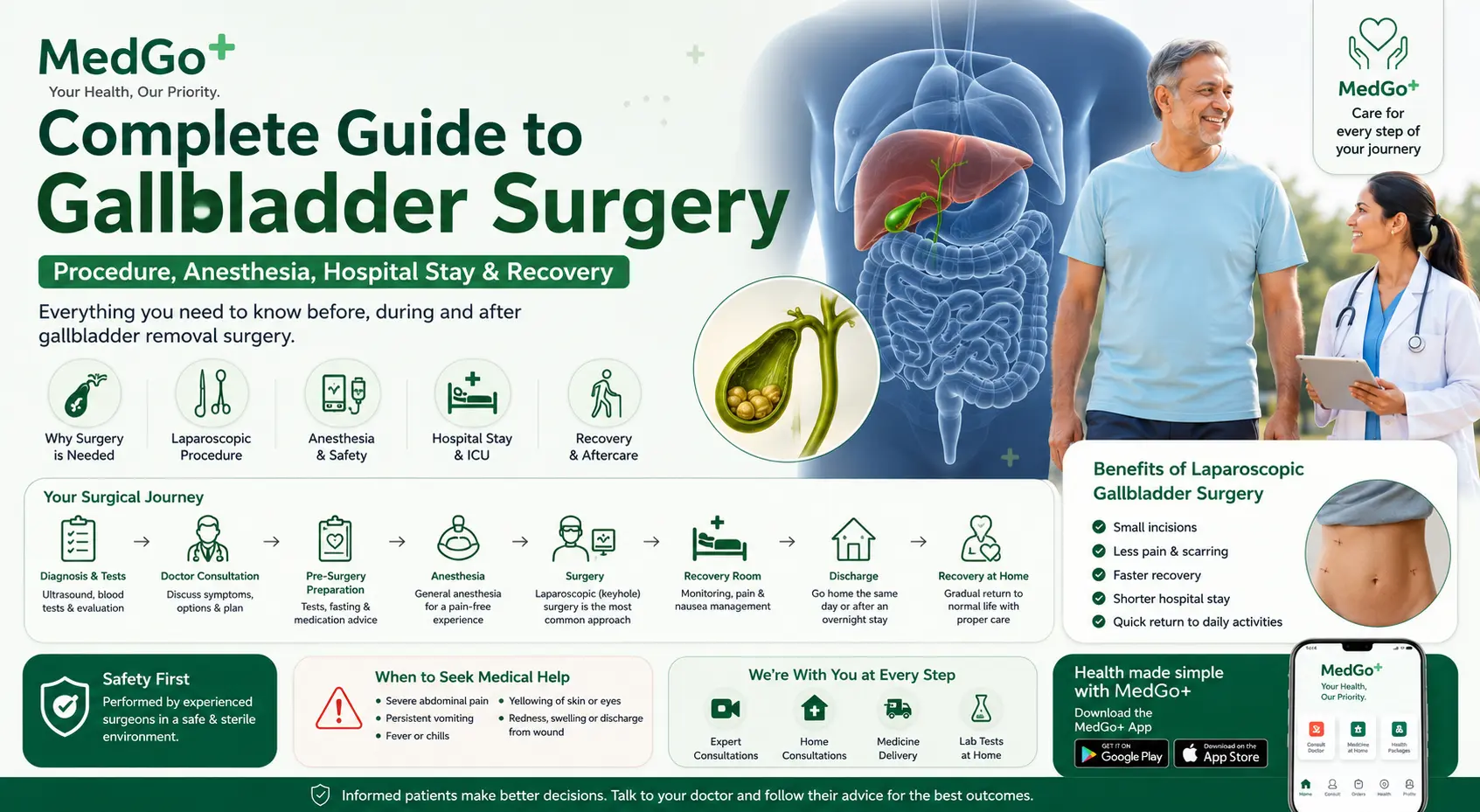
Gallbladder surgery, medically called a cholecystectomy, is an operation to remove the gallbladder. It is commonly performed when gallstones cause repeated pain, inflammation or other complications. For most patients who need surgery, laparoscopic or keyhole gallbladder removal is the usual approach.
If you or someone in your family has been advised to undergo gallbladder surgery, it is natural to have questions about anesthesia, the operation itself, hospital stay, ICU requirements, food, pain and recovery. This guide explains the complete surgical journey in simple language.
What Is the Gallbladder?
The gallbladder is a small organ located beneath the liver in the upper right side of the abdomen. It stores and concentrates bile, a digestive fluid produced by the liver.
When you eat, bile travels through the bile ducts into the intestine and helps with digestion, particularly the digestion of fats.
The gallbladder is not an essential organ. After it is removed, bile continues to flow from the liver through the bile ducts into the intestine, allowing most people to live normally without a gallbladder.
Why Is Gallbladder Surgery Needed?
Gallstones are one of the most common reasons for gallbladder removal. Many people have gallstones without symptoms and may not need treatment. Surgery is generally considered when gallstones cause symptoms or complications.
- Repeated gallbladder attacks or biliary colic.
- Pain related to gallstones.
- Inflammation of the gallbladder.
- Infection involving the gallbladder.
- Gallstones causing blockage of the bile ducts.
- Gallstone-related pancreatitis.
- Other gallbladder conditions where removal is recommended by the surgical team.
What Are Gallstones?
Gallstones are hard deposits that form inside the gallbladder. They can vary in size and number. Some people have one large stone, while others have many smaller stones.
Gallstones may remain silent and cause no symptoms. Problems can occur when a stone blocks the normal flow of bile.
Symptoms May Include
- Pain in the upper right or upper middle abdomen.
- Pain that may occur after meals.
- Nausea or vomiting.
- Indigestion or abdominal discomfort.
- Fever when inflammation or infection is present.
- Yellowing of the skin or eyes when a bile duct is blocked.
How Is a Gallbladder Problem Diagnosed?
Your doctor will usually combine your symptoms and physical examination with blood tests and imaging when necessary.
- Abdominal ultrasound.
- Blood tests to assess inflammation, infection or liver and bile duct function.
- CT scan when additional information is needed.
- HIDA scan in selected situations to evaluate gallbladder function.
- Other bile duct investigations when a duct stone is suspected.
The exact tests depend on your symptoms and what your doctor needs to determine the safest treatment.
Do All Gallstones Need Surgery?
No. Gallstones that do not cause symptoms may not require treatment. However, when gallstones cause repeated symptoms or complications, gallbladder removal is often the definitive treatment.
Your doctor or surgeon will consider your symptoms, imaging findings, medical history and risk of complications before recommending surgery.
What Is Gallbladder Removal Surgery Called?
Gallbladder removal surgery is called a cholecystectomy. There are two main approaches: laparoscopic cholecystectomy and open cholecystectomy.
Laparoscopic Cholecystectomy
This is the most common approach. The surgeon uses several small incisions, a camera and specialized instruments to remove the gallbladder.
Open Cholecystectomy
Open surgery uses a larger abdominal incision. It may be necessary when the gallbladder is severely inflamed or scarred, when anatomy cannot be safely identified through the keyhole approach, or when the surgeon determines that open surgery is the safest option.
What Happens Before Gallbladder Surgery?
Before surgery, your surgeon and anesthesia team assess your overall health and confirm that gallbladder removal is appropriate for you.
- Review of your symptoms and medical history.
- Physical examination.
- Review of ultrasound or other imaging.
- Blood tests when required.
- Medication review.
- Assessment of previous surgeries and anesthesia history.
- Discussion of surgical options and potential risks.
- Anesthesia assessment.
Medicines to Discuss Before Surgery
Tell your surgeon and anesthesiologist about every medicine, supplement and herbal product you take.
- Blood thinners.
- Aspirin or antiplatelet medicines.
- Diabetes medicines.
- Blood pressure medicines.
- Steroids.
- Weight-management medicines.
- Vitamins and herbal supplements.
Do not stop or change prescribed medication unless your healthcare team specifically tells you to do so.
Fasting Before Gallbladder Surgery
You will receive specific instructions about when to stop eating and drinking before surgery. Following these instructions is important for safe anesthesia.
The exact fasting requirements depend on your hospital and anesthesia plan, so follow the instructions provided by your surgical team rather than a generic online schedule.
What Type of Anesthesia Is Used?
Laparoscopic gallbladder removal is generally performed under general anesthesia. This means you are asleep and do not feel the operation.
Before Anesthesia
- The anesthesiologist reviews your medical history.
- Your medications and allergies are checked.
- Previous anesthesia problems are discussed.
- Your fasting status is confirmed.
- Your anesthesia plan is explained.
During Anesthesia
You are continuously monitored by the anesthesia team, including your breathing, oxygen level, heart rate and blood pressure.
After Anesthesia
After surgery, you are taken to a recovery area where the team monitors you while you become fully awake. Pain and nausea are treated as needed.
What Happens Inside the Operating Room?
Once you are safely under anesthesia, the surgical team begins the operation. For laparoscopic surgery, several small abdominal incisions are used.
Step 1: Small Incisions
The surgeon creates small openings in the abdomen through which the camera and surgical instruments can be inserted.
Step 2: Creating Working Space
Carbon dioxide gas is introduced into the abdomen to create enough space for the surgeon to see and safely operate.
Step 3: Camera and Instruments
A laparoscope provides a magnified view of the abdominal structures on a monitor. Specialized instruments are inserted through additional small ports.
Step 4: Identifying the Gallbladder and Bile Duct Anatomy
The surgeon carefully identifies the gallbladder and the structures connected to it. Safe identification of the anatomy is a critical part of the operation.
Step 5: Removing the Gallbladder
The gallbladder is carefully separated and removed through one of the small incisions.
Step 6: Checking the Surgical Area
The surgeon checks the operative area for bleeding or other concerns before completing the procedure.
Step 7: Closing the Incisions
The instruments are removed, the gas is released and the small incisions are closed with an appropriate method such as stitches, surgical adhesive or another closure technique.
How Long Does Gallbladder Surgery Take?
An uncomplicated gallbladder removal commonly takes around one hour, although the actual duration can vary depending on the anatomy, inflammation, previous surgery and findings during the operation.
The total time spent at the hospital will be longer because it includes admission, preparation, anesthesia, recovery and discharge assessment.
What If the Surgeon Cannot Safely Complete Keyhole Surgery?
In some cases, the surgeon may determine that continuing laparoscopically is not the safest option. The operation may then be converted to an open procedure.
This can happen when there is severe inflammation, extensive scar tissue, bleeding, difficult anatomy or another situation in which the surgeon believes open surgery provides a safer approach.
Conversion to open surgery is a safety decision and does not necessarily mean that a complication occurred.
Can Gallstones Be Removed Without Removing the Gallbladder?
In selected situations, a stone that has moved into the common bile duct may be removed using a procedure called ERCP. ERCP is different from gallbladder removal and does not remove the gallbladder itself.
If the gallbladder continues to contain problematic stones and causes symptoms, your surgeon may still recommend cholecystectomy.
What Happens Immediately After Surgery?
After the operation, you are transferred to a recovery area. Nurses and the anesthesia team monitor you while you wake from anesthesia.
- Blood pressure and heart rate are monitored.
- Oxygen levels and breathing are monitored.
- Pain is assessed and treated.
- Nausea and vomiting are treated if needed.
- The surgical wounds are checked.
- Your ability to drink and move safely is assessed.
Do You Need ICU After Gallbladder Surgery?
ICU admission is not routinely required after an uncomplicated gallbladder removal. Most patients recover in the postoperative recovery area and then go to a day-surgery area or hospital ward before discharge.
ICU or higher-level monitoring may be necessary when a patient has serious medical problems, significant complications, severe infection, major bleeding, breathing or heart problems, or requires intensive postoperative support.
The need for ICU care is therefore determined by the patient’s medical condition and the complexity of the surgery rather than by gallbladder surgery alone.
Can You Go Home the Same Day?
Many patients undergoing uncomplicated laparoscopic gallbladder removal can go home on the same day. Some patients stay overnight depending on their recovery, medical condition, timing of surgery or the surgeon’s recommendation.
Before Discharge, the Team May Check:
- Vital signs are stable.
- You are sufficiently awake after anesthesia.
- Pain is reasonably controlled.
- Nausea and vomiting are controlled.
- You can drink fluids.
- You can move safely.
- There are no concerning surgical findings.
- You have appropriate instructions for home care.
How Many Days Will You Stay in the Hospital?
For an uncomplicated laparoscopic procedure, many patients are discharged the same day or after an overnight stay.
Open surgery generally requires a longer hospital stay and recovery. Emergency surgery, severe inflammation, infection, bile duct problems or other complications can also increase the length of hospitalization.
There is no single hospital-stay duration that applies to every patient.
What Is Normal During the First Few Days?
Some discomfort is expected after gallbladder surgery. Symptoms usually improve gradually as the body heals.
- Pain or soreness around the incision sites.
- Mild abdominal discomfort.
- Temporary tiredness.
- Mild nausea.
- Reduced appetite.
- Bloating.
- Shoulder discomfort after laparoscopic surgery.
Shoulder discomfort after laparoscopic surgery can occur because of the gas used to create working space in the abdomen and usually improves as the gas is absorbed.
Eating After Gallbladder Surgery
Many patients can return to a normal healthy diet after gallbladder removal. During the first few days, smaller meals may be easier to tolerate if appetite is reduced or digestion feels unsettled.
- Start with fluids when your healthcare team allows.
- Choose smaller meals if you feel full quickly.
- Gradually return to your usual balanced diet.
- Include protein-rich foods.
- Eat fruits and vegetables as tolerated.
- Stay adequately hydrated unless your doctor has advised fluid restriction.
Some people temporarily notice softer or more frequent stools after gallbladder removal. These changes often improve, but persistent or troublesome symptoms should be discussed with a healthcare professional.
Pain Management After Gallbladder Surgery
Pain around the incision sites and abdomen is common after surgery. Your healthcare team may recommend pain medicines based on your medical history and the type of operation.
- Take prescribed medicines according to instructions.
- Use gentle movement rather than remaining in bed continuously.
- Support comfortable positions when resting.
- Ask your healthcare team if pain is not adequately controlled.
Severe or worsening pain should not simply be assumed to be part of normal recovery.
Walking After Gallbladder Surgery
Gentle walking is generally encouraged after surgery once you are safely recovered from anesthesia. Movement can help you gradually return to normal activity.
- Start with short walks.
- Increase activity gradually.
- Rest when tired.
- Avoid strenuous activity initially.
- Follow your surgeon’s specific instructions.
When Can You Return to Work?
Many people can return to work within approximately one to two weeks after uncomplicated gallbladder removal, but the appropriate timing depends on the type of surgery and the demands of the job.
Desk-Based Work
You may be able to return sooner if you feel comfortable, can sit and move normally and are no longer significantly affected by pain or medication.
Heavy Physical Work
Jobs involving heavy lifting, prolonged standing or strenuous physical activity may require additional recovery time.
When Can You Drive After Gallbladder Surgery?
Do not drive until you are physically capable of controlling the vehicle safely and can perform an emergency stop without significant pain or discomfort.
- You should be fully recovered from anesthesia.
- You should not be impaired by sedating pain medicines.
- You should be able to sit comfortably.
- You should be able to react quickly.
- Check your insurance requirements before driving.
When Can You Exercise After Gallbladder Surgery?
Light activity can usually be increased gradually after surgery. Strenuous exercise and heavy lifting should wait until your surgeon considers them appropriate.
- Begin with gentle walking.
- Increase activity gradually.
- Avoid activities that cause significant pain.
- Ask your surgeon when heavier exercise is appropriate.
- Return to gym and abdominal exercises progressively.
Gallbladder Surgery Wound Care
Follow the wound-care instructions given by your hospital or surgeon. Laparoscopic wounds are usually small and may be closed with dissolvable stitches, surgical glue, tape or another closure method.
- Keep the wound clean according to your instructions.
- Follow instructions about dressings and showering.
- Do not pick at stitches, glue or surgical tape.
- Watch for increasing redness or swelling.
- Report pus, significant bleeding or unusual discharge.
Possible Complications of Gallbladder Surgery
Most patients recover without major complications, but every surgical procedure carries risks.
- Bleeding.
- Wound infection.
- Blood clots.
- Injury to nearby organs.
- Bile leakage.
- Bile duct injury.
- Persistent abdominal symptoms.
- Problems related to anesthesia.
Serious complications are uncommon, but bile duct injury is an important complication that surgeons take specific precautions to prevent.
Warning Signs After Gallbladder Surgery
Contact your healthcare team if your recovery is not progressing normally or you develop concerning symptoms.
- Severe or worsening abdominal pain.
- Increasing abdominal swelling.
- Persistent vomiting or inability to keep fluids down.
- Fever or chills.
- Increasing redness around the wound.
- Pus or significant discharge from the wound.
- Significant bleeding.
- Yellowing of the skin or eyes.
- Breathing difficulty.
- Pain that is not controlled by the prescribed treatment.
When Is Gallbladder Surgery an Emergency?
Gallbladder problems can sometimes cause serious complications, including severe inflammation, infection, bile duct obstruction or pancreatitis.
Severe abdominal pain, persistent vomiting, fever, jaundice or rapidly worsening symptoms require prompt medical assessment.
If you have severe symptoms or feel seriously unwell, do not wait for a routine appointment.
Can You Live Normally Without a Gallbladder?
Yes. The gallbladder is not an essential organ. After it is removed, the liver continues to produce bile and bile flows directly into the intestine.
Most people can return to a normal diet and normal daily life after recovering from gallbladder surgery.
Some people temporarily experience changes in bowel habits, such as softer or more frequent stools. Persistent symptoms should be discussed with your doctor.
Laparoscopic vs Open Gallbladder Surgery
Laparoscopic Surgery
- Several small incisions.
- Usually performed under general anesthesia.
- Most common surgical approach.
- Often allows same-day discharge.
- Generally faster recovery than open surgery.
Open Surgery
- One larger abdominal incision.
- Longer recovery period.
- May require several days in hospital.
- Used when keyhole surgery is not appropriate or cannot be safely completed.
Typical Gallbladder Surgery Patient Journey
A simplified journey for an uncomplicated planned laparoscopic procedure may look like this:
- Gallbladder symptoms or diagnosis.
- Doctor or surgeon consultation.
- Ultrasound and other tests when required.
- Decision for surgery.
- Preoperative assessment.
- Anesthesia assessment.
- Hospital admission.
- General anesthesia.
- Laparoscopic gallbladder removal.
- Recovery room monitoring.
- Pain and nausea management.
- Oral fluids and food when appropriate.
- Gentle walking.
- Discharge when recovery criteria are met.
- Home recovery and gradual return to normal activities.
How Can You Prepare Your Home Before Surgery?
- Arrange transportation home.
- Arrange for a responsible adult to stay with you initially if advised.
- Prepare easy-to-digest and nutritious meals.
- Keep prescribed medicines ready.
- Keep frequently used items within easy reach.
- Prepare a comfortable place to rest.
- Arrange help with heavy household tasks.
How MedGoPlus Can Help
Gallbladder surgery can involve questions before and after the operation about diagnosis, preparation, food, pain, wound care, activity and follow-up. MedGoPlus can help patients connect with qualified healthcare professionals through available consultation services for personalized medical guidance.
If you are unsure whether a symptom is part of normal recovery or requires medical attention, speak with your surgeon or healthcare professional rather than relying only on general online information.
Important Note
Gallbladder surgery and recovery can vary significantly depending on the patient, the severity of gallbladder disease, whether surgery is planned or urgent, the surgical approach and any complications. Your surgeon and anesthesia team should provide the final individualized instructions.
Medical Disclaimer
This article is intended for general health education and does not replace an examination, diagnosis or individualized medical advice. If you have severe abdominal pain, persistent vomiting, jaundice, fever, breathing difficulty or other serious symptoms, seek appropriate medical care promptly.
Take Control of Your Health with MedGoPlus
Book doctor consultations, manage your health needs, and access convenient healthcare services anytime, anywhere with the MedGoPlus App.
Scan to download
Download the MedGoPlus App