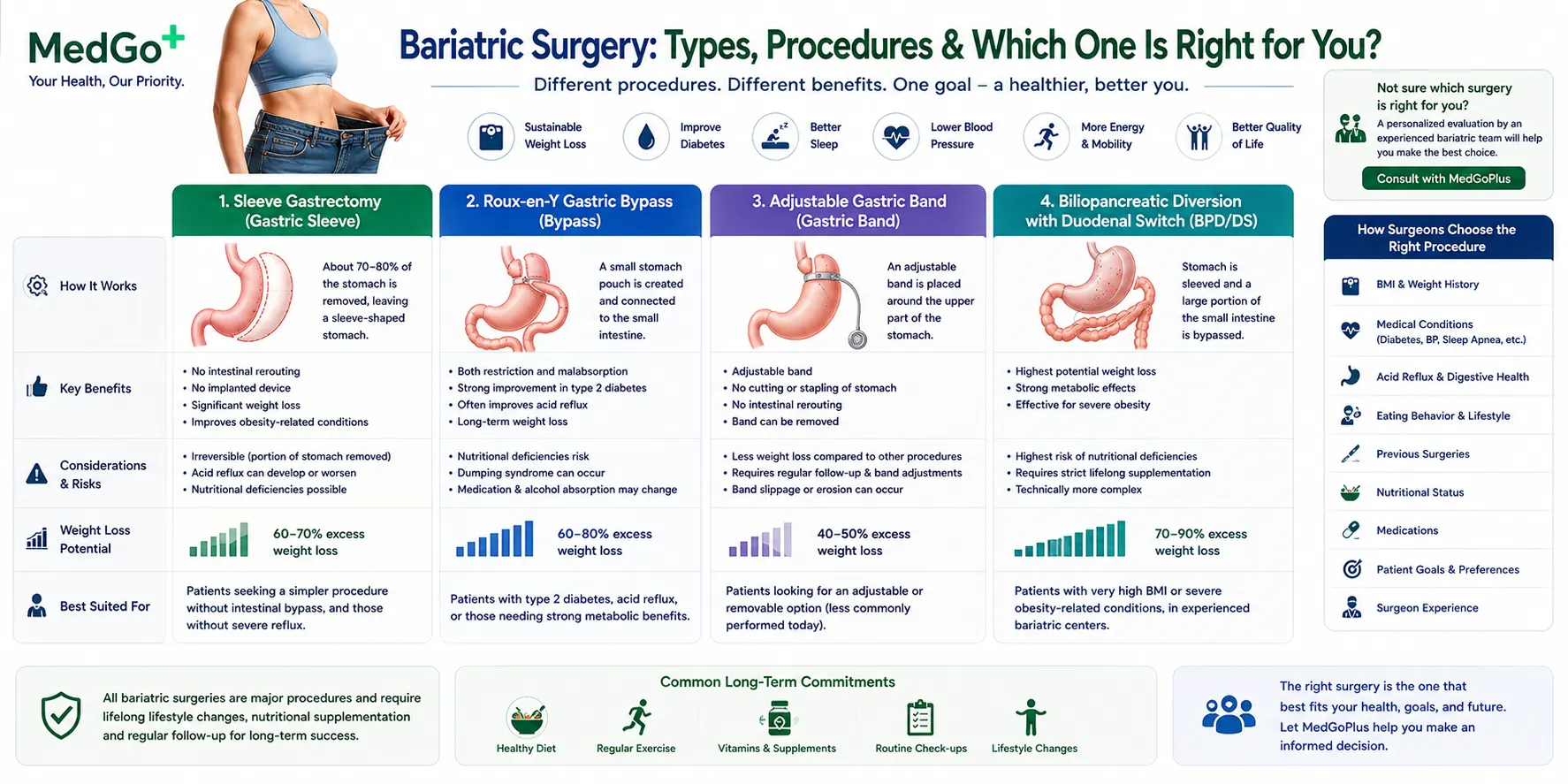
There is no single bariatric operation that is best for every patient. Sleeve gastrectomy, Roux-en-Y gastric bypass, adjustable gastric banding and biliopancreatic diversion with duodenal switch work in different ways and have different benefits, risks and long-term nutritional requirements.
As a bariatric surgeon, I would not choose an operation based on weight alone. The decision should consider your BMI, diabetes status, acid reflux, eating pattern, previous abdominal operations, medications, nutritional health, weight-loss goals, surgical risk and ability to participate in lifelong follow-up.
The right question is not simply, “Which surgery causes the most weight loss?” The better question is, “Which procedure provides the best balance of expected health benefit, safety, nutritional requirements and long-term suitability for this patient?”
Bariatric Surgery Types at a Glance
- Sleeve gastrectomy reduces the size of the stomach without rerouting the intestines.
- Roux-en-Y gastric bypass creates a small stomach pouch and reroutes part of the small intestine.
- Adjustable gastric band places an adjustable device around the upper stomach.
- Biliopancreatic diversion with duodenal switch combines stomach reduction with substantial intestinal bypass.
- Sleeve gastrectomy and gastric bypass are among the most commonly performed modern bariatric operations.
- Gastric banding is performed much less frequently in many centers.
- Duodenal switch is generally reserved for selected patients because of its greater nutritional demands.
- The final procedure should be selected after individualized assessment by a qualified bariatric team.
How Do Bariatric Operations Actually Work?
Bariatric procedures work through one or more mechanisms. Some reduce the amount of food the stomach can comfortably hold. Others change the route food takes through the intestine and therefore alter nutrient absorption and metabolic signaling.
Modern metabolic surgery can also affect hunger, fullness, gut hormones and glucose metabolism. This is one reason bariatric surgery can improve metabolic diseases such as type 2 diabetes in addition to producing weight loss.
- Restriction: reducing stomach capacity.
- Hormonal effects: changing signals involved in hunger and satiety.
- Metabolic effects: improving glucose and insulin regulation.
- Malabsorption: reducing absorption of some calories and nutrients in procedures that bypass part of the intestine.
1. Sleeve Gastrectomy
Sleeve gastrectomy, commonly called gastric sleeve surgery, removes a large portion of the stomach and leaves a narrow, tube-shaped stomach.
Because the stomach is substantially smaller, patients generally feel full after eating much smaller portions. Removing part of the stomach also produces metabolic and hormonal changes that contribute to the procedure’s effects.
How Sleeve Gastrectomy Is Performed
- The operation is usually performed laparoscopically through several small abdominal incisions.
- The surgeon mobilizes the stomach.
- A large portion of the stomach is removed.
- The remaining stomach is shaped into a narrow sleeve.
- The staple line is carefully inspected before the operation is completed.
Advantages of Sleeve Gastrectomy
- No intestinal bypass.
- No implanted device.
- Technically simpler than procedures involving intestinal rerouting.
- Produces substantial weight loss for many patients.
- Can improve several obesity-related health conditions.
- Usually performed using minimally invasive surgery.
Limitations and Risks
- The removed portion of the stomach cannot be restored.
- Acid reflux may develop or worsen in some patients.
- Nutritional deficiencies can still occur.
- Staple-line bleeding or leakage can occur as with other major gastric operations.
- Long-term lifestyle and nutritional follow-up remain necessary.
2. Roux-en-Y Gastric Bypass
Roux-en-Y gastric bypass is a combined restrictive and metabolic operation. The surgeon creates a small stomach pouch and connects it to a lower portion of the small intestine.
How Gastric Bypass Is Performed
- The upper portion of the stomach is divided to create a small pouch.
- The small intestine is divided.
- A lower portion of the small intestine is connected to the new stomach pouch.
- The bypassed intestinal segment is reconnected farther downstream so digestive juices can mix with food.
- Food therefore bypasses most of the stomach and the first portion of the small intestine.
Advantages of Gastric Bypass
- Produces substantial and durable weight loss in many patients.
- Can produce strong metabolic effects.
- Often produces significant improvement in type 2 diabetes.
- Can improve acid reflux in many patients.
- Does not leave a permanent implanted device.
Limitations and Risks
- The anatomy is permanently changed.
- Vitamin and mineral deficiencies require lifelong attention.
- Dumping syndrome can occur.
- Ulcers and other gastrointestinal complications can occur.
- Medication absorption may change.
- Alcohol absorption and effects may be altered.
- The operation is technically more complex than sleeve gastrectomy.
3. Adjustable Gastric Band
Adjustable gastric banding places an inflatable band around the upper portion of the stomach. The band creates a smaller upper pouch and can be adjusted through a port placed under the skin.
Potential Advantages
- Does not require removal of part of the stomach.
- Does not reroute the intestine.
- Can be adjusted.
- Can be removed if medically necessary.
- Generally has fewer immediate nutritional absorption effects than bypass procedures.
Limitations
- Usually produces less weight loss than sleeve or bypass.
- Requires repeated follow-up and band adjustments.
- Some patients develop food intolerance or swallowing problems.
- Band slippage or erosion can occur.
- Some patients eventually require band removal or revision surgery.
Because of these limitations, adjustable gastric banding is now performed less frequently in many centers.
4. Biliopancreatic Diversion With Duodenal Switch
Biliopancreatic diversion with duodenal switch, often abbreviated BPD/DS, combines a sleeve-type stomach operation with substantial intestinal bypass.
Food travels through a shortened portion of the small intestine, while digestive juices follow another pathway and meet the food farther downstream. This produces powerful metabolic effects and substantially reduces nutrient and calorie absorption.
Potential Advantages
- Among the most powerful bariatric procedures for weight loss.
- Strong metabolic effects.
- Can be particularly effective in selected patients with severe obesity.
- Can provide substantial improvement in metabolic disease.
Important Limitations
- Greater risk of nutritional deficiencies.
- Requires strict lifelong supplementation and laboratory monitoring.
- Protein deficiency can occur if nutritional intake is inadequate.
- The procedure is technically complex.
- Long-term follow-up is particularly important.
Because of its complexity and nutritional demands, BPD/DS is generally considered for carefully selected patients in experienced bariatric centers.
Sleeve vs Gastric Bypass vs Band vs Duodenal Switch
- Sleeve: stomach reduction without intestinal bypass.
- Bypass: small stomach pouch plus intestinal rerouting.
- Band: adjustable device around the upper stomach.
- Duodenal switch: sleeve-type stomach reduction plus substantial intestinal bypass.
- Sleeve: important concern is reflux in susceptible patients.
- Bypass: important concerns include nutritional deficiencies and dumping syndrome.
- Band: important concerns include lower weight loss and device-related complications.
- Duodenal switch: important concern is significant nutritional monitoring and supplementation.
Which Bariatric Surgery Produces the Most Weight Loss?
In general, procedures involving greater intestinal bypass can produce greater average weight loss, with duodenal switch often producing the greatest weight loss among the established operations.
However, choosing surgery based only on maximum weight loss is not appropriate. A procedure that produces more weight loss may also have greater nutritional demands and a different complication profile.
The appropriate goal is sufficient and sustainable weight loss with improvement in obesity-related disease while keeping long-term risks manageable.
Which Bariatric Surgery Is Best for Diabetes?
Gastric bypass has strong metabolic effects and can produce major improvement in type 2 diabetes. Sleeve gastrectomy can also significantly improve diabetes.
The choice depends on the severity and duration of diabetes, medications being used, insulin requirements, weight, reflux status, nutritional considerations and the patient’s overall health.
Patients with type 2 diabetes should have their diabetes medications closely reviewed after surgery because glucose levels can improve rapidly.
Which Bariatric Surgery Is Better if I Have Acid Reflux?
Acid reflux is an important factor when choosing between bariatric procedures.
Sleeve gastrectomy can cause or worsen reflux in some patients. Gastric bypass is often favored for patients with significant reflux because it can provide substantial reflux improvement.
The severity of reflux, presence of a hiatal hernia and findings from any required upper gastrointestinal evaluation should be considered before selecting the operation.
Which Surgery Is Better if I Have Severe Obesity?
For patients with severe obesity, procedures with greater expected weight loss may be considered. Depending on the individual case, this can include gastric bypass or a more powerful procedure such as duodenal switch.
However, higher weight-loss potential also needs to be balanced against operative complexity, nutritional risks and the patient’s ability to follow lifelong supplementation and follow-up.
What If I Have a History of Abdominal Surgery?
Previous abdominal operations do not automatically rule out bariatric surgery, but they can make the operation technically more difficult because of scar tissue and altered anatomy.
Your surgeon will review previous operative reports when available and may modify the surgical approach based on your anatomy.
How Does Eating Behavior Affect the Choice of Surgery?
Eating patterns are one of several factors considered during bariatric evaluation.
- Frequent grazing.
- Large meal portions.
- High-calorie liquids.
- Sweet foods and drinks.
- Night eating.
- Emotional or binge eating.
- Difficulty recognizing fullness.
A bariatric dietitian or behavioral-health professional can help identify eating patterns that may influence procedure selection and long-term success.
Does Age Affect Which Bariatric Surgery I Should Have?
Age is considered together with overall health rather than used as an isolated reason to choose or reject a procedure.
Older patients may require particularly careful assessment of heart and lung function, medications, mobility, nutritional status and ability to recover from surgery.
Does Sleep Apnea Affect Bariatric Surgery Choice?
Obstructive sleep apnea is common among people with obesity and is important for anesthesia and postoperative planning.
Sleep apnea does not automatically determine which bariatric operation you should have, but it can affect preoperative evaluation, anesthesia planning and postoperative monitoring.
How Do Surgeons Decide Which Procedure Is Right for You?
A good bariatric surgeon does not choose the procedure from BMI alone. The decision is usually made after a structured multidisciplinary evaluation.
1. BMI and Weight History
Your current BMI, highest weight, previous weight trajectory and previous attempts at weight loss are reviewed.
2. Medical Conditions
Diabetes, hypertension, sleep apnea, fatty liver disease, reflux and other obesity-related conditions can influence the choice.
3. Digestive Symptoms
Reflux, swallowing problems, ulcers or other gastrointestinal conditions may make one procedure more suitable than another.
4. Medications
Current medications, especially diabetes medicines and drugs affected by gastrointestinal absorption, are reviewed.
5. Nutritional Status
Existing deficiencies can influence preparation and the long-term nutritional plan.
6. Previous Operations
Previous abdominal or gastrointestinal surgery may influence the technical approach.
7. Patient Preferences and Expectations
The patient should understand the benefits, limitations, dietary requirements and lifelong commitments associated with each procedure.
8. Surgeon and Center Experience
The expertise and experience of the bariatric surgical team and center also matter when selecting and performing a procedure.
A Simple Decision Framework
- Significant reflux → gastric bypass may be favored in appropriate patients.
- Need for substantial weight loss → sleeve, bypass or selected more powerful procedures may be considered depending on the individual case.
- Type 2 diabetes → procedures with strong metabolic effects, particularly gastric bypass, may be considered.
- Very high BMI → procedures with greater weight-loss potential may be discussed.
- Concern about nutritional complexity → procedures with less intestinal bypass may be easier to manage nutritionally.
- Desire for an adjustable or removable procedure → gastric band may be discussed, although it is used less frequently today.
- Need for maximum metabolic effect → duodenal switch may be considered in carefully selected patients.
These are general principles, not a personal recommendation. A surgeon must consider your complete medical profile before recommending an operation.
Is Bariatric Surgery Reversible?
Reversibility depends on the procedure.
- Sleeve gastrectomy is generally considered permanent because part of the stomach is removed.
- Gastric bypass is difficult to reverse and reversal is generally reserved for specific medical circumstances.
- Adjustable gastric banding can be removed.
- Duodenal switch involves permanent anatomical changes and is not considered a simple reversible operation.
Which Bariatric Surgery Has the Shortest Recovery?
Recovery varies between patients and procedures. Many bariatric operations are performed laparoscopically, which generally means smaller incisions and may support faster recovery compared with open surgery.
However, the shortest operation is not automatically the best operation. Long-term health outcomes and suitability are more important than saving a small amount of operating or recovery time.
Which Procedure Has the Lowest Nutritional Risk?
Procedures that do not bypass significant portions of the intestine generally have fewer malabsorption-related nutritional problems than procedures with substantial intestinal bypass.
Adjustable gastric banding has less effect on nutrient absorption, while sleeve gastrectomy generally has less malabsorption than gastric bypass or duodenal switch.
This does not mean nutritional monitoring is unnecessary after sleeve surgery. Long-term supplementation and laboratory monitoring remain important.
Which Surgery Has the Highest Risk of Nutritional Deficiency?
Procedures with greater intestinal bypass generally carry greater nutritional demands. Duodenal switch has particularly high requirements for lifelong vitamin, mineral and protein monitoring.
Gastric bypass also requires lifelong nutritional supplementation and monitoring.
Your ability and willingness to follow the nutritional program should therefore be part of the surgical decision.
Can Bariatric Surgery Be Changed Later?
Revision or conversion surgery is possible in selected patients, but it is not something that should be assumed when choosing the first operation.
Revision may be considered for complications, inadequate weight loss, significant weight regain or other medical reasons. Revisional surgery is usually more complex than primary surgery.
What Happens Before the Final Procedure Is Selected?
- Detailed medical history.
- Physical examination.
- Weight and BMI assessment.
- Blood investigations.
- Diabetes assessment.
- Nutritional evaluation.
- Medication review.
- Dietitian consultation.
- Behavioral or psychological assessment when appropriate.
- Evaluation for sleep apnea when indicated.
- Evaluation of reflux or other gastrointestinal symptoms.
- Discussion of surgical risks and expected benefits.
Questions to Ask Your Bariatric Surgeon
- Which procedure do you recommend for me?
- Why is this procedure better for my medical condition?
- Would sleeve or bypass be more appropriate in my case?
- Do I have significant acid reflux that affects the choice?
- How will my diabetes be affected?
- How much weight loss is realistically expected?
- What are the short-term risks?
- What are the long-term risks?
- How many vitamins and supplements will I need?
- How often will I need blood tests?
- How long will I need to stay in the hospital?
- When can I return to work and exercise?
- What happens if I regain weight?
- Will I need lifelong follow-up?
- How experienced is the surgical team with this procedure?
The Most Important Point: There Is No “Best” Bariatric Surgery for Everyone
Every bariatric procedure has a different balance of weight-loss potential, metabolic benefit, nutritional risk, reflux effects, technical complexity and long-term follow-up requirements.
A procedure that is excellent for one patient may be a poor choice for another. For example, a patient with significant reflux may have a different recommendation from a patient whose primary concern is severe metabolic disease and very high BMI.
The safest approach is to have a detailed consultation with an experienced bariatric surgeon and multidisciplinary team before making a decision.
How MedGoPlus Can Help
Choosing a bariatric procedure is an important medical decision. MedGoPlus can help patients connect with qualified healthcare professionals for consultation, evaluation and guidance regarding bariatric surgery and long-term weight management through available consultation services.
A qualified bariatric team can review your health history, BMI, medications, diabetes status, reflux symptoms, nutritional needs and weight-loss goals before recommending the most appropriate procedure.
Medical Disclaimer
This article is for general health education and does not provide an individualized surgical recommendation. Bariatric surgery is major surgery. Procedure selection, eligibility, risks, expected weight loss, anesthesia planning and postoperative care vary between patients. Always discuss your options with a qualified bariatric surgeon and healthcare team.
Take Control of Your Health with MedGoPlus
Book doctor consultations, manage your health needs, and access convenient healthcare services anytime, anywhere with the MedGoPlus App.
Scan to download
Download the MedGoPlus App