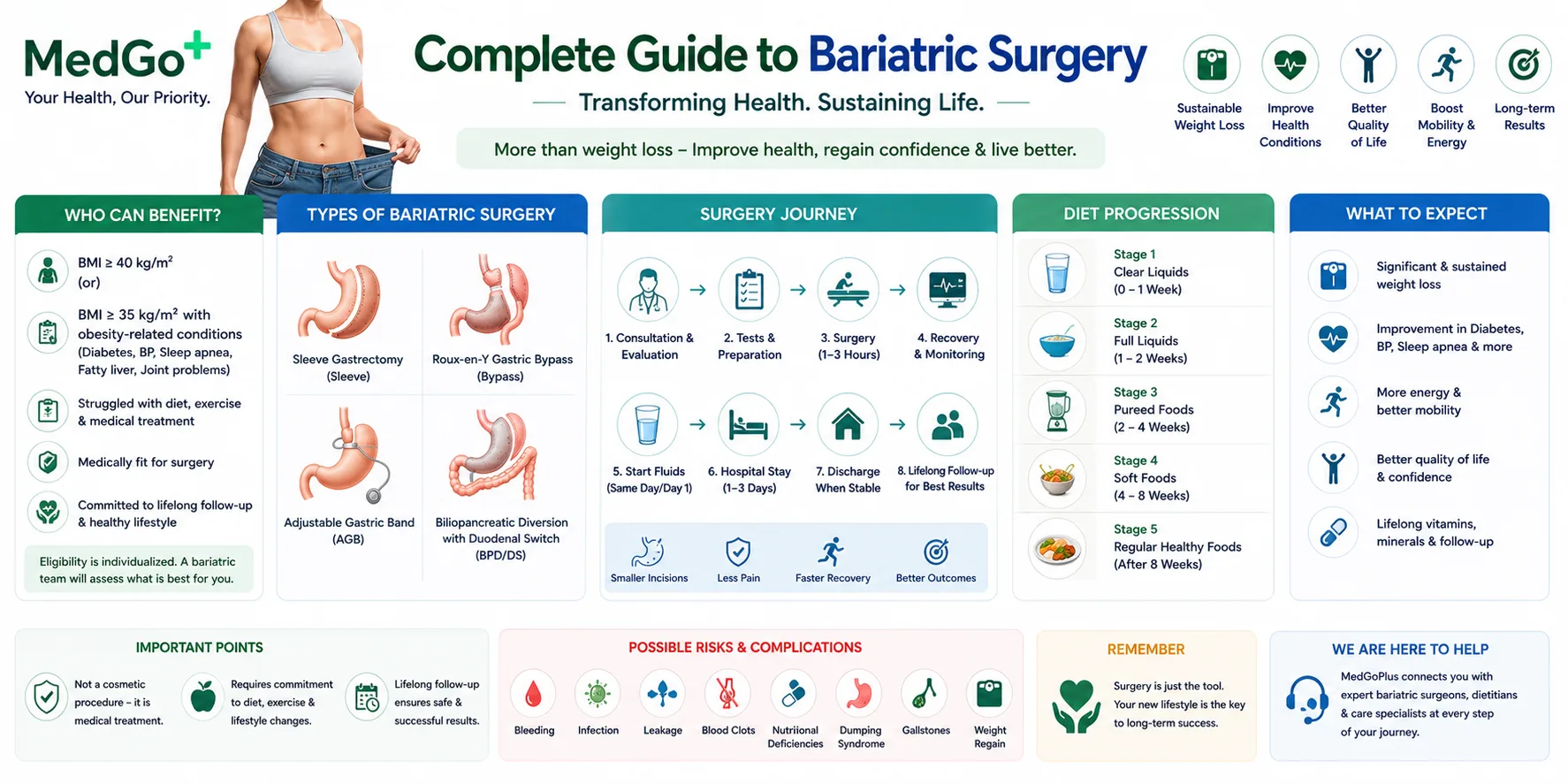
Bariatric surgery, also called metabolic and bariatric surgery, is a group of operations that change the digestive system to help treat obesity and related metabolic disease. Depending on the procedure, surgery may reduce stomach capacity, alter intestinal food flow, or both.
Bariatric surgery is not simply a cosmetic procedure. It is considered a medical treatment for appropriately selected patients with obesity, particularly when excess weight is associated with conditions such as type 2 diabetes, high blood pressure, sleep apnea, fatty liver disease or other obesity-related health problems.
The decision to undergo surgery should be individualized. A bariatric surgeon usually considers your BMI, medical conditions, previous weight-loss attempts, medications, eating patterns, previous abdominal operations, nutritional status, psychological readiness and ability to participate in long-term follow-up.
Bariatric Surgery at a Glance
- Bariatric surgery is also known as metabolic and bariatric surgery.
- It changes the digestive system to support substantial and sustained weight loss.
- It can improve or sometimes put obesity-related diseases into remission.
- The most commonly performed operations include sleeve gastrectomy and gastric bypass.
- Most procedures are performed laparoscopically or robotically through small abdominal incisions.
- General anesthesia is normally required.
- An ICU stay is not routinely required for an uncomplicated case.
- Hospital stay depends on the operation, recovery and individual medical risk.
- The postoperative diet progresses gradually from liquids to soft foods and eventually regular textures.
- Lifelong nutritional monitoring and prescribed vitamin and mineral supplementation are important.
- Long-term success depends on surgery plus nutrition, physical activity, behavioral changes and regular medical follow-up.
What Is Bariatric Surgery?
Bariatric surgery consists of operations that modify the stomach, small intestine or both. These changes can reduce the amount of food that can be eaten comfortably, alter hunger and satiety signals, and in some procedures change nutrient absorption.
Modern bariatric procedures are also considered metabolic operations because their effects extend beyond simple restriction of food intake. Changes in gut hormones, appetite signaling and glucose metabolism can contribute to improvements in conditions such as type 2 diabetes.
The operation is therefore only one part of treatment. Long-term follow-up is essential to monitor weight, nutrition, medications, metabolic health and possible complications.
Who May Benefit From Bariatric Surgery?
Bariatric surgery may be appropriate for selected adults with obesity when the expected health benefits outweigh the surgical and long-term risks.
Eligibility is not determined by BMI alone. A bariatric team considers the complete clinical picture, including obesity-related diseases and previous attempts at nonsurgical treatment.
- Body mass index and body composition.
- Type 2 diabetes.
- High blood pressure.
- Obstructive sleep apnea.
- Obesity-related fatty liver disease.
- Joint problems related to excess weight.
- Cardiovascular risk.
- Difficulty achieving durable weight loss with nonsurgical treatment.
- Overall medical fitness for surgery.
- Ability to follow postoperative nutrition and follow-up requirements.
What BMI Is Required for Bariatric Surgery?
BMI is one important measure used when considering bariatric surgery, but it should not be treated as the only criterion.
Traditional criteria commonly considered surgery for adults with BMI of 40 kg/m² or higher, or BMI of 35 kg/m² or higher with a serious obesity-related health condition. More recent international guidelines have expanded consideration of metabolic surgery for selected patients with lower BMI, particularly those with significant metabolic disease.
The 2022 ASMBS/IFSO guidelines recommend metabolic and bariatric surgery for individuals with BMI 35 kg/m² or higher regardless of comorbidity status, recommend it for patients with type 2 diabetes and BMI 30 kg/m² or higher, and recommend considering surgery in selected individuals with BMI 30–34.9 kg/m² who do not achieve substantial or durable improvement through nonsurgical treatment.
BMI thresholds also require clinical interpretation in Asian populations because obesity-related metabolic risk can occur at lower BMI values. Your bariatric team should therefore assess your individual risk rather than relying on a single number.
Is Bariatric Surgery Suitable for Everyone With Obesity?
No. Bariatric surgery requires careful patient selection. A person may have a BMI that falls within a commonly considered range but still require further evaluation before surgery.
- Medical conditions may need to be stabilized first.
- Certain nutritional deficiencies may need correction.
- Smoking or nicotine use may need to be stopped.
- Eating disorders may require treatment.
- Psychological or behavioral concerns may need assessment.
- Medication plans may need adjustment.
- The patient must understand the permanent lifestyle changes required after surgery.
What Are the Main Types of Bariatric Surgery?
Several bariatric procedures are available. The most appropriate operation depends on your weight, medical conditions, eating patterns, reflux symptoms, diabetes status, previous operations and the risk-benefit profile of each procedure.
- Sleeve gastrectomy.
- Roux-en-Y gastric bypass.
- Adjustable gastric banding.
- Biliopancreatic diversion with duodenal switch.
- Selected newer or modified procedures such as SADI-S may also be offered in specialized centers.
1. Sleeve Gastrectomy
Sleeve gastrectomy, commonly called gastric sleeve surgery, removes a large portion of the stomach and leaves a narrow, tube-shaped stomach.
The smaller stomach limits the amount of food that can be consumed at one time and also produces metabolic and hormonal effects that can influence appetite and glucose metabolism.
- Most of the stomach is permanently removed.
- The intestines are not rerouted.
- There is no implanted device.
- The operation is usually performed laparoscopically.
- It is generally not reversible because part of the stomach has been removed.
- Acid reflux can occur or worsen in some patients.
Sleeve gastrectomy is currently one of the most commonly performed bariatric procedures.
2. Roux-en-Y Gastric Bypass
Roux-en-Y gastric bypass creates a small stomach pouch and connects it to a lower portion of the small intestine. Food therefore bypasses most of the stomach and the first portion of the small intestine.
The procedure produces both restrictive and metabolic effects and can be particularly effective for weight loss and type 2 diabetes.
- Creates a small stomach pouch.
- Reroutes the small intestine.
- Changes food intake and nutrient absorption.
- Produces significant metabolic effects.
- Requires lifelong nutritional monitoring.
- Can cause dumping syndrome in some patients.
- Can influence medication and alcohol absorption.
3. Adjustable Gastric Band
An adjustable gastric band places an inflatable band around the upper part of the stomach to create a small pouch.
The band can be adjusted through a port under the skin. However, adjustable gastric banding is now performed less commonly than sleeve gastrectomy and gastric bypass in many settings because of lower average weight loss and the possibility of later device-related problems or removal.
4. Biliopancreatic Diversion With Duodenal Switch
Biliopancreatic diversion with duodenal switch combines a sleeve-type stomach reduction with substantial intestinal bypass.
It can produce very substantial weight loss and metabolic improvement, but it also carries a greater risk of nutritional deficiencies and requires particularly careful long-term nutritional monitoring.
Because of its complexity, it is generally reserved for selected patients and performed in experienced bariatric centers.
Sleeve vs Gastric Bypass: Which Is Better?
There is no single operation that is best for every patient.
- Sleeve surgery is simpler anatomically because the intestines are not rerouted.
- Gastric bypass may provide stronger metabolic effects for some patients.
- Gastric bypass may be particularly useful in selected patients with type 2 diabetes.
- Sleeve surgery may cause or worsen reflux in some patients.
- Gastric bypass can improve reflux in many patients but carries specific long-term nutritional and gastrointestinal risks.
- The final decision should be individualized by the bariatric team.
How Is Bariatric Surgery Performed?
Most bariatric operations are performed using minimally invasive surgery. The surgeon makes several small abdominal incisions and introduces a camera and specialized instruments.
The abdomen is carefully inspected, the planned stomach or intestinal procedure is performed, and the surgeon checks the operative area before closing the incisions.
Open surgery may be necessary in selected complex situations, including some patients with extensive previous abdominal surgery or other technical challenges.
Laparoscopic vs Open Bariatric Surgery
Laparoscopic surgery uses several small incisions rather than one large abdominal incision. It is the usual approach for many bariatric procedures.
- Smaller incisions.
- Less postoperative wound trauma.
- Often less pain.
- Potentially faster recovery.
- Smaller scars.
Open surgery is less common but may be necessary when minimally invasive surgery is not considered safe or technically appropriate.
How Long Does Bariatric Surgery Take?
Operating time depends on the procedure, the patient’s anatomy, previous abdominal surgery, the surgical technique and whether additional procedures are required.
A straightforward laparoscopic sleeve gastrectomy may take around one to two hours in some centers, while more complex operations can take longer.
Operating time should not be used by itself to judge whether surgery went well. Patient safety and careful completion of the procedure are more important than speed.
What Type of Anesthesia Is Used?
Bariatric surgery is generally performed under general anesthesia. You are fully unconscious during the operation and an anesthesiology team continuously monitors breathing, blood pressure, heart rate, oxygen levels and other vital parameters.
Because obesity can be associated with sleep apnea, difficult airway anatomy and other medical conditions, the anesthetic assessment is an important part of preparation.
Is ICU Required After Bariatric Surgery?
An ICU stay is not routinely required after an uncomplicated bariatric operation.
Most patients recover initially in a post-anesthesia or recovery area and then move to a regular surgical ward once they are awake, stable and adequately monitored.
ICU or higher-level monitoring may be appropriate when a patient has significant medical risk, severe sleep apnea or breathing problems, major cardiovascular disease, an unexpected complication, or another reason requiring closer observation.
The decision is based on patient safety rather than the operation alone.
What Happens Immediately After Bariatric Surgery?
After the operation, you are transferred to a recovery area where the clinical team monitors your breathing, blood pressure, heart rate, oxygen level, pain and alertness as you wake from anesthesia.
- Pain and nausea are treated.
- Oxygen may be given temporarily.
- Compression devices may be used to reduce blood-clot risk.
- You will be encouraged to begin moving when safe.
- Fluid intake will follow your surgical team’s protocol.
- Your incisions will be checked.
- Your ability to urinate and mobilize will be assessed.
How Long Is the Hospital Stay?
Hospital stay varies according to the procedure, hospital protocol and individual recovery.
Many uncomplicated laparoscopic bariatric procedures require only a short hospital stay. Some sleeve gastrectomy patients may stay around one to two nights, while complex operations or patients with medical issues may require longer monitoring.
- Stable vital signs.
- Adequate pain control.
- Ability to walk safely.
- Ability to drink the prescribed fluids.
- No evidence of a major surgical complication.
- Adequate urine output.
- Appropriate postoperative instructions understood by the patient and caregiver.
When Can I Go Home After Bariatric Surgery?
Discharge is based on recovery criteria rather than simply reaching a specific number of hours after surgery.
- You are medically stable.
- Pain is adequately controlled with the planned medicines.
- You can walk safely.
- You can tolerate the prescribed fluids.
- There is no concerning bleeding or other complication.
- Your surgical team is satisfied with your recovery.
- You understand medications, diet, wound care and follow-up instructions.
What Tests Are Needed Before Bariatric Surgery?
Preoperative testing is individualized according to age, medical history, procedure and local bariatric program protocols.
- Complete medical history and physical examination.
- Blood tests.
- Blood glucose and diabetes assessment.
- Kidney and liver function testing.
- Blood count.
- Iron and nutritional assessment when appropriate.
- Electrocardiogram when indicated.
- Sleep apnea assessment when indicated.
- Upper gastrointestinal evaluation or endoscopy in selected patients.
- Psychological or behavioral assessment.
- Other tests based on individual medical conditions.
Why Is a Dietitian Involved Before Bariatric Surgery?
Bariatric surgery permanently changes how much and sometimes how you eat and absorb nutrients. A dietitian helps you understand these changes before surgery rather than trying to learn everything afterward.
- Preoperative nutrition.
- Protein requirements.
- Postoperative diet stages.
- Portion control.
- Hydration.
- Vitamin and mineral supplementation.
- Foods that may cause symptoms after surgery.
- Long-term eating habits.
Do I Need to Lose Weight Before Bariatric Surgery?
Some bariatric programs recommend or require a period of weight loss before surgery, while others individualize the approach.
Preoperative weight reduction may help improve metabolic health and can sometimes make surgery technically easier, but the exact requirement depends on your surgeon and program.
Do not follow a crash diet without medical supervision.
What Is the Pre-Bariatric Surgery Diet?
Some patients are prescribed a short-term low-calorie or liver-shrinking diet before surgery. The purpose may include reducing liver size and abdominal fat to improve surgical access.
The exact diet varies by bariatric center and may include protein-rich foods, controlled carbohydrates and specific liquids or meal replacements.
Follow the diet prescribed by your bariatric team rather than copying a diet from another patient.
What Happens on the Day of Bariatric Surgery?
- You arrive at the hospital according to the surgical team’s instructions.
- Your identity, procedure and medical history are confirmed.
- Vital signs are checked.
- Required medications may be adjusted.
- The anesthesiologist reviews the anesthesia plan.
- The surgeon confirms the planned procedure.
- You are taken to the operating room.
- General anesthesia is administered.
- The operation is performed.
- You recover in a monitored postoperative area.
Will I Have a Drain After Bariatric Surgery?
Not every bariatric patient needs a surgical drain. Drain use depends on the procedure, surgeon preference and individual circumstances.
If a drain is placed, you will receive instructions about monitoring and caring for it. Do not remove or manipulate a drain yourself unless specifically instructed.
What Will I Eat Immediately After Bariatric Surgery?
Your postoperative diet progresses gradually because the stomach and digestive system need time to heal and adapt.
- Clear or prescribed liquids initially.
- Protein-containing liquids when permitted.
- Pureed or blended foods during a later stage.
- Soft foods after further healing.
- Regular-texture foods introduced gradually.
The exact timing differs between procedures and bariatric programs. Do not advance your diet faster than instructed.
Why Are Portions So Small After Bariatric Surgery?
The stomach has been surgically modified, so its capacity is substantially different from before surgery.
Eating too much or eating too quickly can cause pain, nausea, vomiting or other symptoms. Learning to eat slowly, chew thoroughly and recognize fullness is a major part of recovery.
How Long Does the Bariatric Surgery Diet Take?
The diet typically progresses through several stages rather than changing directly from liquids to a normal diet.
- Stage 1: liquids.
- Stage 2: pureed or blended foods.
- Stage 3: soft foods.
- Stage 4: gradual transition to regular healthy foods.
The exact number of days or weeks for each stage depends on the operation and your surgeon or dietitian’s protocol.
Protein After Bariatric Surgery
Protein becomes especially important after bariatric surgery because food intake is reduced and maintaining muscle mass is important during rapid weight loss.
- Eggs.
- Fish.
- Chicken.
- Low-fat dairy products.
- Greek yogurt.
- Dal and lentils.
- Beans.
- Tofu.
- Paneer when appropriate.
- Prescribed protein supplements when recommended.
Your dietitian should provide an individualized protein target based on your procedure, body size and nutritional needs.
Why Are Vitamins and Minerals Necessary After Bariatric Surgery?
Reduced food intake and, in some procedures, altered nutrient absorption can make vitamin and mineral deficiencies more likely.
- Multivitamin and mineral supplementation.
- Iron when indicated.
- Vitamin B12.
- Folate.
- Calcium.
- Vitamin D.
- Other nutrients according to the procedure and laboratory results.
Do not stop prescribed bariatric supplements simply because you feel well. Nutritional deficiencies can develop gradually and may initially have few symptoms.
Walking After Bariatric Surgery
Early gentle movement is an important part of recovery. Your healthcare team will generally encourage you to get out of bed and walk as soon as it is safe.
- Start with short walks.
- Increase walking gradually.
- Avoid pushing through significant pain or dizziness.
- Follow restrictions given by your surgeon.
- Increase daily activity as your strength returns.
When Can I Return to Work?
Return-to-work timing depends on the procedure, recovery, medical conditions and type of job.
- Desk-based work may be possible relatively early after an uncomplicated recovery.
- Physically demanding work usually requires more time.
- Heavy lifting should wait until your surgeon provides clearance.
- Fatigue may persist even after the incisions look healed.
Your surgeon should determine when you are medically ready to return to your specific job.
When Can I Exercise After Bariatric Surgery?
Walking usually begins early, but strenuous exercise and heavy lifting are introduced gradually.
- Early recovery: gentle walking.
- Later recovery: progressively longer walks and light activity.
- After medical clearance: structured aerobic exercise.
- After adequate healing: resistance and strength training.
Exercise becomes particularly important long term because preserving muscle while losing body fat improves overall health and functional fitness.
How Much Weight Can I Lose After Bariatric Surgery?
Weight loss varies substantially between individuals and depends on the procedure, starting weight, metabolism, adherence to postoperative recommendations, physical activity and long-term follow-up.
Gastric bypass generally produces greater average weight loss than adjustable gastric banding, while sleeve gastrectomy also produces substantial weight loss. Exact results cannot be predicted for an individual patient.
The goal should not be a specific number on the scale alone. Improvement in diabetes, blood pressure, sleep apnea, mobility, quality of life and other obesity-related conditions are also important outcomes.
Does Bariatric Surgery Cure Obesity?
Obesity is a chronic disease, and bariatric surgery is an important treatment rather than a simple one-time cure.
Surgery can produce substantial and durable weight loss and improve many obesity-related diseases, but long-term results still depend on nutrition, activity, behavior, medications when required and ongoing medical care.
Can Bariatric Surgery Improve Type 2 Diabetes?
Yes. Bariatric surgery can produce major improvements in type 2 diabetes, and some patients experience remission.
The metabolic effects can occur relatively early and are not explained solely by weight loss.
Diabetes medicines may need adjustment after surgery, sometimes rapidly. Never change insulin or other diabetes medication without medical supervision.
Other Health Benefits of Bariatric Surgery
- Improved blood sugar control.
- Improved blood pressure.
- Improved sleep apnea in many patients.
- Reduced cardiovascular risk factors.
- Improved mobility.
- Improved quality of life.
- Improvement in some obesity-related liver conditions.
- Reduced burden of weight-related joint problems.
The degree of improvement varies by individual and depends on the underlying condition.
Common Short-Term Risks of Bariatric Surgery
Like all major operations, bariatric surgery carries potential short-term complications.
- Bleeding.
- Infection.
- Reaction to anesthesia.
- Blood clots.
- Breathing complications.
- Leak from a stomach or intestinal staple or surgical connection.
- Nausea and vomiting.
- Dehydration.
- Pain.
- Need for additional intervention in selected cases.
Long-Term Risks and Complications
- Vitamin and mineral deficiencies.
- Iron deficiency and anemia.
- Bone health problems.
- Gallstones after rapid weight loss.
- Acid reflux, particularly after sleeve gastrectomy in some patients.
- Dumping syndrome after certain procedures.
- Low blood sugar in selected patients.
- Bowel obstruction.
- Ulcers after certain procedures.
- Hernias.
- Strictures or narrowing.
- Vomiting or food intolerance.
- Weight regain.
- Need for revision surgery or another procedure in some patients.
The type and frequency of complications vary substantially between procedures.
What Is a Leak After Bariatric Surgery?
A leak occurs when stomach or intestinal contents escape through an area of the surgical staple line or connection.
It is an uncommon but potentially serious complication that usually requires urgent medical assessment and treatment.
- Increasing abdominal pain.
- Fever.
- Rapid heart rate.
- Breathing difficulty.
- Increasing weakness.
- Persistent vomiting or inability to tolerate fluids.
These symptoms require urgent medical attention after bariatric surgery.
What Is Dumping Syndrome?
Dumping syndrome can occur after certain bariatric procedures, particularly gastric bypass. Food can move too quickly from the stomach into the small intestine.
Symptoms may include abdominal discomfort, nausea, diarrhea, flushing, sweating, dizziness or a rapid heartbeat after eating.
Dietary changes, such as eating smaller meals and limiting rapidly absorbed sugars, can reduce symptoms. Persistent symptoms should be discussed with the bariatric team.
Why Can Gallstones Occur After Bariatric Surgery?
Rapid weight loss can increase the risk of gallstone formation.
Some bariatric programs use preventive medication in selected patients during the period of rapid weight loss.
Right upper abdominal pain, persistent vomiting, fever or jaundice after surgery should be medically assessed.
Can You Regain Weight After Bariatric Surgery?
Yes. Bariatric surgery is highly effective, but some weight regain can occur over time.
Weight regain does not automatically mean that the operation has failed. Eating patterns, physical activity, medications, metabolic adaptation, psychological factors and anatomical changes can all contribute.
- Maintain regular follow-up.
- Prioritize protein and nutritious foods.
- Avoid frequent grazing and liquid calories.
- Stay physically active.
- Address emotional or binge eating early.
- Have weight regain evaluated rather than ignoring it.
What Happens if I Stop My Bariatric Vitamins?
Stopping prescribed supplements can lead to nutritional deficiencies, sometimes before obvious symptoms develop.
Depending on the procedure and individual risk, deficiencies may involve iron, vitamin B12, folate, calcium, vitamin D and other nutrients.
Regular blood testing helps detect deficiencies early.
How Often Do I Need Follow-Up After Bariatric Surgery?
Follow-up is an essential part of bariatric treatment. Visits are usually more frequent during the first year and continue periodically afterward.
- Weight monitoring.
- Blood pressure and diabetes assessment.
- Nutritional review.
- Vitamin and mineral testing.
- Medication review.
- Dietitian support.
- Physical activity assessment.
- Evaluation for symptoms or complications.
Can I Take My Regular Medicines After Bariatric Surgery?
Medication absorption and requirements can change after bariatric surgery.
Some medicines may need different doses, formulations or timing. Diabetes and blood-pressure medicines may require particular attention because health improvements can occur rapidly.
Never stop or change prescribed medicines without consulting your doctor.
What Medicines Should I Avoid After Bariatric Surgery?
Certain medicines, including some nonsteroidal anti-inflammatory drugs, may increase gastrointestinal risks after particular bariatric procedures.
The exact restrictions depend on the operation and your medical history. Always check with your surgeon or prescribing doctor before taking a new medicine, including over-the-counter painkillers.
Bariatric Surgery and Pregnancy
Pregnancy after bariatric surgery can be healthy, but pregnancy planning should be discussed with your bariatric and obstetric teams.
Because rapid weight loss and nutritional deficiencies can occur after surgery, many bariatric programs recommend delaying pregnancy until weight has stabilized and nutritional status is adequate.
Pregnancy after bariatric surgery requires appropriate nutritional monitoring and supplementation.
Bariatric Surgery and Alcohol
Alcohol requires particular caution after bariatric surgery. Gastric bypass can alter how the body absorbs and processes alcohol, potentially resulting in faster or higher alcohol exposure.
Alcohol also provides calories without essential nutrients and can interfere with long-term weight management.
Follow your bariatric team’s recommendations regarding alcohol.
What Lifestyle Changes Are Needed After Bariatric Surgery?
- Eat slowly.
- Chew food thoroughly.
- Eat small portions.
- Prioritize protein.
- Drink fluids according to your bariatric team’s instructions.
- Avoid frequent high-calorie beverages.
- Take prescribed vitamins and minerals.
- Exercise regularly.
- Attend long-term follow-up appointments.
- Monitor changes in weight and health conditions.
What Should I Avoid After Bariatric Surgery?
- Large meals.
- Eating very quickly.
- Carbonated drinks when prohibited by your program.
- Frequent sugary drinks.
- Excessive alcohol.
- Smoking and nicotine.
- Ignoring vitamin supplementation.
- Skipping follow-up appointments.
- Taking unapproved medications or supplements.
- Returning to heavy exercise before medical clearance.
When Should I Seek Urgent Medical Care After Bariatric Surgery?
Contact your bariatric team urgently or seek emergency medical care when appropriate if you develop symptoms that could indicate a serious complication.
- Severe or rapidly increasing abdominal pain.
- Persistent vomiting.
- Inability to drink fluids.
- Fever or chills.
- Rapid heartbeat.
- Shortness of breath.
- Chest pain.
- Fainting or severe dizziness.
- Significant bleeding.
- Black or bloody stools.
- Severe dehydration.
- Increasing abdominal swelling.
- Jaundice.
What Is the Long-Term Goal of Bariatric Surgery?
The goal is not simply to make the number on the weighing scale smaller. Successful bariatric treatment aims to improve health, reduce obesity-related disease, increase mobility and quality of life, and support sustainable long-term weight management.
A successful outcome should therefore be measured by both weight-related and health-related improvements.
Bariatric Surgery: A Typical Patient Journey
Step 1: Initial Consultation
The surgeon reviews your weight history, medical conditions, medications, previous treatments and goals.
Step 2: Multidisciplinary Evaluation
You may meet a dietitian, physician, psychologist or other specialists depending on your needs.
Step 3: Preoperative Testing
Blood tests and other investigations are performed according to your health status and planned operation.
Step 4: Surgical Planning
The bariatric team selects the procedure that best fits your medical and nutritional profile.
Step 5: Surgery
The procedure is generally performed under general anesthesia using minimally invasive techniques.
Step 6: Hospital Recovery
You are monitored, encouraged to walk and gradually introduced to the prescribed fluid and diet plan.
Step 7: Discharge
You go home when medically stable and able to follow the required recovery plan.
Step 8: Long-Term Follow-Up
Regular follow-up monitors weight, nutrition, medications, metabolic health and possible complications.
Bariatric Surgery: Recovery Timeline at a Glance
Day 0
Surgery, anesthesia recovery and close postoperative monitoring.
Day 1
Gentle walking, pain control and progression of prescribed fluids.
First Week
Rest, hydration, wound care, short walks and adherence to the prescribed diet.
Weeks 2–4
Gradual increase in daily activity and progression through postoperative food stages.
Weeks 4–6
Many patients progressively return to normal daily activities, subject to surgeon clearance.
Months 2–6
Weight loss continues, nutrition is monitored and exercise becomes increasingly important.
Long Term
Continued nutritional supplementation, healthy eating, physical activity and lifelong medical follow-up.
Questions to Ask Your Bariatric Surgeon
- Which bariatric procedure is most appropriate for me and why?
- What health benefits can I realistically expect?
- What are the major risks in my individual case?
- Will I need ICU monitoring?
- How long will I likely stay in the hospital?
- What will my diet look like during the first month?
- What vitamins and supplements will I need?
- When can I return to work?
- When can I exercise?
- How often will I need blood tests?
- What symptoms should make me contact the hospital immediately?
- What happens if I regain weight?
- How will my diabetes or blood-pressure medicines change?
- How much long-term follow-up does the program provide?
How MedGoPlus Can Help
Choosing bariatric surgery is a major health decision. Patients often need guidance not only about the operation itself, but also about preparation, diet, medications, recovery, exercise and long-term follow-up.
MedGoPlus can help patients connect with qualified healthcare professionals for consultations, surgical guidance, postoperative questions and ongoing health management through available consultation services.
If you are considering bariatric surgery, discuss your individual BMI, medical conditions, previous weight-loss treatments and surgical options with a qualified bariatric surgeon rather than relying on a general eligibility calculator alone.
The Bottom Line
Bariatric surgery is a powerful medical treatment for appropriately selected patients with obesity. It can produce substantial weight loss and improve important conditions such as type 2 diabetes, hypertension and sleep apnea.
The main operations include sleeve gastrectomy and gastric bypass, with other procedures available for selected patients. Each operation has different benefits, risks and nutritional consequences.
The operation itself is only the beginning. Long-term success depends on following the postoperative diet, taking prescribed vitamins and minerals, staying physically active, managing medications appropriately and attending regular follow-up.
If you are considering bariatric surgery, the most important question is not simply which operation causes the most weight loss. The right question is which procedure provides the best overall balance of health benefit, safety, nutritional requirements and long-term suitability for you.
Medical Disclaimer
This article is intended for general health education and does not replace an individualized medical consultation. Bariatric surgery eligibility, procedure selection, anesthesia planning, hospital stay, diet progression, medications and follow-up vary between patients and surgical centers. Always follow the instructions provided by your bariatric surgeon and healthcare team.
Take Control of Your Health with MedGoPlus
Book doctor consultations, manage your health needs, and access convenient healthcare services anytime, anywhere with the MedGoPlus App.
Scan to download
Download the MedGoPlus App