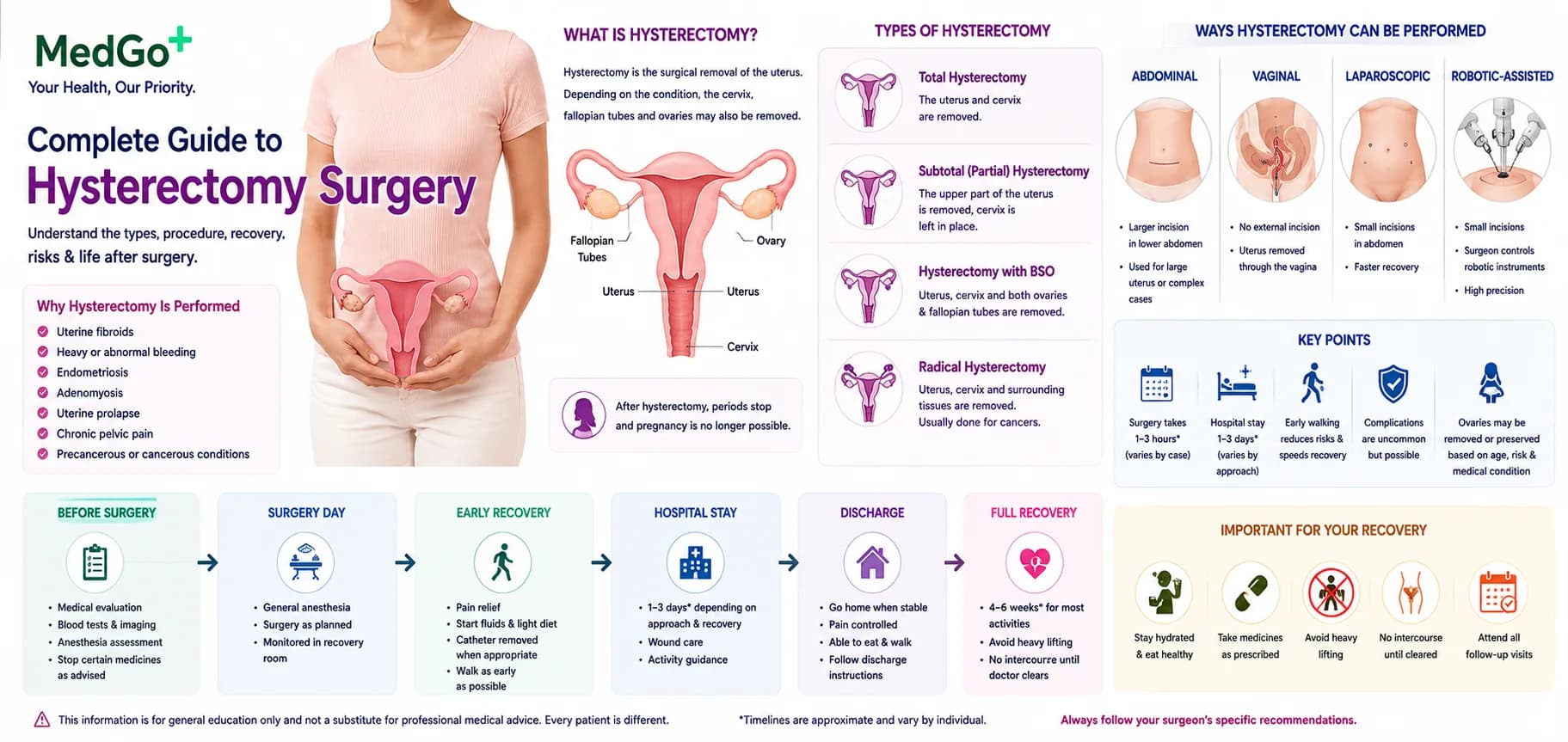
A hysterectomy is a major surgical procedure in which the uterus is removed. Depending on the medical condition and the planned operation, the surgeon may also remove the cervix, fallopian tubes and one or both ovaries.
Hysterectomy is performed for several conditions, including symptomatic fibroids, heavy or abnormal uterine bleeding, adenomyosis, endometriosis, uterine prolapse and certain gynecological cancers. It is usually considered after the medical team has assessed whether less invasive treatments are appropriate for the patient.
One of the most important points for a patient to understand is that “hysterectomy” does not always mean the same operation. The amount of tissue removed and the route used to perform the surgery depend on the reason for surgery, the size and position of the uterus, previous operations, anatomy and overall health.
What Is a Hysterectomy?
A hysterectomy is surgery to remove the uterus, also called the womb. Once the uterus is removed, pregnancy is no longer possible and menstrual periods stop.
The ovaries are separate organs from the uterus. Therefore, having a hysterectomy does not automatically mean that the ovaries must be removed.
Whether the cervix, fallopian tubes or ovaries are removed is decided based on the patient’s medical condition, age, cancer risk, ovarian health and the surgical plan.
Why Is Hysterectomy Performed?
Hysterectomy may be recommended when a uterine or pelvic condition is causing significant symptoms, has not responded adequately to other treatments, or requires definitive surgical treatment.
- Large or symptomatic uterine fibroids.
- Severe or persistent heavy menstrual bleeding.
- Adenomyosis.
- Endometriosis in selected patients.
- Uterine prolapse.
- Chronic pelvic pain caused by certain uterine conditions.
- Precancerous or cancerous conditions of the uterus or cervix.
- Some ovarian or fallopian-tube cancers.
- Other serious gynecological conditions where hysterectomy is considered appropriate.
Is Hysterectomy Always Necessary?
No. Hysterectomy is a major operation and is not automatically the first treatment for every gynecological condition.
Depending on the diagnosis, alternatives may include medicines, hormonal treatment, intrauterine devices, uterine artery embolization, endometrial procedures, myomectomy or other minimally invasive treatments.
The appropriate alternative depends on the underlying condition, severity of symptoms, age, fertility plans and overall health.
Types of Hysterectomy
The main types are classified according to how much reproductive tissue is removed.
1. Total Hysterectomy
The uterus and cervix are removed. This is one of the most commonly performed forms of hysterectomy.
2. Subtotal or Supracervical Hysterectomy
The main body of the uterus is removed while the cervix is left in place.
3. Hysterectomy With Removal of Both Tubes and Ovaries
The uterus and cervix are removed together with both fallopian tubes and ovaries. This is called bilateral salpingo-oophorectomy when both tubes and ovaries are removed.
4. Radical Hysterectomy
A radical hysterectomy removes the uterus and cervix together with surrounding tissues and may include part of the upper vagina and lymph-node assessment or removal. It is generally used for selected gynecological cancers.
Does Hysterectomy Always Remove the Ovaries?
No. The ovaries may be left in place when there is no strong medical reason to remove them, particularly in younger patients where preserving natural ovarian hormone production may be beneficial.
The decision depends on age, ovarian health, cancer risk, family history, the reason for surgery and the findings during evaluation.
If both ovaries are removed before natural menopause, ovarian hormone production falls abruptly and surgical menopause usually occurs.
What Happens to Your Period After Hysterectomy?
After the uterus is removed, menstrual periods stop because the uterine lining is no longer present.
If the ovaries are retained, they may continue producing hormones and ovulation may continue even though periods no longer occur.
Does Hysterectomy Cause Menopause?
A hysterectomy by itself does not necessarily cause immediate menopause if the ovaries are retained.
If both ovaries are removed before natural menopause, the sudden loss of ovarian hormone production causes surgical menopause.
- Hot flashes.
- Night sweats.
- Vaginal dryness.
- Sleep disturbance.
- Mood changes.
- Changes in sexual desire.
Hormone therapy may be appropriate for some patients, but this decision must be individualized based on age, cancer history, medical conditions and other risk factors.
Ways a Hysterectomy Can Be Performed
There are three main surgical routes: abdominal, vaginal and minimally invasive laparoscopic surgery. Robotic-assisted surgery is a form of minimally invasive laparoscopic surgery.
Abdominal Hysterectomy
The surgeon removes the uterus through an incision in the lower abdomen. The incision may be horizontal or vertical depending on the surgical situation.
Vaginal Hysterectomy
The uterus is removed through an incision made at the top of the vagina. There are no abdominal skin incisions for the hysterectomy itself.
Laparoscopic Hysterectomy
The surgeon uses a camera and specialized instruments inserted through several small abdominal incisions. The uterus is separated and removed through an appropriate route.
Robotic-Assisted Hysterectomy
The surgeon controls robotic instruments through small abdominal incisions. The robot does not perform the operation independently; the surgeon controls the instruments throughout the procedure.
Which Hysterectomy Approach Is Best?
There is no single approach that is best for every patient.
- Vaginal surgery may be suitable when the uterus can safely be removed through the vagina.
- Laparoscopic or robotic surgery may offer smaller incisions and faster recovery for appropriately selected patients.
- Abdominal surgery may be necessary when the uterus is very large, anatomy is complex, extensive disease is present or minimally invasive removal is not appropriate.
- Cancer surgery may require a different approach depending on the type and stage of cancer.
What Type of Anesthesia Is Used?
Most hysterectomies are performed under general anesthesia, meaning the patient is fully unconscious and does not feel the operation.
The anesthesia team monitors breathing, oxygen levels, blood pressure, heart rate and other vital functions throughout the operation.
Depending on the surgical approach and patient factors, regional anesthesia techniques may sometimes be used as part of the overall anesthetic and pain-control plan.
What Happens Before Hysterectomy Surgery?
Before surgery, your gynecologist and anesthesia team review your medical history, medications, previous operations and overall fitness for anesthesia.
- Detailed medical and surgical history.
- Pelvic examination when appropriate.
- Blood tests.
- Pregnancy testing when appropriate.
- Imaging such as ultrasound or MRI when indicated.
- Evaluation of anemia if heavy bleeding is present.
- Medication review.
- Anesthesia assessment.
- Cancer evaluation when malignancy is suspected or known.
What Should You Tell Your Surgeon Before Surgery?
- All prescription medicines.
- Over-the-counter medicines.
- Blood-thinning medicines.
- Diabetes medicines.
- Allergies.
- Previous anesthesia problems.
- Previous abdominal or pelvic surgeries.
- Smoking or nicotine use.
- Bleeding disorders.
- Heart or lung conditions.
- Any possibility of pregnancy.
Hysterectomy Surgery: Step-by-Step
The exact steps depend on the surgical route and whether additional organs or lymph nodes need to be treated. A typical operation follows a sequence similar to the following.
Step 1: Anesthesia
Anesthesia is administered and the patient is continuously monitored.
Step 2: Positioning and Preparation
The patient is positioned safely, the abdomen and pelvic area are prepared and sterile drapes are placed.
Step 3: Surgical Access
The surgeon gains access to the pelvis through the selected route: abdominal, vaginal or laparoscopic/robotic.
Step 4: Identification of Pelvic Structures
The uterus, cervix, bladder, bowel, ureters, blood vessels and surrounding structures are identified and protected.
Step 5: Separation of the Uterus
The supporting tissues and blood vessels supplying the uterus are carefully divided and controlled.
Step 6: Removal of the Planned Organs
The uterus, cervix and any additional structures included in the surgical plan are removed.
Step 7: Inspection for Bleeding
The surgeon checks the operative field carefully for bleeding and confirms that surrounding organs are intact.
Step 8: Closure
The vaginal cuff or other surgical tissues are closed as appropriate. Abdominal incisions are closed when an abdominal or laparoscopic approach is used.
Step 9: Recovery Room
The patient is transferred to the recovery area for monitoring while the effects of anesthesia wear off.
How Long Does Hysterectomy Surgery Take?
Operating time varies substantially depending on the surgical route, size of the uterus, presence of adhesions, endometriosis, cancer, previous operations and whether additional procedures are required.
A straightforward hysterectomy may be relatively short, while complex cancer surgery or extensive pelvic disease can require significantly more operating time.
Is ICU Required After Hysterectomy?
Routine ICU admission is not required after an uncomplicated hysterectomy.
Most patients recover in a standard postoperative or surgical ward. Higher-level monitoring may be required when there are significant medical conditions, major bleeding, anesthesia concerns or serious postoperative complications.
What Happens Immediately After Surgery?
- You will wake up in a monitored recovery area.
- Pain medication will be provided.
- Nausea medication may be given if needed.
- A urinary catheter may be present temporarily.
- An IV line may remain in place.
- Your blood pressure, heart rate and oxygen levels will be monitored.
- You will be encouraged to move as soon as it is safe.
- The surgical wounds will be checked regularly.
Will I Have a Urinary Catheter?
A urinary catheter is commonly used during hysterectomy because the bladder needs to remain empty during pelvic surgery.
In uncomplicated cases, the catheter is often removed relatively soon after surgery once it is safe to assess normal urination.
Patients with bladder involvement, extensive pelvic surgery or urinary problems may require the catheter for longer.
When Can I Eat After Hysterectomy?
Once you are awake and your surgical team is satisfied that it is safe, you can usually begin fluids and gradually return to food as tolerated.
- Start with fluids when permitted.
- Progress to light food if there is no significant nausea.
- Gradually return to a normal balanced diet.
- Maintain adequate protein for healing.
- Drink enough fluids to help prevent constipation.
When Will I Be Asked to Walk?
Early movement is an important part of recovery. Patients are generally encouraged to get out of bed and walk as soon as it is safe.
Walking helps restore mobility and reduces the risk associated with prolonged inactivity, including blood clots.
How Long Will I Stay in the Hospital?
Hospital stay depends on the surgical approach, the patient’s health and whether complications occur.
- Laparoscopic or robotic hysterectomy may allow discharge relatively quickly after an uncomplicated recovery.
- Vaginal hysterectomy may also have a relatively short hospital stay.
- Abdominal hysterectomy generally requires a longer stay because recovery from the larger abdominal incision takes more time.
- Cancer surgery or complex pelvic procedures may require additional hospitalization.
What Are the Usual Discharge Requirements?
- Stable vital signs.
- Pain adequately controlled with the planned medicines.
- Able to walk safely.
- Able to drink and eat sufficiently.
- Able to urinate adequately after catheter removal when appropriate.
- No evidence of an immediate major complication.
- Clear understanding of wound care and medicines.
- A safe plan for follow-up and help at home when required.
Hysterectomy Recovery Timeline
First 24 Hours
Recovery from anesthesia, pain control, monitoring, fluids, early walking and assessment of bladder function.
Days 2–7
Gradual increase in walking and daily activities while managing fatigue, pain and wound care.
Weeks 2–3
Energy generally begins improving, but strenuous activity and heavy lifting may still be restricted.
Weeks 4–6
Many patients can gradually return toward normal activities depending on the surgical approach and their surgeon’s assessment.
After 6 Weeks
Many patients have substantially recovered, although some may need additional time, particularly after abdominal or complex surgery.
How Long Does Full Recovery Take?
Recovery varies by surgical approach. Minimally invasive and vaginal procedures generally recover faster than abdominal hysterectomy.
A typical recovery may take several weeks, while abdominal hysterectomy often requires approximately 4 to 6 weeks or longer for complete recovery. Some patients need additional time before their energy and strength fully return.
What Activities Should I Avoid After Hysterectomy?
- Heavy lifting until your surgeon clears you.
- Strenuous exercise during early recovery.
- Running or high-impact activity until medically cleared.
- Driving while taking sedating pain medication or when movement is uncomfortable.
- Swimming or soaking until the wounds have healed and your surgeon approves it.
- Vaginal intercourse until your surgeon confirms adequate healing.
When Can I Have Sex After Hysterectomy?
Sexual intercourse is generally avoided during the early healing period so that the internal surgical tissues can heal properly.
Many patients are advised to wait at least 4 to 6 weeks, but the correct timing depends on the surgical approach, healing and the surgeon’s assessment.
Do not resume vaginal intercourse simply because external incisions look healed. Internal tissues may require additional time.
Will Hysterectomy Affect Sexual Function?
Sexual function varies between individuals. Some patients experience improved sexual comfort when hysterectomy resolves problems such as severe bleeding or chronic pelvic pain.
Others may experience temporary changes in desire, vaginal dryness or discomfort during recovery. Removing the ovaries can contribute to hormonal changes that affect sexual function.
Persistent sexual difficulties should be discussed with a gynecologist because treatment options are available.
Possible Risks and Complications of Hysterectomy
Hysterectomy is a major operation and, like any surgery, carries potential risks. The individual risk depends on the surgical approach, medical conditions and complexity of the operation.
- Bleeding.
- Infection.
- Blood clots.
- Reaction to anesthesia.
- Injury to the bladder.
- Injury to the ureters.
- Bowel injury.
- Urinary problems.
- Wound complications.
- Vaginal cuff complications.
- Ovarian function changes.
- Early or surgical menopause when both ovaries are removed.
- Need for additional treatment when surgery is performed for cancer.
Can the Bladder or Bowel Be Injured During Hysterectomy?
The bladder, ureters and bowel are located close to the uterus and are therefore carefully identified and protected during surgery.
Injury is uncommon but can occur, particularly during complex surgery, severe endometriosis, extensive adhesions, previous pelvic surgery or cancer operations.
If an injury occurs, the surgical team may repair it during the operation or arrange additional treatment depending on the situation.
Can Hysterectomy Cause Blood Clots?
Any major operation can increase the risk of venous blood clots. Hysterectomy patients are therefore encouraged to move early when safe.
- Early walking.
- Leg compression devices when indicated.
- Blood-thinning medication when appropriate.
- Avoiding prolonged immobility.
What Vaginal Bleeding Is Normal After Hysterectomy?
Light vaginal bleeding or discharge can occur during recovery, particularly after vaginal or laparoscopic hysterectomy.
Heavy bleeding, large blood clots, foul-smelling discharge or bleeding that is becoming heavier rather than lighter requires medical assessment.
Hysterectomy and Fertility
After the uterus is removed, carrying a pregnancy is no longer possible. This is a permanent loss of uterine fertility.
If fertility preservation is important to you, discuss this with your gynecologist before surgery. Depending on the condition, alternatives to hysterectomy may sometimes be available.
Emotional Changes After Hysterectomy
Hysterectomy can be emotionally significant, particularly for patients who wanted future pregnancies or who associate the uterus with fertility and identity.
- Sadness or grief.
- Anxiety about physical changes.
- Concerns about sexual function.
- Relief after long-standing symptoms improve.
- Mixed emotional responses.
If sadness, anxiety or loss of interest in normal activities persists, speak with your doctor or a mental health professional.
What Should I Eat After Hysterectomy?
There is usually no special lifelong diet after a routine hysterectomy, but good nutrition supports healing and recovery.
- Protein-rich foods.
- Vegetables and fruits.
- Whole grains when tolerated.
- Adequate fluids.
- Iron-rich foods when appropriate, particularly if anemia was present.
- Fiber-rich foods to reduce constipation.
If you were anemic before surgery because of heavy bleeding, your doctor may recommend iron treatment or additional blood tests.
How to Support a Smooth Recovery
- Walk regularly but increase activity gradually.
- Take prescribed medicines as directed.
- Keep your surgical wounds clean and follow wound-care instructions.
- Drink adequate fluids.
- Eat enough protein and nutrient-dense foods.
- Prevent constipation and avoid excessive straining.
- Avoid heavy lifting until cleared.
- Attend your postoperative appointment.
- Do not resume sexual activity until your surgeon confirms adequate healing.
- Contact your healthcare team if symptoms are worsening rather than improving.
Warning Signs After Hysterectomy
Contact your healthcare team promptly if you develop concerning symptoms after surgery.
- Heavy vaginal bleeding.
- Large blood clots.
- Fever or chills.
- Increasing abdominal pain.
- Foul-smelling vaginal discharge.
- Increasing redness, swelling or pus from the incision.
- Difficulty passing urine.
- Persistent vomiting.
- Severe constipation or abdominal swelling.
- Pain or swelling in one leg.
- Chest pain.
- Sudden shortness of breath.
- Fainting or severe weakness.
Chest pain, severe breathing difficulty, fainting or rapidly worsening symptoms require urgent medical evaluation.
Hysterectomy for Fibroids
Fibroids are non-cancerous growths arising from the muscle of the uterus. They can cause heavy bleeding, pelvic pressure, pain, urinary symptoms or enlargement of the uterus.
Hysterectomy provides definitive treatment because the uterus containing the fibroids is removed. However, other treatments may be appropriate depending on the number and size of fibroids, symptoms, age and fertility goals.
Hysterectomy for Endometriosis
Endometriosis is a condition in which tissue similar to the uterine lining grows outside the uterus. Hysterectomy may be considered in selected patients with severe symptoms when other treatments have not provided adequate relief.
Importantly, hysterectomy does not automatically eliminate all endometriosis because endometriosis can exist outside the uterus. The surgical plan therefore needs to address the actual distribution of disease.
Hysterectomy for Cancer
Hysterectomy can form part of treatment for certain cancers of the uterus, cervix or other reproductive organs.
Cancer surgery may be more extensive than a routine hysterectomy and can involve removal of surrounding tissue, lymph nodes or other structures depending on the cancer type and stage.
Some patients may also need chemotherapy, radiation therapy, hormonal treatment or other cancer-directed therapy after surgery.
Abdominal vs Laparoscopic vs Vaginal Hysterectomy
- Abdominal: larger abdominal incision and generally longer recovery.
- Laparoscopic: several small incisions and generally faster recovery when appropriate.
- Robotic: minimally invasive approach using surgeon-controlled robotic instruments.
- Vaginal: uterus removed through the vagina without an abdominal incision for the hysterectomy itself.
The surgical route should be selected based on safety and suitability rather than simply choosing the approach with the smallest incision.
Questions to Ask Your Gynecologic Surgeon
- Why do I need a hysterectomy?
- Are there alternatives to hysterectomy in my case?
- Which type of hysterectomy do you recommend?
- Will my cervix be removed?
- Will my fallopian tubes be removed?
- Will one or both ovaries be removed?
- Why do you recommend removing or preserving my ovaries?
- Which surgical approach will you use and why?
- Will the operation be laparoscopic, robotic, vaginal or abdominal?
- What type of anesthesia will I receive?
- How long is the expected operation?
- How long will I stay in the hospital?
- Will I need a catheter after surgery?
- When can I return to work?
- When can I exercise?
- When can I have sexual intercourse?
- What complications should I watch for?
- Will I need hormone treatment?
- What follow-up will I need?
The Most Important Decision: What Should Be Removed?
Before surgery, patients should understand exactly which organs are planned for removal. “Hysterectomy” refers to removal of the uterus, but the cervix, tubes and ovaries may or may not be removed.
This discussion is particularly important when the ovaries are healthy and the patient has not yet reached natural menopause. The decision should balance cancer risk, age, ovarian function and the reason for surgery.
When Should You Seek Medical Help After Surgery?
Recovery should generally progress gradually. If pain, bleeding, fever, weakness or other symptoms are getting worse instead of better, contact your healthcare team.
Seek urgent medical care for severe chest pain, significant difficulty breathing, fainting, heavy bleeding or rapidly worsening symptoms.
How MedGoPlus Can Help
Undergoing hysterectomy can involve important decisions about the uterus, cervix, fallopian tubes, ovaries, surgical approach and recovery. Patients may benefit from discussing their diagnosis and treatment options with an experienced gynecologist.
MedGoPlus can help patients connect with qualified healthcare professionals for consultations and postoperative guidance through available consultation services.
Medical Disclaimer
This article is intended for general health education and does not replace individualized medical advice. Hysterectomy is major surgery, and the appropriate procedure, surgical approach, anesthesia plan, removal of the ovaries or cervix, hospital stay and recovery vary from patient to patient. Always discuss your individual treatment plan with your gynecologist and surgical team.
Take Control of Your Health with MedGoPlus
Book doctor consultations, manage your health needs, and access convenient healthcare services anytime, anywhere with the MedGoPlus App.
Scan to download
Download the MedGoPlus App