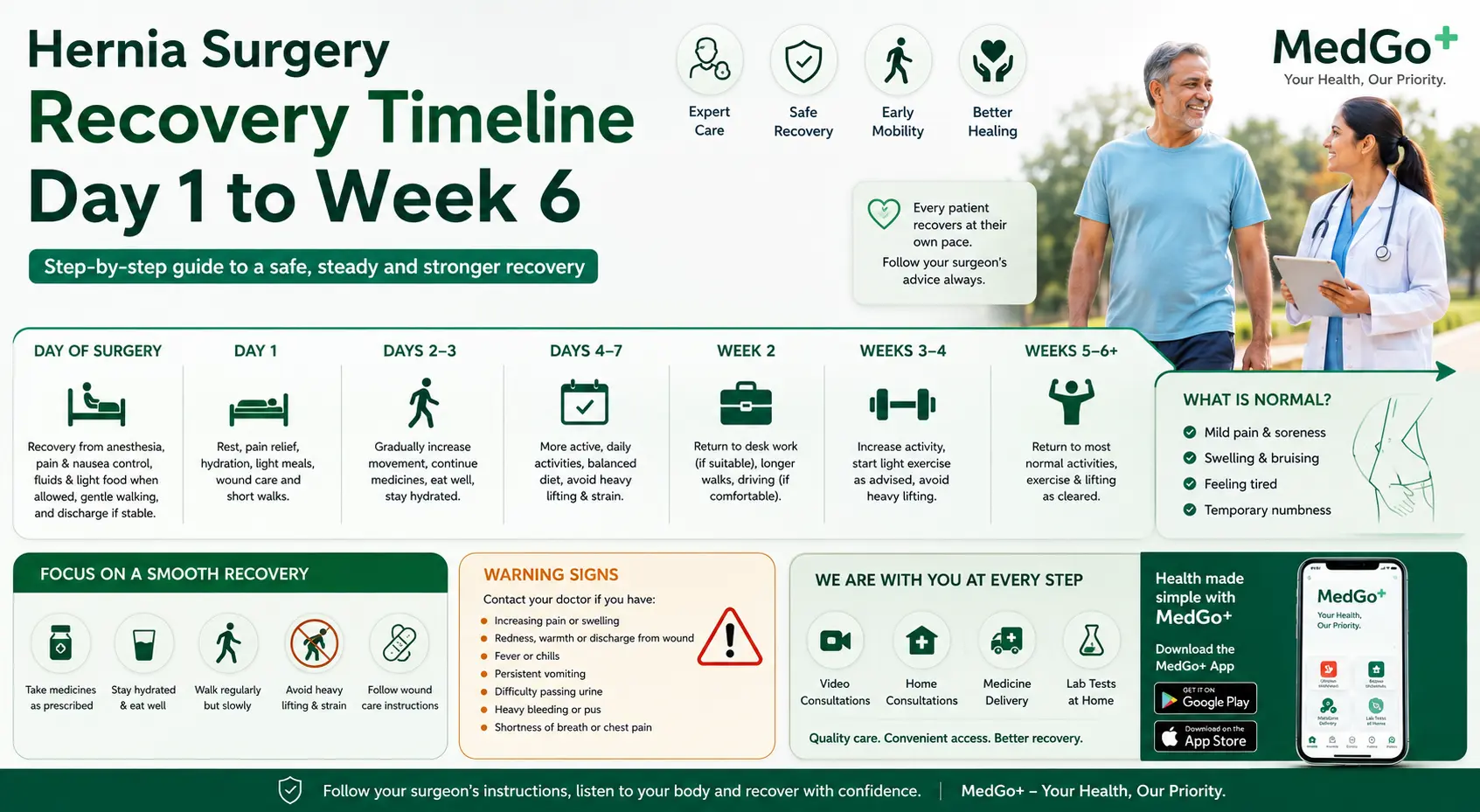
Recovery after hernia surgery is usually gradual. Many patients can walk and perform light activities soon after surgery, but the time needed to return to work, exercise and heavier activities varies depending on the type of hernia, surgical technique, overall health and the nature of the patient’s daily activities.
This guide explains a typical recovery journey from the day of surgery through approximately six weeks. Your own surgeon’s instructions should always take priority because recovery is different for every patient.
What Affects Hernia Surgery Recovery?
Recovery is influenced by several factors. A patient undergoing an uncomplicated planned hernia repair may recover differently from someone who requires emergency surgery or has other medical conditions.
- Type and location of the hernia.
- Open or laparoscopic surgical technique.
- Size and complexity of the hernia.
- Whether the surgery was planned or performed as an emergency.
- Whether bowel or other tissue was involved.
- Age and general health.
- Existing medical conditions.
- Type of work and physical activity.
- Whether complications occur during recovery.
Recovery on the Day of Surgery
Immediately after surgery, you will usually spend time in a recovery area while the effects of anesthesia wear off. Your healthcare team will monitor your vital signs, breathing, pain, nausea and surgical wound.
You May Be Able To:
- Drink fluids once your healthcare team allows it.
- Eat light food if you are not nauseated.
- Sit up and gradually stand with assistance.
- Walk short distances when it is safe.
- Pass urine before discharge when required.
- Return home the same day if you meet the discharge criteria.
Many uncomplicated hernia repairs are performed as day-case procedures. Some patients may need to stay overnight depending on their recovery, medical condition or the complexity of the operation.
Day 1 After Hernia Surgery
The first day after surgery is usually focused on rest, pain control, hydration, gentle movement and monitoring the surgical wound.
What You May Notice
- Soreness around the surgical area.
- Mild swelling or bruising.
- Tiredness.
- Reduced appetite.
- Mild nausea in some patients.
- Bloating or shoulder discomfort after laparoscopic surgery.
What You Can Usually Do
- Take prescribed medicines as directed.
- Drink adequate fluids unless medically restricted.
- Eat small, balanced meals as tolerated.
- Walk gently around your home.
- Rest between periods of activity.
- Follow your wound-care instructions.
Days 2–3: Gradually Increase Movement
During the next few days, many patients gradually become more mobile. Walking is generally encouraged because prolonged bed rest is usually unnecessary after an uncomplicated repair.
- Take several short walks during the day.
- Increase walking gradually according to comfort.
- Avoid movements that cause significant pain.
- Continue prescribed pain relief as directed.
- Keep monitoring the incision.
- Maintain adequate hydration and nutrition.
Some discomfort when moving, coughing or changing position can be expected. Pain should generally become easier to manage as recovery progresses.
Days 4–7: First Week of Recovery
By the end of the first week, many patients are becoming more independent and are able to perform more routine activities. Recovery speed varies considerably.
- Continue regular gentle walking.
- Gradually increase normal daily activities.
- Continue wound care according to instructions.
- Eat a balanced diet with adequate protein and fibre.
- Drink enough fluids unless medically restricted.
- Avoid heavy lifting and strenuous exercise unless specifically cleared.
Bruising, tenderness and mild swelling may still be present during the first week. These symptoms should generally improve rather than progressively worsen.
Week 2: Returning to Routine
During the second week, many patients can gradually return to more of their normal daily routine if their recovery is uncomplicated.
- Continue walking and gradually increase duration.
- Perform light household activities if comfortable.
- Return to desk-based work when physically and medically appropriate.
- Continue to avoid activities that cause significant pain.
- Follow your surgeon’s instructions regarding lifting and exercise.
Patients whose work involves heavy lifting, prolonged standing or strenuous physical activity may need more time away from work.
Weeks 3–4: Increasing Activity
By weeks three and four, many patients are feeling significantly better and can gradually increase their normal activities. The pace should still be guided by symptoms and the surgeon’s recommendations.
- Continue regular walking.
- Gradually resume appropriate low-impact activities.
- Increase daily activity as comfort improves.
- Continue monitoring the incision if it has not completely healed.
- Avoid heavy lifting until your surgeon advises that it is appropriate.
Weeks 5–6 and Beyond
By approximately six weeks, many patients have returned close to their normal routine after an uncomplicated repair. However, there is no universal six-week deadline for every patient.
Your surgeon may recommend a different timeline depending on the type of repair, your healing, the nature of your work and your exercise goals.
- Gradually return to more demanding activities when cleared.
- Increase exercise progressively rather than suddenly.
- Continue listening to your body.
- Attend follow-up appointments when recommended.
- Report persistent or worsening symptoms.
Hernia Surgery Recovery: Week-by-Week Overview
Surgery Day
Recovery from anesthesia, pain and nausea management, oral fluids when appropriate, gentle movement and discharge assessment.
Days 1–3
Rest, hydration, nutritious food, wound care and short gentle walks.
Days 4–7
Gradual return to daily activities while continuing to avoid strenuous activity and heavy lifting.
Week 2
Increasing mobility and gradual return to suitable work and daily activities.
Weeks 3–4
Increasing activity and gradual return toward a normal routine when appropriate.
Weeks 5–6+
Many patients can progressively resume more demanding activities, subject to their surgeon’s advice and individual recovery.
When Can I Walk After Hernia Surgery?
Walking can often begin within hours after an uncomplicated operation once the patient has recovered sufficiently from anesthesia and the healthcare team considers it safe.
- Start with short walks.
- Walk several times a day as tolerated.
- Increase distance gradually.
- Stop and rest if you develop significant pain, dizziness or weakness.
- Follow any specific mobility instructions from your surgical team.
When Can I Drive After Hernia Surgery?
You should not drive until you are physically and mentally able to control the vehicle safely and can perform an emergency stop without significant pain.
- You should no longer be significantly affected by anesthesia or sedating medication.
- You should be able to sit comfortably.
- You should be able to move your legs and body safely.
- You should be able to react quickly in an emergency.
- Check your insurer’s requirements before returning to driving.
The exact timing varies between patients and procedures, so ask your surgeon when driving is appropriate for you.
When Can I Return to Work?
Return-to-work timing depends largely on the type of job and how your recovery is progressing.
Office or Desk Work
Some patients can return to desk-based work relatively soon after surgery if they are comfortable and can move around safely.
Physical Work
Jobs involving lifting, pushing, pulling, prolonged standing or strenuous physical activity may require a longer recovery period.
Your surgeon should provide individualized guidance based on your operation and job requirements.
When Can I Exercise After Hernia Surgery?
Gentle walking is generally encouraged early in recovery. More demanding exercise should be introduced gradually and according to your surgeon’s advice.
- Walking: usually begins early as tolerated.
- Light daily activity: gradually increase according to comfort.
- Running: wait until your surgeon considers it appropriate.
- Gym workouts: return gradually.
- Abdominal or core exercises: follow specific surgical guidance.
- Heavy lifting: resume only when appropriately cleared.
Wound Care During Recovery
Your incision should be cared for according to the instructions provided by your hospital or surgeon. The type of closure may include dissolvable stitches, non-dissolvable stitches, staples or skin adhesive.
- Keep the wound clean according to your instructions.
- Follow instructions regarding dressings and showering.
- Do not pick at the incision or adhesive.
- Watch for increasing redness, swelling or discharge.
- Attend any scheduled wound review or suture/staple removal.
Pain During Hernia Surgery Recovery
Some pain, soreness and tenderness are expected after hernia surgery. Pain should generally improve as healing progresses.
- Take prescribed pain medicines according to instructions.
- Use gentle movement rather than remaining in bed all day.
- Avoid activities that significantly increase pain.
- Ask your healthcare team if pain is not adequately controlled.
Severe, rapidly increasing or unexpected pain should be assessed by your healthcare team.
Diet During Hernia Surgery Recovery
A balanced diet can support recovery and help maintain strength. Focus on adequate protein, fibre, fluids, fruits, vegetables and other nutritious foods that you tolerate well.
- Include protein-rich foods such as eggs, fish, chicken, dairy, lentils and beans.
- Eat fruits and vegetables for fibre and nutrients.
- Drink adequate fluids unless medically restricted.
- Increase fibre gradually if constipation is a problem.
- Choose smaller meals if your appetite is reduced.
For more detailed guidance, see our guide on what to eat after hernia surgery.
Constipation After Hernia Surgery
Constipation can occur after surgery because of reduced activity, changes in diet, dehydration and some pain medicines. Avoiding excessive straining is important during recovery.
- Drink adequate fluids unless your doctor has restricted fluids.
- Gradually increase fibre.
- Eat fruits and vegetables.
- Walk regularly as tolerated.
- Ask your healthcare team whether a stool softener or laxative is appropriate.
Normal Symptoms During Recovery
Some symptoms can occur during normal recovery and usually improve gradually.
- Mild or moderate soreness.
- Bruising around the incision.
- Mild swelling.
- Temporary numbness around the surgical area.
- Tiredness.
- Reduced appetite during the first few days.
- Mild bloating after laparoscopic surgery.
Warning Signs: When Should You Contact Your Doctor?
Contact your healthcare team if your recovery is not progressing as expected or you develop symptoms that concern you.
- Increasing rather than improving pain.
- Increasing redness or swelling around the wound.
- Pus or unusual discharge from the incision.
- Persistent vomiting.
- Difficulty passing urine.
- Persistent fever.
- Increasing abdominal swelling.
- Significant bleeding.
- A new or rapidly increasing lump.
When Should You Seek Urgent Medical Attention?
Seek urgent medical attention if you develop severe or rapidly worsening symptoms, particularly severe abdominal or groin pain, repeated vomiting, significant abdominal swelling, heavy bleeding, difficulty breathing, fainting or a rapid deterioration in your condition.
Do not wait for a routine follow-up appointment if you believe you may have a serious postoperative complication.
Open vs Laparoscopic Hernia Surgery Recovery
Recovery can differ between open and laparoscopic surgery, but there is no single recovery timeline that applies to every patient.
Open Surgery
Open surgery usually involves a larger incision at the site of the hernia. Local discomfort around the incision can be noticeable during the early recovery period.
Laparoscopic Surgery
Laparoscopic surgery uses several smaller incisions. Some patients experience less wound discomfort and return to normal activities sooner, although temporary abdominal bloating or shoulder discomfort can occur.
The most appropriate surgical technique depends on the type of hernia, previous surgery, patient factors and the surgeon’s assessment.
How Can You Support a Smooth Recovery?
- Follow your surgeon’s instructions carefully.
- Take medicines exactly as prescribed.
- Walk regularly but increase activity gradually.
- Eat a balanced diet with adequate protein and fibre.
- Stay hydrated unless medically restricted.
- Avoid smoking because it can interfere with healing.
- Avoid heavy lifting until appropriately cleared.
- Keep your follow-up appointments when recommended.
- Contact your healthcare team if symptoms are worsening.
A Simple Hernia Recovery Checklist
- Take prescribed medicines.
- Keep the surgical wound clean and follow dressing instructions.
- Drink adequate fluids.
- Eat nutritious meals.
- Walk gently every day as advised.
- Prevent constipation and avoid excessive straining.
- Avoid heavy lifting until cleared.
- Do not drive while affected by anesthesia or sedating medicines.
- Monitor for warning signs.
- Attend follow-up appointments when recommended.
How MedGoPlus Can Help During Recovery
Recovery after surgery can involve questions about pain, food, medicines, wound care, activity and follow-up. MedGoPlus can help patients connect with qualified healthcare professionals through available consultation services for personalized guidance.
If you are unsure whether a symptom is part of normal recovery or needs medical attention, speak with your healthcare team rather than relying only on general online information.
Important Note
Recovery timelines are general estimates and should not be treated as fixed medical rules. Your recovery may be faster or slower depending on your operation, health, complications and the advice of your surgeon. Always follow your surgeon’s individual instructions.
Medical Disclaimer
This article is intended for general health education and does not replace an examination, diagnosis or individualized medical advice. If you have concerning symptoms after hernia surgery, contact your surgeon or seek appropriate medical care.
Take Control of Your Health with MedGoPlus
Book doctor consultations, manage your health needs, and access convenient healthcare services anytime, anywhere with the MedGoPlus App.
Scan to download
Download the MedGoPlus App