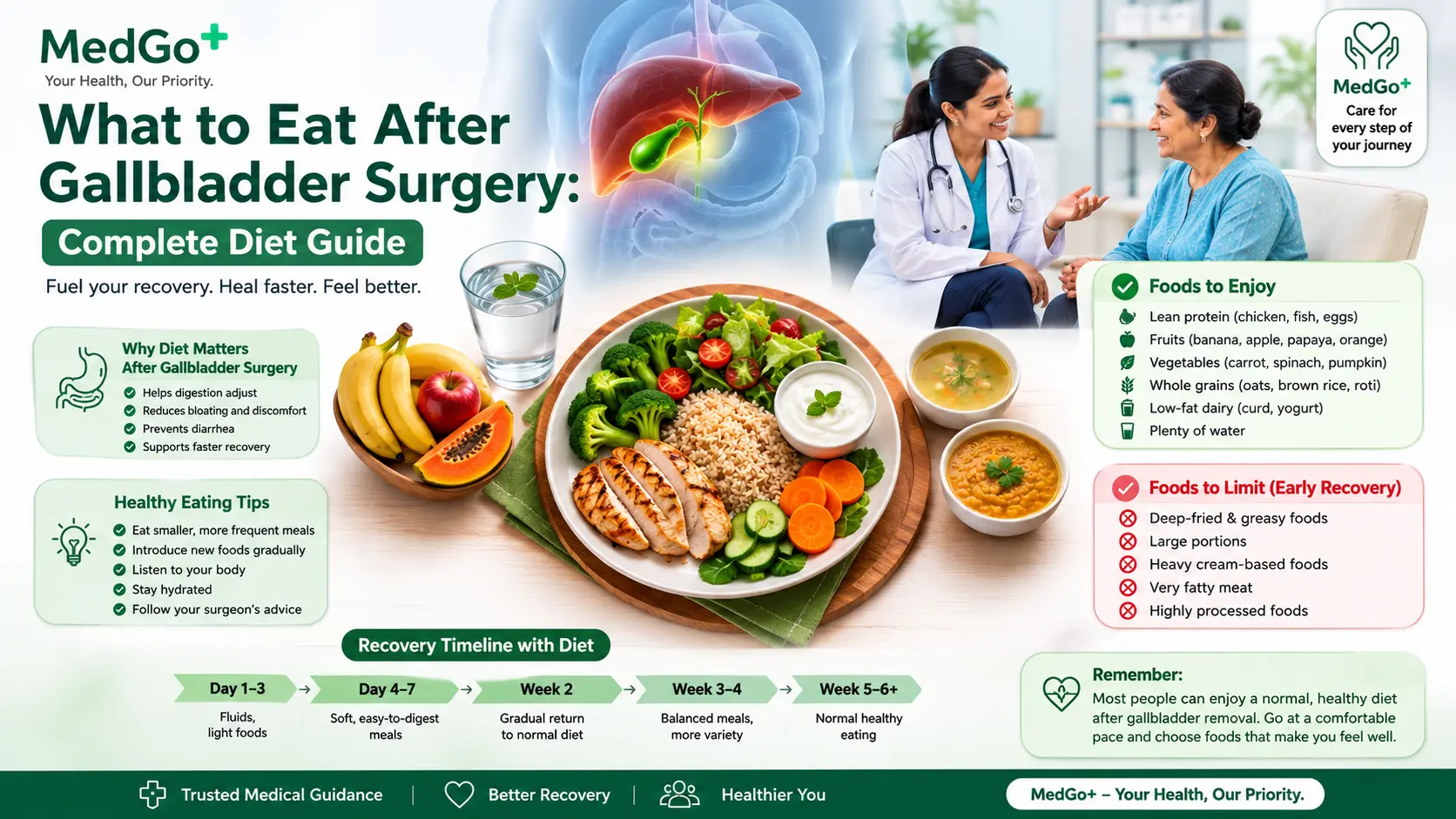
After gallbladder surgery, most people can eventually return to a normal, balanced diet. However, your digestive system may need some time to adjust, particularly during the first few days or weeks after surgery.
Some people notice bloating, loose stools, gas or discomfort after eating certain foods. Smaller meals, gradual dietary changes and temporarily limiting foods that trigger symptoms may make the transition more comfortable.
There is no single gallbladder surgery diet that every patient must follow. Your individual medical conditions, symptoms, medications and your surgeon’s instructions should always be considered.
Why Can Digestion Change After Gallbladder Removal?
The gallbladder stores and concentrates bile produced by the liver. After the gallbladder is removed, the liver continues to produce bile, but bile flows more continuously into the small intestine instead of being stored in the gallbladder.
Most people adapt well to this change. Some patients may temporarily notice changes in bowel movements or difficulty tolerating large or fatty meals.
What Can I Eat Immediately After Gallbladder Surgery?
Your healthcare team will decide when you can begin drinking and eating after surgery. Once you are sufficiently awake and able to tolerate fluids, you may gradually return to food according to your hospital’s instructions.
Start With Small Amounts
If you feel nauseated or have little appetite, smaller meals may be easier to tolerate than large meals.
- Water and other permitted fluids.
- Light soups.
- Soft foods.
- Rice or other easily tolerated grains.
- Banana or other soft fruits.
- Curd or yogurt if tolerated.
- Simple protein sources.
You do not necessarily need to remain on a liquid or very soft diet for a long period. As your appetite and digestion improve, gradually introduce a wider variety of foods.
Best Foods to Eat After Gallbladder Surgery
The goal is not to follow a restrictive diet forever. Instead, focus on nutritious foods that you tolerate well and gradually return to a balanced eating pattern.
1. Lean Protein
Protein supports muscle maintenance and normal tissue repair during recovery.
- Eggs.
- Skinless chicken.
- Fish.
- Dal and lentils.
- Beans.
- Low-fat yogurt or curd.
- Other suitable lean protein sources.
2. Fruits
Fruits provide vitamins, minerals and fibre. Introduce them according to your tolerance.
- Bananas.
- Apples.
- Papaya.
- Oranges.
- Melons.
- Other fresh fruits that you tolerate well.
3. Vegetables
Vegetables provide fibre and important nutrients. Cooked vegetables may feel easier to tolerate during the early recovery period.
- Carrots.
- Beans.
- Spinach and other leafy greens.
- Pumpkin.
- Bottle gourd.
- Other cooked vegetables that you tolerate.
4. Whole Grains
Whole grains can provide fibre and help form part of a balanced diet. If you experience bloating, introduce higher-fibre foods gradually.
- Oats.
- Whole-wheat roti.
- Brown rice.
- Whole-grain bread.
- Other whole grains that you tolerate.
Why Should You Be Careful With Fatty Foods?
Fat is an important part of a healthy diet, but some people have difficulty tolerating large amounts of fat immediately after gallbladder removal.
Large, greasy or fried meals may trigger bloating, abdominal discomfort or loose stools in some people. This does not necessarily mean that you must permanently avoid all dietary fat.
- Choose smaller portions of high-fat foods.
- Limit heavily fried meals during early recovery if they cause symptoms.
- Avoid very large meals.
- Gradually reintroduce foods as your digestion improves.
- Choose healthier sources of fat in moderate amounts.
Healthy Fats After Gallbladder Removal
Once you are tolerating food normally, moderate amounts of healthier fats can be part of a balanced diet.
- Nuts and seeds in suitable portions.
- Avocado.
- Olive or other plant-based oils.
- Fatty fish in appropriate portions.
If a particular food repeatedly causes symptoms, reduce the portion or discuss it with your healthcare professional.
Foods to Limit During Early Recovery
You do not necessarily need to completely eliminate specific foods forever. However, certain foods may be more likely to cause digestive symptoms while your body is adjusting.
- Deep-fried foods.
- Very greasy meals.
- Large portions of fatty meat.
- Heavy cream-based foods.
- Very large meals.
- Highly processed foods.
- Foods that repeatedly trigger bloating or diarrhea.
Your personal tolerance is important. A food that causes symptoms in one person may be tolerated normally by another.
Can I Eat Eggs After Gallbladder Surgery?
Eggs can be a useful source of protein after surgery. Some people tolerate eggs well, while others may notice discomfort if they eat large amounts or prepare them with significant added fat.
If eggs cause symptoms, try a smaller portion or a lower-fat preparation and discuss persistent problems with your healthcare professional.
Can I Eat Chicken and Fish After Gallbladder Surgery?
Yes. Chicken and fish can provide protein and can generally be included in a balanced diet after gallbladder removal.
- Choose grilled, baked, steamed or lightly cooked preparations.
- Avoid heavily fried preparations if they cause symptoms.
- Start with moderate portions.
- Choose leaner cuts when possible.
Can I Eat Rice After Gallbladder Surgery?
Rice can generally be included after gallbladder surgery. White rice may be easier to tolerate during the early recovery period, while higher-fibre options can be gradually introduced as your digestion allows.
A balanced meal can combine rice with vegetables and a suitable protein source.
Can I Eat Indian Food After Gallbladder Surgery?
Yes. You do not need to permanently switch to a completely different type of cuisine after gallbladder removal. Many familiar Indian foods can be included if they are prepared in a way that you tolerate well.
Breakfast Options
- Idli.
- Oats.
- Light poha.
- Vegetable upma.
- Eggs if tolerated.
- Low-fat curd or yogurt.
Lunch Options
- Rice or roti.
- Dal.
- Cooked vegetables.
- Curd.
- Grilled or lightly cooked chicken or fish.
Dinner Options
- Light rice-based meals.
- Roti with vegetables.
- Dal.
- Soup.
- Lean protein.
During early recovery, very oily gravies, deep-fried snacks and very large meals may be harder to tolerate.
Can I Eat Spicy Food After Gallbladder Surgery?
Spicy food is not automatically prohibited after gallbladder removal. However, heavily spiced or oily meals may cause discomfort in some people.
If spicy foods cause abdominal discomfort, reflux, bloating or loose stools, reduce them temporarily and gradually reintroduce them as tolerated.
Can I Drink Tea or Coffee After Gallbladder Surgery?
Many people can return to tea or coffee after surgery once they are eating and drinking normally. However, caffeine may worsen stomach discomfort, reflux or diarrhea in some individuals.
If these drinks trigger symptoms, reduce the amount or temporarily avoid them.
How Much Water Should I Drink?
Adequate hydration is important during recovery. Drink fluids regularly unless your doctor has specifically advised you to restrict fluids.
- Drink water throughout the day.
- Take smaller amounts if you feel nauseated.
- Include suitable soups or other fluids.
- Increase fluid intake appropriately if you are constipated and have no fluid restriction.
People with certain heart, kidney or other medical conditions may require individualized fluid recommendations.
What If I Have Diarrhea After Gallbladder Removal?
Some people experience softer or more frequent stools after gallbladder removal. This can happen because bile flows more continuously into the intestine.
- Eat smaller meals.
- Reduce very fatty meals if they trigger symptoms.
- Keep a record of foods that appear to worsen symptoms.
- Stay adequately hydrated.
- Gradually return to a normal balanced diet.
Persistent, severe or troublesome diarrhea should be discussed with your doctor because treatment may sometimes be needed.
How to Prevent Constipation After Gallbladder Surgery
Constipation can occur after surgery because of reduced activity, changes in diet, dehydration and certain pain medicines.
- Drink adequate fluids unless medically restricted.
- Gradually increase fibre.
- Eat fruits and vegetables.
- Walk gently and regularly as advised.
- Avoid excessive straining.
- Ask your healthcare team whether a stool softener or laxative is appropriate.
A Simple Gallbladder Surgery Recovery Meal Plan
Breakfast
Oats, idli, light poha or another easily tolerated breakfast with a suitable protein source.
Mid-Morning
Fresh fruit or low-fat yogurt if tolerated.
Lunch
Rice or roti with dal, cooked vegetables and a suitable lean protein source.
Evening
Fruit, yogurt or another light snack that you tolerate well.
Dinner
A moderate portion of rice or roti with vegetables and lean protein.
This is a general example rather than a personalized medical diet. Your nutritional requirements may be different.
How Long Should I Follow a Special Diet?
There is no universal period during which every patient must follow a restricted diet. Many people gradually return to their usual balanced diet as their digestive system adjusts.
Some patients may need to temporarily limit fatty or irritating foods if they cause symptoms. Long-term dietary restrictions should generally be based on your symptoms and medical advice rather than fear of eating normally after gallbladder removal.
Foods and Habits That Support Recovery
- Eat balanced meals.
- Include adequate protein.
- Gradually increase fibre.
- Eat fruits and vegetables.
- Stay hydrated.
- Choose moderate portions.
- Limit very greasy meals if they cause symptoms.
- Walk regularly as advised after surgery.
- Avoid excessive alcohol during recovery.
- Follow your surgeon’s postoperative instructions.
When Should You Contact Your Doctor?
Contact your healthcare team if you develop persistent vomiting, severe abdominal pain, significant abdominal swelling, persistent diarrhea, inability to keep fluids down or other symptoms that concern you.
After gallbladder surgery, yellowing of the skin or eyes, fever, worsening pain or significant wound problems should be assessed promptly.
Important: Your Medical Conditions Matter
A general gallbladder surgery diet may not be suitable for everyone. Patients with diabetes, kidney disease, heart disease, food allergies, digestive disorders or other medical conditions may require individualized nutritional advice.
If your surgeon, physician or dietitian has provided specific dietary instructions, follow that plan.
How MedGoPlus Can Help
Questions about food are common after gallbladder surgery. MedGoPlus can help patients connect with qualified healthcare professionals through available consultation services for personalized guidance about recovery, nutrition, symptoms and follow-up care.
If a particular food repeatedly causes symptoms or your digestive problems are persistent, discuss them with a healthcare professional rather than making major long-term dietary restrictions on your own.
Take Care of Your Recovery
Most people can return to a normal, balanced diet after gallbladder removal. During the early recovery period, smaller meals, adequate hydration and moderate amounts of fat may be easier to tolerate.
Listen to your body, introduce foods gradually and focus on nutritious meals that support your recovery. If symptoms persist or become severe, contact your healthcare team.
Medical Disclaimer
This article is intended for general health education and does not replace individualized medical advice. Dietary needs after gallbladder surgery vary between patients. Always follow the instructions provided by your surgeon, physician or dietitian.
Take Control of Your Health with MedGoPlus
Book doctor consultations, manage your health needs, and access convenient healthcare services anytime, anywhere with the MedGoPlus App.
Scan to download
Download the MedGoPlus App