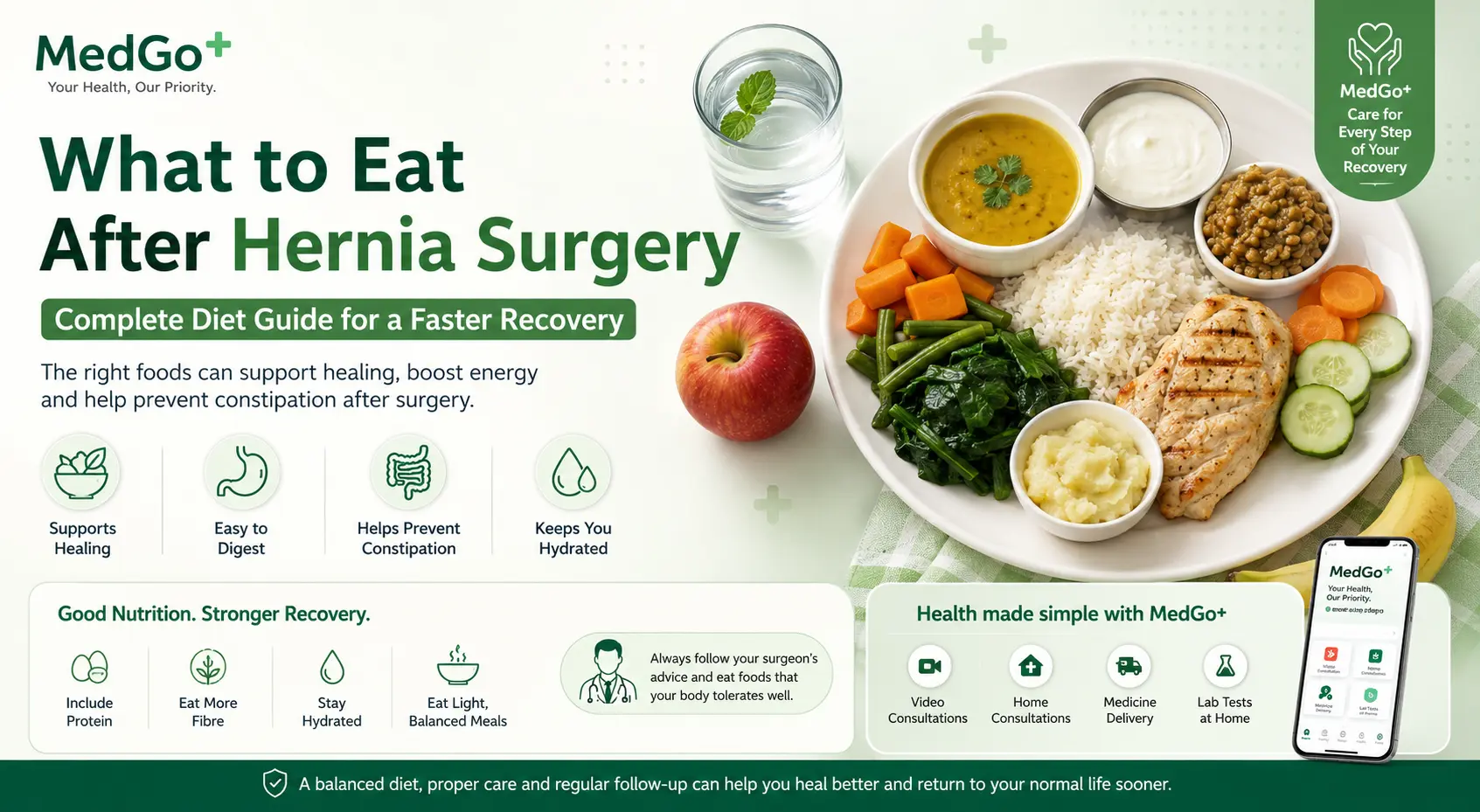
What you eat after hernia surgery can support your recovery, help maintain your energy and reduce problems such as constipation. However, there is no single diet that is right for every patient. Your appetite, type of surgery, medical conditions and your surgeon’s instructions should all be considered.
In most uncomplicated cases, patients can gradually return to their normal balanced diet as they recover. If you have nausea, bloating or constipation after surgery, smaller meals and easily tolerated foods may be more comfortable during the first few days.
Why Is Diet Important After Hernia Surgery?
After surgery, your body needs adequate calories, protein, fluids, vitamins and minerals to support normal healing. Good nutrition can also help maintain strength and support a gradual return to normal activities.
- Protein supports tissue repair and recovery.
- Fibre can help prevent constipation.
- Fluids help maintain hydration and support normal bowel function.
- Fruits and vegetables provide vitamins, minerals and fibre.
- Balanced meals help restore energy after surgery.
What Can I Eat Immediately After Hernia Surgery?
After surgery, your healthcare team will decide when it is appropriate to start drinking and eating. Once you are sufficiently awake and able to tolerate fluids, you may gradually return to food according to your hospital’s instructions.
Start With Small Amounts
If you feel nauseated or have a reduced appetite, start with small amounts rather than forcing a large meal. Choose foods and fluids that you normally tolerate well.
- Water and other permitted fluids.
- Clear soups or light soups.
- Soft foods.
- Rice or other easily tolerated grains.
- Curd or yogurt if tolerated.
- Banana or other soft fruits.
If your surgeon or hospital has given you specific dietary instructions, follow those instructions instead of a general diet guide.
Best Foods to Eat During Hernia Surgery Recovery
As your appetite returns, focus on a balanced diet that includes protein, fibre, fluids, fruits, vegetables and whole grains.
1. Protein-Rich Foods
Protein is important for maintaining muscle and supporting tissue repair. Include suitable protein sources throughout the day.
- Eggs.
- Fish.
- Chicken.
- Dal and lentils.
- Beans and other legumes.
- Milk and yogurt.
- Paneer or other suitable protein-rich foods.
- Nuts and seeds when tolerated.
2. Fruits and Vegetables
Fruits and vegetables provide fibre, vitamins, minerals and other nutrients that support a balanced diet.
- Bananas.
- Papaya.
- Apples.
- Oranges and other citrus fruits.
- Cooked vegetables.
- Leafy greens.
- Carrots.
- Beans and other vegetables that you tolerate well.
3. Whole Grains and Fibre-Rich Foods
Fibre can help maintain regular bowel movements and may reduce the need for straining. Increase fibre gradually if your usual diet is low in fibre, especially if you are experiencing bloating.
- Oats.
- Whole-grain bread.
- Brown rice.
- Whole-wheat roti.
- Vegetables.
- Fruits.
- Lentils and beans.
4. Yogurt and Other Suitable Dairy Foods
Yogurt, curd and other suitable dairy foods can provide protein and calcium. Choose options that you normally tolerate well.
5. Healthy Fats
Small amounts of healthy fats can be part of a balanced diet. Nuts, seeds, avocado and plant-based oils can be included according to your normal dietary pattern and medical needs.
Hydration After Hernia Surgery
Staying adequately hydrated is important during recovery. Fluids can help support normal bowel function and reduce the risk of dehydration, particularly when appetite is reduced.
- Drink water regularly unless your doctor has given you a fluid restriction.
- Take fluids in smaller amounts if you feel nauseated.
- Include soups and other suitable fluids if tolerated.
- Increase fluids when appropriate if you are experiencing constipation.
Patients with kidney, heart or other conditions that require fluid restriction should follow their doctor’s specific advice.
How to Prevent Constipation After Hernia Surgery
Constipation can occur after surgery because of reduced activity, changes in food and fluid intake, anesthesia and certain pain medicines. Avoiding excessive straining is particularly important during hernia recovery.
- Drink adequate fluids unless medically restricted.
- Gradually include fibre-rich foods.
- Eat fruits and vegetables regularly.
- Walk gently as advised by your healthcare team.
- Do not ignore the urge to pass stool.
- Ask your healthcare team whether a stool softener or laxative is appropriate if constipation develops.
What Indian Foods Can I Eat After Hernia Surgery?
You do not necessarily need a special Western-style diet after hernia surgery. Many familiar Indian foods can be included as part of a balanced recovery diet, provided they are tolerated and fit your medical needs.
Breakfast Options
- Idli with a suitable accompaniment.
- Oats.
- Vegetable upma.
- Light poha.
- Eggs.
- Curd or yogurt.
Lunch Options
- Rice or whole-wheat roti.
- Dal.
- Cooked vegetables.
- Curd.
- Fish or chicken if part of your diet.
- A suitable portion of salad when tolerated.
Snack Options
- Fresh fruit.
- Yogurt.
- A small portion of nuts.
- Light homemade snacks.
Dinner Options
- Light rice-based meals.
- Roti with vegetables.
- Dal.
- Soup.
- Eggs, fish or another suitable protein source.
Foods to Limit During Early Recovery
You do not necessarily need to completely avoid specific foods after hernia surgery. However, some foods may be uncomfortable during the first few days, particularly if they cause bloating, nausea or digestive discomfort.
- Very large meals.
- Very greasy or high-fat meals if they cause discomfort.
- Foods that consistently cause you bloating.
- Excessively spicy foods if they worsen nausea or digestive symptoms.
- Highly processed foods with little nutritional value.
- Excess alcohol.
Your tolerance matters. A food that is comfortable for one patient may cause bloating or discomfort in another.
Can I Eat Eggs After Hernia Surgery?
Yes. Eggs can be a convenient source of protein after surgery and can generally be included if you tolerate them and have no medical reason to avoid them.
Boiled or lightly prepared eggs may be easier to tolerate than heavily fried preparations during the early recovery period.
Can I Eat Chicken or Fish After Hernia Surgery?
Chicken and fish can provide high-quality protein and can be included as part of a balanced postoperative diet when tolerated.
During the early recovery period, simpler preparations such as grilled, baked, steamed or lightly cooked options may be easier to tolerate than very oily or heavily fried dishes.
Can I Eat Rice After Hernia Surgery?
Rice can generally be included after hernia surgery. Choose an amount that fits your appetite and overall diet. Combining rice with protein and vegetables can provide a more balanced meal.
Can I Drink Tea or Coffee After Hernia Surgery?
Many patients can return to tea or coffee once they are eating and drinking normally, but caffeine may worsen nausea, reflux or stomach discomfort in some people.
If your doctor has given you specific instructions or you have another medical condition affected by caffeine, follow that advice.
How Much Should I Eat After Surgery?
There is no fixed amount of food that every patient should eat after hernia surgery. Appetite may be lower during the first few days.
- Start with smaller meals if your appetite is reduced.
- Eat slowly and stop when comfortably full.
- Gradually return to your normal portions.
- Prioritize protein and nutritious foods when appetite is limited.
- Maintain adequate fluid intake unless medically restricted.
Diet During the First Week After Hernia Surgery
Days 1–2
Focus on fluids, easily tolerated foods and small meals. If nausea is present, increase food intake gradually as symptoms improve.
Days 3–4
As your appetite improves, gradually introduce more protein, vegetables, fruits and fibre-rich foods.
Days 5–7
Many patients can progressively return to their usual balanced diet if they are recovering normally and have no specific dietary restrictions.
Important: Your Medical Conditions Matter
A general postoperative diet may not be appropriate for everyone. Patients with diabetes, kidney disease, heart disease, food allergies, swallowing problems or other medical conditions may require individualized dietary advice.
If you have been given a specific diet by your surgeon, physician or dietitian, follow that plan.
When Should You Contact Your Doctor?
Contact your healthcare team if you are unable to keep fluids down, have persistent vomiting, develop severe or worsening abdominal pain, experience significant abdominal swelling, have difficulty passing urine or develop other concerning symptoms after surgery.
If you experience severe symptoms or a rapid deterioration in your condition, seek urgent medical attention.
How MedGoPlus Can Help
Recovering after surgery can raise many questions about food, medicines, wound care, activity and follow-up. MedGoPlus can help connect patients with qualified healthcare professionals through available consultation services for personalized medical guidance.
Take Care of Your Recovery
A balanced diet, adequate hydration, appropriate activity and following your surgeon’s instructions can help support a smooth recovery after hernia surgery. Focus on nutritious foods, listen to your body and gradually return to your normal routine.
Remember that food supports recovery but does not replace medical treatment. If you have concerns about your recovery, speak with your surgeon or healthcare professional.
Medical Disclaimer
This article is intended for general health education and does not replace individualized medical advice. Dietary needs after surgery can vary depending on the type of operation, medical conditions, medications and recovery. Always follow the instructions provided by your surgeon and healthcare team.
Take Control of Your Health with MedGoPlus
Book doctor consultations, manage your health needs, and access convenient healthcare services anytime, anywhere with the MedGoPlus App.
Scan to download
Download the MedGoPlus App