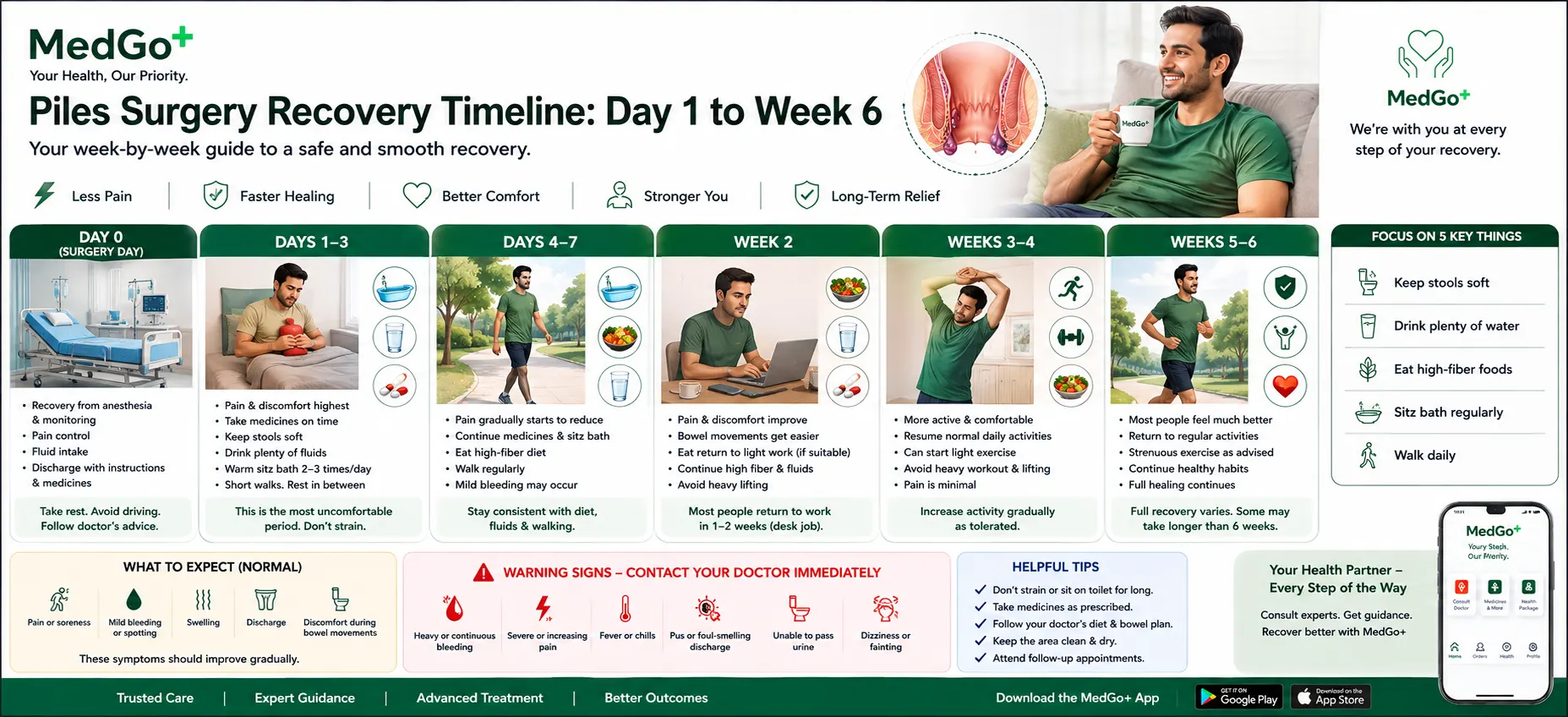
Recovery after piles surgery is gradual. The first few days are usually the most uncomfortable, particularly after a conventional hemorrhoidectomy. Pain, swelling, mild bleeding and discomfort during bowel movements can occur while the surgical area heals.
Many patients gradually return to normal daily activities over the following weeks, but recovery time varies depending on the procedure, the extent of the hemorrhoids, your general health and the type of work or physical activity you normally do.
This guide provides a general recovery timeline from the day of surgery through approximately six weeks. Your surgeon’s postoperative instructions should always take priority.
What Happens After Piles Surgery?
After hemorrhoid surgery, you are taken to a recovery area where your healthcare team monitors you while the effects of anesthesia wear off. Your pain, bleeding, blood pressure, heart rate and ability to pass urine may be assessed before discharge.
Many uncomplicated hemorrhoid operations can be performed as day-care procedures, although some patients may stay overnight depending on the procedure, anesthesia, pain control and their medical condition.
- Recovery from anesthesia.
- Pain assessment and treatment.
- Monitoring for bleeding.
- Gradual return to eating and drinking.
- Assessment of urination.
- Discharge instructions.
- Prescriptions for pain relief and bowel management when appropriate.
Piles Surgery Recovery at a Glance
Surgery Day
Recovery from anesthesia, pain control, monitoring and discharge preparation.
Days 1–3
Pain and discomfort are often significant. Focus on prescribed medicines, soft stools, fluids, rest and gentle walking.
Days 4–7
The surgical area is still healing, but many patients gradually become more mobile and independent.
Week 2
Pain and bowel-movement discomfort often begin to improve. Some patients can return to work depending on their recovery and job.
Weeks 3–4
Daily activities can usually increase gradually, although strenuous exercise and heavy lifting may still require caution.
Weeks 5–6
Many patients are substantially recovered, but complete healing and return to unrestricted activity can take longer in some cases.
Day 0: The Day of Piles Surgery
Immediately after surgery, you will spend time in a recovery area while the effects of anesthesia wear off. You may feel sleepy, tired or mildly nauseated.
Your Healthcare Team May Check
- Blood pressure and heart rate.
- Pain level.
- Bleeding from the surgical area.
- Ability to drink fluids.
- Ability to pass urine.
- Overall recovery from anesthesia.
If you are discharged on the same day, arrange for a responsible adult to take you home and stay with you according to your hospital’s instructions.
The First 24 Hours
The first day is mainly about controlling pain, preventing constipation, staying hydrated and resting.
- Take prescribed pain medicines as directed.
- Take prescribed stool-softening or laxative medicines when instructed.
- Drink adequate fluids unless medically restricted.
- Eat light, nutritious foods if tolerated.
- Walk gently around the home.
- Rest between activities.
- Follow your surgeon’s wound-care instructions.
Do not drive after anesthesia or while taking medicines that impair your alertness or ability to drive safely.
Days 1–3: The Most Uncomfortable Period
For many patients, the first several days are the most uncomfortable part of hemorrhoidectomy recovery. Pain can become particularly noticeable during and after bowel movements.
- Use prescribed pain relief regularly as instructed.
- Keep stools soft.
- Drink adequate fluids.
- Avoid straining.
- Use warm sitz baths if recommended.
- Take short, gentle walks.
- Rest when tired.
Do not compare your recovery directly with another patient. Different procedures and individual healing rates can produce very different experiences.
Why Is Piles Surgery Painful?
The anus contains many sensitive nerve endings, and bowel movements repeatedly move across the healing surgical area. This is why conventional hemorrhoidectomy can be more painful than many other minor surgical procedures.
Pain should gradually become more manageable as healing progresses. Your surgeon may prescribe a combination of pain-relieving medicines.
- Take medicines exactly as prescribed.
- Do not exceed recommended doses.
- Keep bowel movements soft.
- Avoid unnecessary straining.
- Use warm water baths if recommended.
- Contact your healthcare team if pain is severe or increasingly difficult to control.
The First Bowel Movement After Piles Surgery
The first bowel movement is one of the biggest concerns for many patients. Some pain, pressure or discomfort can occur, but avoiding bowel movements can allow stool to become harder and more difficult to pass.
- Follow your prescribed bowel-management plan.
- Drink adequate fluids unless restricted.
- Eat fibre-rich foods as advised.
- Use prescribed stool softeners or laxatives when instructed.
- Do not strain.
- Do not sit on the toilet for a long time.
- Take pain medicine according to your surgeon’s instructions.
Many colorectal surgeons aim for a bowel movement within the first couple of days, but the exact timing varies between patients and postoperative instructions.
Days 4–7: End of the First Week
By the end of the first week, the surgical area is still healing, but some patients notice that mobility and daily activities are becoming easier.
- Continue prescribed pain management.
- Continue your bowel regimen.
- Walk regularly as tolerated.
- Keep the area clean.
- Continue warm sitz baths if recommended.
- Avoid heavy lifting.
- Avoid strenuous exercise.
A small amount of bleeding or discharge may occur during healing, but heavy or increasing bleeding should be assessed promptly.
Week 2: Gradual Improvement
During the second week, many patients begin to feel significantly better. Pain and bowel-movement discomfort may still occur but should generally be becoming easier to manage.
- Continue regular walking.
- Gradually increase normal household activity.
- Continue preventing constipation.
- Maintain adequate fibre and fluids.
- Return to work if you feel ready and your surgeon agrees.
- Avoid activities that cause significant pain.
Some people may need more than two weeks away from work, particularly after conventional hemorrhoidectomy or when their job involves physical activity.
Weeks 3–4: Returning to Your Routine
By weeks three and four, many patients can perform substantially more of their normal daily activities.
- Continue increasing walking.
- Resume light activities gradually.
- Continue a fibre-rich diet.
- Maintain adequate hydration.
- Continue monitoring bowel habits.
- Follow your surgeon’s advice about exercise and lifting.
Do not use the calendar alone to decide when you are ready for heavy exercise. Your symptoms and your surgeon’s advice should guide the timing.
Weeks 5–6: Later Recovery
By approximately five to six weeks, many patients are much closer to their usual routine. Some may already feel fully recovered, while others may still have mild tenderness or changes around the surgical area.
- Gradually return to more demanding activities when cleared.
- Continue healthy bowel habits.
- Maintain adequate fibre and fluids.
- Increase exercise progressively.
- Attend follow-up appointments when recommended.
- Report persistent or worsening symptoms.
Complete recovery can take longer than six weeks in some patients, particularly after extensive surgery or if complications occur.
How to Keep Your Stools Soft After Surgery
Preventing constipation is one of the most important parts of hemorrhoid surgery recovery. Hard stools and straining can increase pain and interfere with healing.
- Drink adequate fluids unless medically restricted.
- Eat fibre-rich foods.
- Use prescribed stool softeners or laxatives as instructed.
- Do not ignore the urge to have a bowel movement.
- Avoid excessive straining.
- Stay gently active.
Your surgeon may recommend a specific bowel regimen. Follow that plan rather than adding or stopping medicines on your own.
What to Eat After Piles Surgery
The main dietary goal during recovery is to support healing while keeping stools soft and easy to pass.
- Fruits.
- Vegetables.
- Oats.
- Whole grains.
- Dal and lentils.
- Beans and legumes.
- Adequate protein.
- Adequate fluids.
If your usual diet is low in fibre, increase fibre gradually. A sudden increase can cause bloating or abdominal discomfort.
Foods to Avoid or Limit During Recovery
There is no universal list of foods that every patient must avoid after piles surgery. The most important goal is to avoid constipation and foods that cause significant digestive discomfort.
- Large amounts of low-fibre processed foods.
- Foods that consistently cause constipation.
- Foods that trigger diarrhea or digestive irritation for you.
- Excessively large meals.
- Alcohol during the early recovery period if it conflicts with your medicines or surgeon’s advice.
Sitz Bath After Piles Surgery
A warm sitz bath can help soothe the surgical area and may reduce discomfort. Some colorectal surgery guidance recommends warm-water baths several times a day during the early recovery period.
- Use comfortably warm water.
- Follow your surgeon’s recommended duration and frequency.
- Gently clean the area.
- Pat dry rather than rubbing.
- Avoid adding soaps, perfumes or other irritating substances unless specifically recommended.
Sitz baths provide symptom relief but do not replace prescribed treatment or wound care.
How to Clean Yourself After a Bowel Movement
The surgical area can be sensitive after hemorrhoid surgery. Gentle cleaning is generally preferable to vigorous rubbing.
- Follow your surgeon’s wound-care instructions.
- Rinse gently with water when appropriate.
- Avoid aggressive wiping.
- Pat the area dry gently.
- Use only products recommended by your healthcare team.
If your surgeon has provided specific instructions about dressings, cleansing solutions or bathing, follow those instructions.
Bleeding After Piles Surgery
A small amount of bleeding or spotting can occur after hemorrhoid surgery, particularly around bowel movements. It should generally become less rather than progressively heavier.
The amount considered acceptable varies by procedure and hospital instructions, so follow the specific guidance provided by your surgical team.
Heavy, continuous or increasing bleeding requires prompt medical assessment.
Swelling and Discharge After Surgery
Swelling, tenderness and a small amount of mucus or discharge can occur while the surgical area heals.
However, increasing swelling accompanied by severe pain, fever, pus or worsening redness should be assessed by a healthcare professional.
Difficulty Passing Urine After Piles Surgery
Difficulty urinating can occasionally occur after anorectal surgery, particularly after anesthesia or when pain and swelling affect the pelvic area.
If you are unable to pass urine, contact your surgical team promptly or seek urgent medical assessment according to your discharge instructions.
Do not ignore significant urinary retention because prolonged bladder over-distension can cause complications.
When Can I Sit Normally After Piles Surgery?
Sitting can be uncomfortable during the early recovery period because the surgical area is directly involved.
- Sit for short periods initially.
- Change position regularly.
- Use a comfortable surface.
- Stand and walk periodically.
- Avoid prolonged sitting if it increases pain.
Ask your surgeon whether they recommend any particular cushion. Avoid using a device simply because it is marketed for hemorrhoid recovery without discussing it with your healthcare team.
When Can I Walk After Piles Surgery?
Gentle walking is generally encouraged once you have recovered sufficiently from anesthesia and your healthcare team considers it safe.
- Start with short walks.
- Walk several times during the day.
- Increase distance gradually.
- Avoid activities that cause significant pain.
- Rest when tired.
Avoid remaining in bed for prolonged periods unless your medical team has specifically instructed you to do so.
When Can I Return to Work?
Many patients need approximately two weeks away from work after conventional hemorrhoidectomy, although the exact timing varies considerably.
Desk-Based Work
You may return when you can sit, walk and perform your normal duties without significant discomfort and your surgeon considers it appropriate.
Physical Work
Jobs involving heavy lifting, prolonged standing, pushing, pulling or strenuous physical activity may require additional recovery time.
When Can I Drive After Piles Surgery?
Do not drive until you are fully recovered from anesthesia, are not impaired by pain medicines and can safely control the vehicle.
- You should be able to sit comfortably.
- You should be able to move your body safely.
- You should be able to perform an emergency stop.
- You should not be affected by sedating medicines.
- Check your insurer’s requirements if applicable.
Ask your surgeon if you are uncertain about when it is safe to drive.
When Can I Exercise After Piles Surgery?
Gentle walking can usually begin early, but strenuous exercise should be introduced gradually.
- Walking: gradually increase as tolerated.
- Light household activity: increase according to comfort.
- Jogging: resume only when healing and symptoms allow.
- Gym workouts: return gradually after appropriate clearance.
- Heavy lifting: wait until your surgeon says it is safe.
- Cycling: avoid if it causes pressure or pain around the surgical area.
When Can I Have Sex After Piles Surgery?
Sexual activity can usually be resumed when you feel comfortable and your surgical team has not given you a specific restriction. Avoid activity that causes pain, pressure or bleeding.
If you are uncertain, ask your surgeon during follow-up.
Common Symptoms During Normal Recovery
- Pain or soreness.
- Pain during bowel movements.
- Mild swelling.
- Tenderness around the anus.
- Small amounts of bleeding or spotting.
- Mucus or light discharge.
- Temporary changes in bowel habits.
- Tiredness during the first several days.
These symptoms should generally improve rather than progressively worsen.
Warning Signs After Piles Surgery
Contact your healthcare team promptly if you develop symptoms that are severe, worsening or different from what you were told to expect.
- Heavy or continuous rectal bleeding.
- Large blood clots.
- Severe or rapidly worsening pain.
- Fever or chills.
- Pus or foul-smelling discharge.
- Increasing redness or swelling.
- Inability to pass urine.
- Persistent vomiting.
- Severe abdominal pain.
- Dizziness or fainting.
When Should You Seek Emergency Care?
Seek urgent medical attention for heavy or continuous bleeding, large blood clots, severe uncontrolled pain, fainting, significant dizziness, inability to pass urine or other rapidly worsening symptoms.
Do not wait for a routine postoperative appointment if you believe you may have a serious complication.
Possible Complications After Piles Surgery
Most patients recover without major complications, but hemorrhoid surgery can have risks.
- Bleeding.
- Infection.
- Urinary retention.
- Severe postoperative pain.
- Constipation or difficulty passing stool.
- Temporary difficulty controlling bowel movements in some situations.
- Scar-related narrowing in uncommon cases.
- Recurrence of hemorrhoidal symptoms.
Your surgeon should explain the risks relevant to your specific procedure before surgery.
How to Reduce the Risk of Constipation and Straining
- Follow your prescribed bowel regimen.
- Eat adequate fibre.
- Drink sufficient fluids unless medically restricted.
- Walk regularly as tolerated.
- Avoid delaying bowel movements.
- Avoid prolonged toilet sitting.
- Do not strain to force a bowel movement.
A Simple Daily Recovery Routine
Morning
- Take prescribed medicines.
- Drink fluids as advised.
- Eat a fibre-containing breakfast.
- Take a gentle walk.
During the Day
- Eat balanced meals.
- Drink adequate fluids.
- Walk regularly.
- Rest when tired.
- Avoid prolonged sitting.
- Keep stools soft.
Evening
- Take prescribed medicines.
- Use a warm sitz bath if recommended.
- Prepare for a comfortable night of rest.
- Monitor for unusual symptoms.
How Family Members Can Help
Support from family or caregivers can make the first few days easier, especially when pain and mobility are limited.
- Arrange transportation after discharge.
- Help prepare fibre-rich meals.
- Help with household tasks.
- Help collect prescribed medicines.
- Encourage gentle walking.
- Watch for heavy bleeding or other warning signs.
- Help arrange medical review when necessary.
How Long Until I Am Completely Recovered?
There is no single recovery day that applies to every patient. Some people return to normal activities within a few weeks, while others need longer.
After conventional hemorrhoidectomy, pain and bowel discomfort can remain significant during the early weeks. Many patients gradually return to their full level of activity over approximately two to four weeks, but complete healing can take longer.
Recovery may also be different after less-invasive procedures such as rubber band ligation compared with surgical hemorrhoidectomy.
Do All Piles Surgeries Have the Same Recovery?
No. Recovery depends heavily on the procedure.
Hemorrhoidectomy
Usually involves more postoperative pain and a longer recovery period.
Stapled Hemorrhoidopexy
Uses a different surgical technique and may have a different recovery experience.
Office Procedures
Procedures such as rubber band ligation generally involve less recovery time than conventional hemorrhoidectomy.
Your surgeon should explain the expected recovery for the specific procedure you are having.
Questions to Ask Before Piles Surgery
- Which piles procedure are you recommending?
- Why do I need surgery instead of an office procedure?
- What type of anesthesia will be used?
- Will I go home the same day?
- How much pain should I expect?
- What medicines will I need after surgery?
- How will constipation be prevented?
- When can I return to work?
- When can I drive?
- When can I exercise?
- What amount of bleeding is expected?
- Which symptoms require urgent medical attention?
- When should I attend follow-up?
How MedGoPlus Can Help
Recovery after piles surgery can raise questions about pain, bowel movements, diet, wound care, medicines, work and exercise. MedGoPlus can help patients connect with qualified healthcare professionals through available consultation services for personalized medical guidance.
If you are unsure whether a symptom is part of normal recovery or needs medical attention, contact your surgical team rather than relying only on general online information.
Take Care During Your Recovery
The most important goals after piles surgery are controlling pain, keeping stools soft, avoiding straining, maintaining gentle activity and watching for complications.
Recovery takes time. Do not rush back to heavy exercise or strenuous work simply because you are feeling better. Increase activity gradually and follow the instructions provided by your surgeon.
Medical Disclaimer
This article is intended for general health education and does not replace individualized medical advice. Recovery varies depending on the procedure, the patient’s health and the presence of complications. Always follow the postoperative instructions provided by your surgeon or healthcare team.
Take Control of Your Health with MedGoPlus
Book doctor consultations, manage your health needs, and access convenient healthcare services anytime, anywhere with the MedGoPlus App.
Scan to download
Download the MedGoPlus App