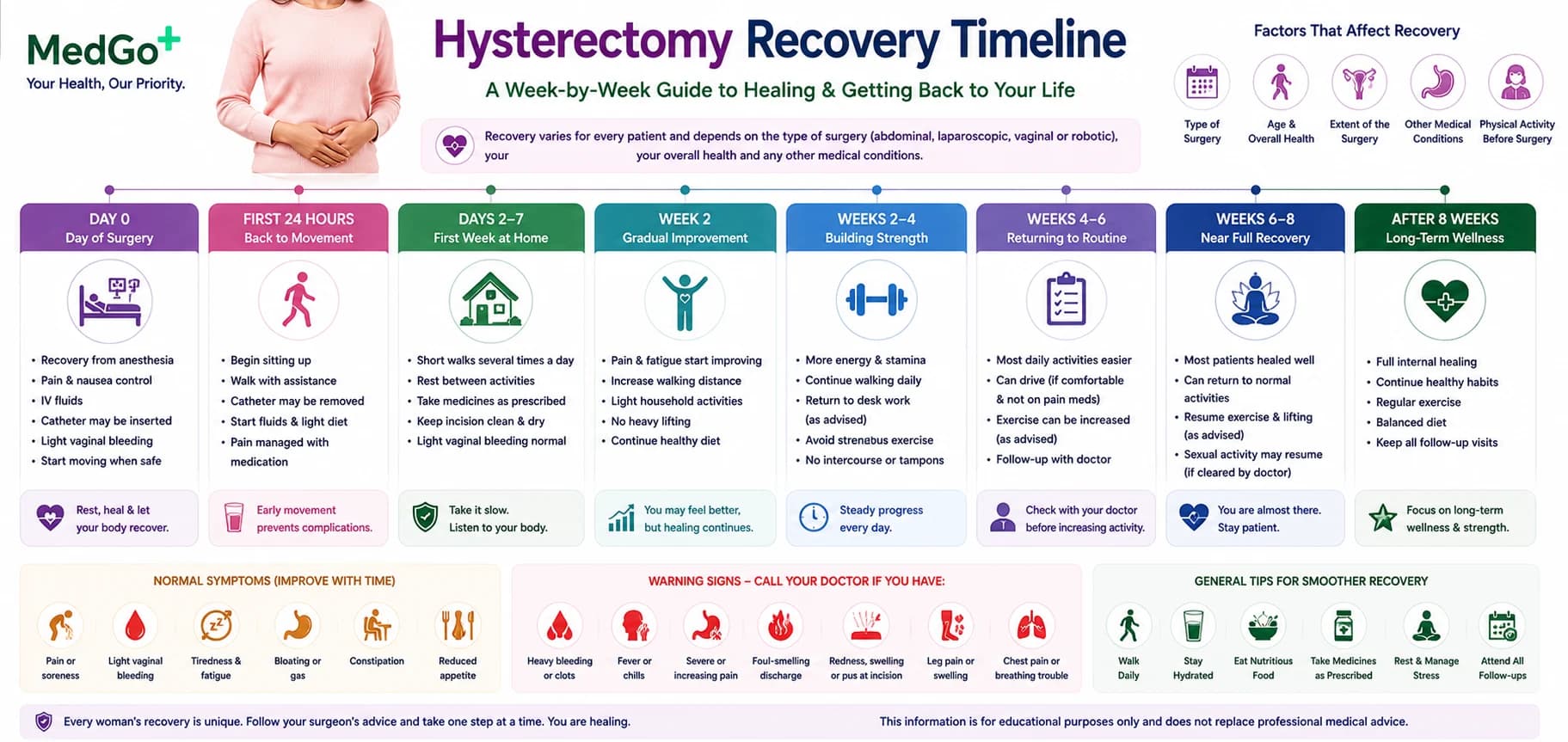
Recovery after a hysterectomy is a gradual process. Most patients improve steadily over the first several weeks, but the exact timeline depends on the type of hysterectomy, surgical approach, overall health, age, the reason for surgery and whether additional procedures were performed.
A laparoscopic, robotic or vaginal hysterectomy generally allows a faster recovery than an abdominal hysterectomy. However, even after minimally invasive surgery, the internal tissues need time to heal.
Think of recovery as a gradual return to normal rather than a fixed deadline. Some days may feel better than others, and temporary fatigue can continue even when pain is improving.
Hysterectomy Recovery at a Glance
- Day 0–1: Recovery from anesthesia, pain control, fluids and early movement.
- Days 2–7: Gradual walking, basic daily activities and wound care.
- Week 2: Pain and fatigue generally begin improving, but activity remains limited.
- Weeks 2–4: Gradual increase in walking and light activities.
- Weeks 4–6: Many patients are approaching normal daily activities, depending on the surgery.
- Weeks 6–8: Many patients have substantially recovered, particularly after abdominal surgery.
- Beyond 8 weeks: Some patients may still need additional time to regain their previous energy and strength.
Day 0: The Day of Hysterectomy Surgery
Immediately after surgery, you will be taken to a recovery area where your breathing, blood pressure, heart rate, oxygen level and pain are monitored while the effects of anesthesia wear off.
- You may feel sleepy or tired from anesthesia.
- Mild to moderate abdominal or pelvic discomfort is common.
- Pain medicines will be provided.
- You may have an intravenous drip.
- A urinary catheter may be present temporarily.
- You may have dressings over abdominal wounds.
- Some patients experience nausea after anesthesia.
- You may have light vaginal bleeding or discharge.
Your surgical team will decide when it is safe for you to drink, eat, sit up and begin walking.
The First 24 Hours
The first day is mainly focused on safe recovery from anesthesia, controlling pain, maintaining hydration and getting you moving.
- Pain is assessed regularly.
- Nausea is treated if necessary.
- Fluids are given as needed.
- You may gradually begin drinking and eating.
- The catheter may be removed when appropriate.
- You will be encouraged to stand and walk with assistance.
- Your wound and vaginal bleeding will be monitored.
Early walking is important because movement improves circulation and helps reduce the risk of blood clots.
Days 2–3: Getting Moving
During the next few days, most patients gradually become more mobile. You may still feel tired and sore, especially when getting out of bed or changing position.
- Take short walks several times a day.
- Increase walking gradually rather than exercising intensely.
- Take pain medication according to your discharge plan.
- Drink adequate fluids.
- Eat small, nutritious meals if your appetite is reduced.
- Prevent constipation and avoid excessive straining.
- Continue breathing or mobility exercises if advised.
When Can I Go Home?
Hospital discharge depends on the type of surgery and how well you are recovering.
- Laparoscopic or robotic hysterectomy may allow relatively early discharge after an uncomplicated recovery.
- Vaginal hysterectomy may also involve a short hospital stay.
- Abdominal hysterectomy generally requires a longer hospital stay.
- Complex cancer surgery or additional procedures may require longer hospitalization.
You are generally discharged when your vital signs are stable, pain is manageable, you can move safely, you can eat and drink sufficiently and there are no immediate concerns requiring continued hospital care.
Days 3–7: Your First Week at Home
The first week at home is usually about resting while gradually becoming more active. It is normal to tire easily even after simple activities.
- Take short, gentle walks around your home.
- Rest when you feel tired.
- Avoid heavy lifting.
- Avoid strenuous household work.
- Take prescribed medicines as directed.
- Keep wounds clean according to your discharge instructions.
- Drink enough fluids.
- Eat protein-rich and fibre-containing foods.
- Use sanitary pads rather than tampons if vaginal bleeding occurs.
What Is Normal During the First Week?
- Mild to moderate pain or soreness.
- Tiredness and increased need for sleep.
- Mild vaginal bleeding or discharge.
- Bloating or gas discomfort.
- Temporary constipation.
- Reduced appetite.
- Difficulty getting comfortable in certain positions.
- Mild pulling or discomfort around abdominal incisions.
These symptoms should generally improve gradually rather than becoming progressively worse.
Week 2: Gradual Improvement
By the second week, many patients notice that walking and basic activities are becoming easier. However, you may still have periods of fatigue and should not assume that feeling better means the internal tissues are completely healed.
- Increase walking distance gradually.
- Continue avoiding heavy lifting unless your surgeon has cleared you.
- Perform recommended pelvic floor or mobility exercises.
- Continue good hydration and nutrition.
- Rest after activities when needed.
- Continue monitoring bleeding and wound changes.
Weeks 2–4: Building Strength
Between the second and fourth weeks, many patients gradually regain energy and independence. The appropriate activity level depends strongly on the surgical approach.
- Continue regular walking.
- Gradually increase daily activities.
- Light household activities may become easier.
- Avoid strenuous abdominal exercises unless cleared.
- Avoid heavy lifting until your surgeon gives permission.
- Plan your return to work based on your job demands and recovery.
Patients recovering from minimally invasive surgery may progress more quickly than those recovering from an abdominal hysterectomy.
Weeks 4–6: Returning Toward Normal
By four to six weeks, many patients are significantly more active and may be approaching their normal routine. Some fatigue can still occur.
- Walking can usually be increased further.
- Many daily activities become easier.
- Light exercise may be increased according to medical advice.
- Driving may be possible when you can safely control the vehicle.
- Return to work may be appropriate depending on your job.
- Sexual activity should only resume after appropriate healing and medical clearance.
Do not use the six-week mark as an automatic clearance for every activity. Your surgeon may recommend a different timeline based on your operation and healing.
Weeks 6–8: Completing Recovery
Many patients have recovered substantially by six to eight weeks. This is particularly relevant after abdominal hysterectomy, where the abdominal muscles and deeper tissues require more time to heal.
- Normal daily activities may gradually resume.
- Exercise can be increased according to your surgeon’s advice.
- Work restrictions may be reduced or removed.
- Heavy lifting may be resumed when medically cleared.
- Sexual activity may resume once healing is confirmed and you are comfortable.
Some patients, especially those who underwent extensive surgery or had other health problems, may need longer than eight weeks to feel completely recovered.
Hysterectomy Recovery by Surgical Approach
Laparoscopic or Robotic Hysterectomy
Because the abdominal incisions are small, recovery is often faster than after open abdominal surgery. Many patients gradually return to normal activities over several weeks.
Vaginal Hysterectomy
There is no abdominal incision for the hysterectomy itself, and recovery is often relatively quick. Internal vaginal tissues still need adequate time to heal.
Abdominal Hysterectomy
The larger abdominal incision generally means more postoperative discomfort and a longer recovery. Full recovery may take around six to eight weeks or longer.
Pain After Hysterectomy
Pain is common after hysterectomy but should generally improve as recovery progresses.
- Take prescribed pain medicines according to instructions.
- Do not wait until severe pain develops before using medication prescribed for regular use.
- Use gentle movement rather than staying in bed all day.
- Support your abdomen when coughing or changing position if this feels more comfortable.
- Tell your healthcare team if pain is becoming worse instead of better.
Fatigue After Hysterectomy
Fatigue is one of the most common reasons patients feel that recovery is slower than expected. Your body is using energy to heal, and anesthesia, pain, reduced activity and blood loss can contribute to tiredness.
- Rest when you need to.
- Avoid trying to complete all household tasks at once.
- Take short walks instead of prolonged exercise.
- Maintain adequate nutrition and hydration.
- Gradually increase activity as your energy improves.
If severe fatigue persists or is accompanied by dizziness, breathlessness, rapid heartbeat or unusual weakness, contact your doctor because anemia or another medical problem may need assessment.
Vaginal Bleeding and Discharge After Hysterectomy
Light vaginal bleeding or discharge can occur after hysterectomy and may continue for several weeks. It should generally become lighter over time.
- Use sanitary pads rather than tampons during recovery.
- Monitor whether bleeding is becoming lighter.
- Follow your surgeon’s instructions about bathing and swimming.
- Report heavy bleeding or large blood clots.
- Report foul-smelling discharge or fever.
Some patients may experience bleeding that stops and starts during recovery. Heavy or worsening bleeding should not be assumed to be normal.
Bowel Movements and Constipation
Constipation is common after surgery because of reduced activity, changes in diet and certain pain medicines.
- Drink adequate fluids.
- Gradually increase fibre when tolerated.
- Walk regularly.
- Take prescribed stool softeners or laxatives when recommended.
- Avoid excessive straining during bowel movements.
When Can I Shower After Hysterectomy?
Showering is often possible relatively soon after surgery, but the exact timing depends on the wound type and your surgeon’s instructions.
Avoid soaking in a bath or swimming pool until your wounds have healed and your healthcare team confirms that it is safe.
When Can I Drive After Hysterectomy?
Driving should wait until you are no longer affected by sedating pain medicines, can comfortably wear a seatbelt and can perform an emergency stop without significant pain or restriction.
For some patients this may be around two to six weeks, but the exact timing depends on recovery and the type of surgery. Check your insurance requirements as well.
When Can I Return to Work?
Return-to-work timing depends on your surgical approach, recovery and occupation.
- Desk-based work may be possible earlier if recovery is uncomplicated.
- Jobs involving prolonged standing may require additional recovery time.
- Heavy manual work generally requires a longer restriction.
- Abdominal hysterectomy usually requires more recovery time than minimally invasive surgery.
- Your surgeon should determine when you are medically fit to return.
When Can I Exercise After Hysterectomy?
Walking is usually the best starting exercise after surgery. Begin with short, gentle walks and increase the distance gradually.
- Avoid strenuous exercise during early recovery.
- Avoid heavy abdominal exercises until cleared.
- Increase activity gradually.
- Stop if exercise causes significant pain, bleeding or dizziness.
- Follow your surgeon’s instructions for returning to higher-impact activities.
When Can I Lift Heavy Objects?
Heavy lifting is generally restricted during the early recovery period because the abdominal and internal surgical tissues need time to heal.
The exact lifting restriction varies according to the surgical approach and your surgeon’s instructions. Do not assume that feeling comfortable means the tissues are fully healed.
When Can I Have Sex After Hysterectomy?
Vaginal intercourse is generally avoided until the internal surgical tissues have healed and vaginal bleeding or discharge has settled.
Many patients are advised to wait at least four to six weeks, although your surgeon may recommend a longer period depending on the operation and healing.
Do not resume intercourse simply because the external wounds look healed. Internal tissues require adequate time to recover.
What Should I Eat During Recovery?
A balanced diet supports tissue healing, energy and bowel function.
- Protein-rich foods such as eggs, fish, lean meat, dairy or plant proteins.
- Fresh fruits and vegetables.
- Fibre-rich foods to help prevent constipation.
- Adequate fluids.
- Iron-rich foods if you have been advised that you are anemic.
- Vitamin-rich foods to support overall nutrition.
How Can I Prevent Constipation After Surgery?
- Drink enough fluids.
- Walk regularly.
- Eat fibre-rich foods as tolerated.
- Avoid unnecessary straining.
- Take prescribed laxatives or stool softeners if recommended.
- Tell your doctor if constipation becomes severe or persistent.
Pelvic Floor Exercises After Hysterectomy
Pelvic floor exercises may be recommended during recovery, particularly when pelvic floor weakness or prolapse is part of the original condition.
The timing and type of exercises should be guided by your surgeon or physiotherapist. Do not begin strenuous pelvic exercises without appropriate advice.
Emotional Recovery After Hysterectomy
Physical healing is only one part of recovery. Some patients experience sadness, anxiety, mood changes or a sense of loss after hysterectomy, particularly when fertility has been permanently affected.
Others experience significant relief when symptoms such as heavy bleeding, pelvic pain or pressure finally improve.
If low mood, anxiety or feelings of hopelessness persist, discuss them with your doctor. Emotional support and professional treatment are available.
If Your Ovaries Were Removed
If both ovaries were removed before natural menopause, surgical menopause can occur immediately because ovarian hormone production drops abruptly.
- Hot flashes.
- Night sweats.
- Vaginal dryness.
- Sleep changes.
- Mood changes.
- Changes in sexual desire.
Your doctor may discuss hormone therapy or other treatments depending on your age, medical history and reason for ovary removal.
Signs That Recovery Is Going Well
- Pain gradually becomes easier to control.
- Walking becomes easier each week.
- Energy slowly returns.
- Vaginal bleeding or discharge becomes lighter.
- Appetite improves.
- Bowel and bladder function return toward normal.
- You can gradually perform more daily activities without significant symptoms.
Warning Signs During Hysterectomy Recovery
Contact your healthcare team if you develop symptoms that are severe, worsening or unexpected.
- Heavy vaginal bleeding.
- Passing large blood clots.
- Foul-smelling vaginal discharge.
- Fever or chills.
- Increasing abdominal or pelvic pain.
- Increasing redness, swelling or drainage from an incision.
- Persistent vomiting.
- Difficulty passing urine.
- Severe constipation or abdominal swelling.
- Pain or swelling in one leg.
- Persistent dizziness or unusual weakness.
When Is It an Emergency?
Seek urgent medical attention for severe chest pain, sudden or significant difficulty breathing, fainting, heavy uncontrolled bleeding or rapidly worsening symptoms.
These symptoms can sometimes indicate serious complications such as a blood clot or significant bleeding and should not be managed at home.
A Simple Recovery Plan
- First week: Rest, short walks, pain control and wound care.
- Week 2: Gradually increase walking and light daily activities.
- Weeks 2–4: Build endurance while continuing to avoid heavy lifting.
- Weeks 4–6: Gradually return toward normal daily activities if healing is satisfactory.
- Weeks 6–8: Increase exercise and work activities according to medical clearance.
- After 8 weeks: Continue building strength and return to your normal routine as tolerated.
This is a general framework rather than a personal medical clearance. Your surgeon’s instructions take priority.
How to Make Your Recovery Easier
- Arrange help at home during the first few days.
- Keep frequently used items within easy reach.
- Prepare simple nutritious meals in advance.
- Keep your medications organized.
- Take short walks throughout the day.
- Do not try to “catch up” on household work.
- Get adequate sleep and rest.
- Keep all follow-up appointments.
- Ask your surgeon before increasing strenuous activity.
The Most Important Point About Hysterectomy Recovery
Do not compare your recovery directly with another patient. Two people can undergo hysterectomy on the same day and have very different recovery experiences.
The surgical approach, extent of surgery, age, general health, anemia, previous operations, complications and physical demands at home or work can all affect recovery.
A gradual improvement in pain, mobility and energy is generally more important than reaching a specific milestone on a specific day.
How MedGoPlus Can Help
Recovery after hysterectomy can raise many questions about pain, bleeding, activity, diet, work, exercise and returning to normal life.
MedGoPlus can help patients connect with qualified healthcare professionals for consultations and postoperative guidance through available consultation services.
Medical Disclaimer
This article is for general health education and does not replace individualized medical advice. Recovery varies according to the type of hysterectomy, surgical approach, medical conditions and whether complications occur. Always follow the postoperative instructions provided by your surgeon and healthcare team.
Take Control of Your Health with MedGoPlus
Book doctor consultations, manage your health needs, and access convenient healthcare services anytime, anywhere with the MedGoPlus App.
Scan to download
Download the MedGoPlus App