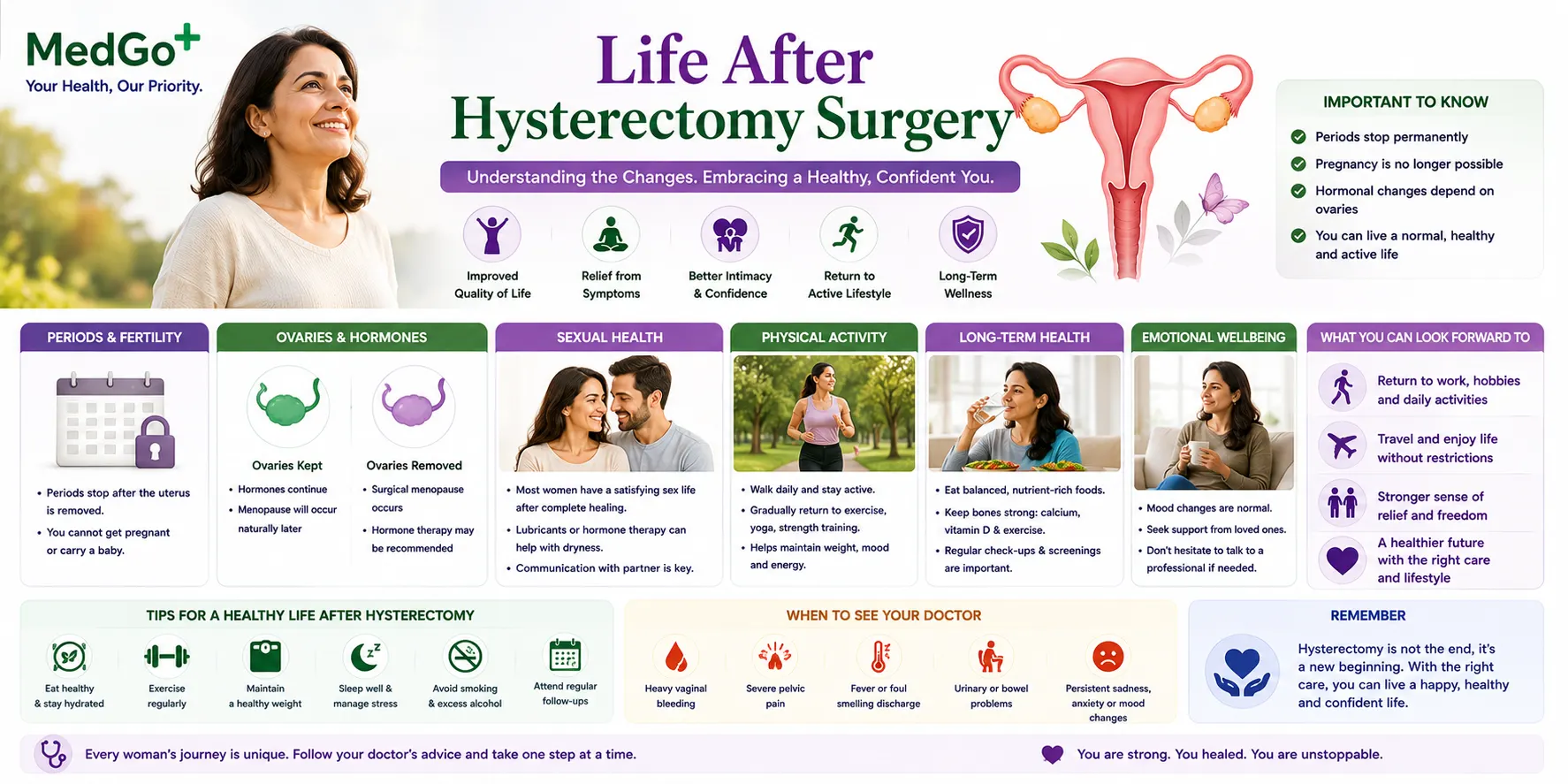
Life after hysterectomy can be very different from the recovery period immediately following surgery. Once healing is complete, many women return to work, exercise, travel, relationships and everyday activities without major restrictions.
However, the long-term experience depends greatly on what was removed during surgery. The uterus is always removed during a hysterectomy, but the cervix, fallopian tubes and ovaries may or may not be removed.
The most important distinction is whether one or both ovaries were preserved. If the ovaries remain, they can continue producing hormones. If both ovaries are removed before natural menopause, surgical menopause occurs because ovarian hormone production falls abruptly.
What Changes After Hysterectomy?
- You will no longer have menstrual periods.
- You will no longer be able to carry a pregnancy.
- Pregnancy prevention is no longer required after the uterus has been removed.
- Your hormonal status depends largely on whether your ovaries were preserved.
- Your sexual function may remain normal, improve or temporarily change during recovery.
- Your physical activity can usually return to normal after adequate healing.
- Your long-term follow-up depends on your original diagnosis and the organs removed.
The First Important Question: Were Your Ovaries Removed?
If your ovaries were preserved, you may continue to produce ovarian hormones even though you no longer have periods.
If both ovaries were removed before natural menopause, you will usually enter surgical menopause soon after surgery.
This difference is extremely important when discussing long-term symptoms, bone health, sexual health and possible hormone treatment.
Will I Still Have Periods After Hysterectomy?
No. Once the uterus has been removed, menstrual bleeding does not occur because there is no longer a uterine lining to shed.
If your ovaries remain, they may continue their normal hormonal activity and you may still experience some cyclical symptoms even though you no longer have periods.
Can I Get Pregnant After Hysterectomy?
A woman cannot carry a pregnancy after the uterus has been removed. Hysterectomy therefore permanently ends the ability to become pregnant and carry a pregnancy.
If fertility is important to you, this should be discussed carefully before surgery because hysterectomy is irreversible.
Do I Still Need Contraception After Hysterectomy?
Contraception is no longer needed to prevent pregnancy after hysterectomy because pregnancy cannot be carried without a uterus.
However, condoms may still be recommended to reduce the risk of sexually transmitted infections.
Life After Hysterectomy If the Ovaries Are Preserved
When one or both healthy ovaries are left in place, they can continue producing hormones. This means hysterectomy does not automatically cause immediate menopause.
- No menstrual periods.
- No ability to carry a pregnancy.
- Continued ovarian hormone production may occur.
- Menopause can still happen naturally later.
- Some women may experience menopause earlier than expected after hysterectomy.
Life After Hysterectomy If Both Ovaries Are Removed
When both ovaries are removed before natural menopause, the body experiences a sudden reduction in ovarian hormones. This is called surgical menopause.
- Hot flushes.
- Night sweats.
- Vaginal dryness.
- Sleep disturbance.
- Mood changes.
- Reduced sexual desire.
- Fatigue.
- Changes in bone health over time.
The intensity of symptoms varies from person to person. Your doctor can discuss hormone therapy and non-hormonal treatment options based on your medical history.
Does Hysterectomy Cause Early Menopause?
Removing both ovaries causes immediate surgical menopause if the woman has not already gone through natural menopause.
If the ovaries are preserved, menopause does not usually happen immediately because the ovaries can continue producing hormones. However, menopause may occur somewhat earlier than it otherwise would have in some women.
Menopause Symptoms After Hysterectomy
- Hot flushes.
- Night sweats.
- Vaginal dryness.
- Sleep problems.
- Mood changes.
- Anxiety.
- Reduced libido.
- Fatigue.
- Joint or muscle discomfort.
- Changes in concentration or memory.
Not every woman experiences all of these symptoms. Their severity depends on age, hormone levels, whether the ovaries were removed and individual health factors.
Can Hormone Replacement Therapy Be Used After Hysterectomy?
Hormone replacement therapy, commonly called HRT, may be appropriate for some women who develop menopause symptoms after hysterectomy, particularly when both ovaries have been removed before natural menopause.
The appropriate hormone treatment depends on your medical history, age, cancer history, cardiovascular risk, blood-clot risk and whether your uterus remains.
HRT is not suitable for everyone. Never start, stop or change hormone therapy without discussing it with your doctor.
Will I Need Progesterone With HRT After Hysterectomy?
The need for progesterone depends on whether the uterus is present and on the specific hormone treatment being prescribed.
Women who have had their uterus removed may sometimes use estrogen-only HRT, but the correct treatment depends on individual circumstances, including the reason for hysterectomy.
Sex After Hysterectomy
Once healing is complete and your surgeon has confirmed that sexual activity is safe, most women can resume sexual intercourse.
Many patients are advised to wait at least 4 to 6 weeks, and some surgical teams recommend around 6 weeks or longer, depending on the procedure and healing.
There is no need to rush. Emotional readiness is just as important as physical healing.
Will Hysterectomy Affect Sexual Desire?
Hysterectomy does not automatically reduce sexual desire. Some women experience improved sexual wellbeing after surgery because symptoms such as pain, heavy bleeding or fear of pregnancy have been resolved.
Others may experience a temporary decrease in libido during recovery because of fatigue, discomfort, emotional changes or hormonal changes.
Removal of both ovaries can contribute to hormonal changes that affect sexual desire and vaginal comfort.
Can Sex Feel Different After Hysterectomy?
Some women notice no significant difference, while others notice changes in comfort, lubrication or the sensation of orgasm.
The experience varies considerably. Persistent pain, dryness or difficulty with sexual function should be discussed with a gynecologist because treatment options are available.
Vaginal Dryness After Hysterectomy
Vaginal dryness is more likely when ovarian hormone production falls, particularly after removal of both ovaries.
- Water-based or appropriate vaginal lubricants may help during sexual activity.
- Vaginal moisturizers may help some women with persistent dryness.
- Local vaginal estrogen may be appropriate for some patients.
- Systemic hormone therapy may be considered when appropriate.
Discuss persistent dryness, pain or urinary symptoms with your healthcare professional rather than simply tolerating them.
Can Hysterectomy Improve Sex Life?
For some women, yes. If the hysterectomy resolves severe pelvic pain, heavy bleeding or other symptoms that previously interfered with intimacy, sexual wellbeing may improve.
However, results vary and sexual health can also be affected by hormones, emotional wellbeing, relationship factors and other medical conditions.
Exercise After Hysterectomy: Long Term
Once the postoperative healing period is complete and your surgeon has cleared you, regular physical activity should generally become part of a healthy lifestyle.
- Walking.
- Strength training.
- Cycling.
- Swimming after complete healing.
- Yoga or stretching.
- Aerobic exercise.
- Pelvic floor exercises when appropriate.
Increase activity gradually, particularly after abdominal surgery or if you had complications.
Can I Lift Weights After Hysterectomy?
After complete healing and medical clearance, many women can return to strength training. The progression should be gradual.
- Start with light resistance.
- Focus on correct technique.
- Increase weight gradually.
- Avoid exercises that cause pain or pelvic pressure.
- Stop and seek medical advice if new bleeding or significant pain develops.
Weight Gain After Hysterectomy
Hysterectomy itself does not automatically cause weight gain. Weight can change because of age, menopause, reduced activity during recovery, changes in muscle mass, diet and hormonal changes.
If both ovaries are removed and surgical menopause occurs, changes in body composition and metabolism may make weight management more challenging for some women.
- Return gradually to regular exercise after medical clearance.
- Eat adequate protein.
- Choose vegetables, fruits and whole grains.
- Limit excess sugary drinks and highly processed foods.
- Maintain regular sleep.
- Discuss significant unexplained weight changes with your doctor.
Bone Health After Hysterectomy
Bone health becomes particularly important when both ovaries are removed before natural menopause because the resulting reduction in estrogen can accelerate bone loss.
- Weight-bearing exercise.
- Resistance training.
- Adequate calcium intake.
- Adequate vitamin D when needed.
- Avoiding smoking.
- Limiting excessive alcohol.
- Medical assessment when early menopause occurs.
Your doctor may recommend bone-density assessment or other preventive measures depending on your age and hormone status.
Heart Health After Hysterectomy
Long-term cardiovascular health remains important after hysterectomy. If surgery results in early loss of ovarian hormones, your doctor may discuss additional strategies for protecting overall health.
- Maintain a healthy body weight.
- Exercise regularly.
- Control blood pressure.
- Monitor cholesterol when appropriate.
- Do not smoke.
- Eat a balanced diet.
- Manage diabetes if present.
Pelvic Floor Health After Hysterectomy
The pelvic floor supports the bladder, bowel and pelvic organs. Maintaining pelvic floor strength can be useful, particularly in women with a history of pelvic organ prolapse or pelvic floor weakness.
- Pelvic floor muscle exercises when recommended.
- Maintaining a healthy weight.
- Preventing chronic constipation.
- Avoiding unnecessary prolonged straining.
- Treating chronic cough when present.
A pelvic health physiotherapist can provide individualized assessment and exercise guidance when needed.
Bladder and Bowel Function After Hysterectomy
Some women experience temporary changes in bladder or bowel function after surgery. These often improve during recovery.
Persistent urinary leakage, difficulty emptying the bladder, recurrent urinary infections, severe constipation or other ongoing bowel changes should be discussed with a doctor.
Do I Still Need Gynecological Checkups?
Yes. Hysterectomy does not mean that all future gynecological care is unnecessary.
The follow-up you need depends on whether your cervix was removed, why the hysterectomy was performed and whether you have a history of cervical or other gynecological disease.
Do I Still Need Cervical Screening After Hysterectomy?
This depends on whether the cervix was removed and your previous cervical screening or cancer history.
If the cervix remains, routine cervical screening generally continues according to the applicable screening program.
If the cervix was removed for reasons other than cancer or significant precancerous disease, screening requirements may differ. Patients treated for cervical cancer or significant precancerous disease may need continued surveillance.
Always follow the screening plan recommended by your gynecologist.
Can I Travel After Hysterectomy?
After the initial recovery period and once your surgeon considers travel safe, most women can travel normally.
- Stay hydrated.
- Move your legs regularly during long journeys.
- Walk periodically when traveling for several hours.
- Carry your medications with you.
- Keep important medical information accessible.
- Avoid heavy luggage until fully recovered.
Long-distance travel soon after major surgery may increase concerns about blood clots, so discuss timing with your healthcare team.
Can I Return to Normal Household Activities?
Once the postoperative healing period is complete, most women can return to normal household activities.
During early recovery, heavy lifting and strenuous cleaning should be avoided. Gradual progression is safer than suddenly returning to a full workload.
Emotional Life After Hysterectomy
The emotional response to hysterectomy is highly individual. Some women feel relief because long-standing symptoms have ended. Others may experience grief, sadness, anxiety or concerns about fertility and body image.
These feelings do not mean that something is wrong with you. A hysterectomy can represent a major life change, particularly for women who had hoped to have children.
- Talk openly with your partner or trusted family members.
- Discuss persistent sadness with your doctor.
- Consider counseling if the emotional impact is significant.
- Seek support from people who understand your experience.
- Do not ignore persistent anxiety or depression.
Body Image After Hysterectomy
Some women feel confident and relieved after recovery, while others may worry that hysterectomy has changed their femininity or attractiveness.
A hysterectomy does not define your femininity or worth. Physical healing, hormonal changes and emotional adjustment can take time.
If body-image concerns are affecting your relationships or daily life, counseling can be helpful.
Can Hysterectomy Change Your Relationship?
A major operation can temporarily affect relationships because of pain, fatigue, changes in sexual activity and emotional stress.
- Talk openly about your recovery.
- Do not rush sexual activity.
- Discuss changes in desire or comfort.
- Allow time for both partners to adjust.
- Seek professional help if relationship difficulties persist.
Can I Have a Normal Sex Life After Hysterectomy?
Yes. Many women have a satisfying sex life after hysterectomy once they have healed.
Sexual wellbeing can be influenced by pain, vaginal dryness, hormone levels, emotional health, relationship factors and the condition that led to surgery.
If sex remains painful or uncomfortable after recovery, speak with your gynecologist rather than assuming that the problem is permanent.
What Symptoms Should Never Be Ignored Long Term?
- New or persistent vaginal bleeding after the expected recovery period.
- Persistent pelvic pain.
- Pain during sexual intercourse.
- Persistent vaginal dryness or irritation.
- New urinary leakage.
- Difficulty passing urine.
- Persistent bowel problems.
- Unexplained weight loss.
- Persistent severe fatigue.
- New or worsening menopausal symptoms.
- Persistent depression or anxiety.
Not every symptom is related to the hysterectomy, but persistent or new symptoms deserve medical assessment.
A Healthy Lifestyle After Hysterectomy
- Exercise regularly after full recovery.
- Eat a balanced diet.
- Maintain a healthy body weight.
- Get adequate protein and calcium.
- Maintain vitamin D as advised.
- Do not smoke.
- Limit alcohol.
- Sleep adequately.
- Manage blood pressure, cholesterol and diabetes.
- Attend recommended medical follow-ups.
Life After Hysterectomy: What You Do Not Need to Fear
- You do not automatically lose your femininity.
- You do not automatically lose sexual function.
- You do not automatically enter menopause if your ovaries remain.
- You do not need a permanently restrictive diet.
- You do not necessarily need to stop exercising.
- You can generally return to normal daily life after complete recovery.
The goal after recovery is not simply to live with the changes caused by surgery. It is to understand your new baseline and return to a healthy, active and satisfying life.
When Should You Speak With Your Doctor?
- If menopausal symptoms are interfering with daily life.
- If vaginal dryness or painful sex persists.
- If you experience unexpected vaginal bleeding.
- If you have persistent pelvic pain.
- If you develop urinary or bowel problems.
- If you have concerns about bone health.
- If you experience persistent anxiety or depression.
- If you are considering hormone therapy.
- If you are unsure about your long-term screening schedule.
How MedGoPlus Can Help
Life after hysterectomy involves more than completing the surgical recovery period. Questions about hormones, menopause, sexual health, exercise, nutrition, emotional wellbeing and long-term follow-up are common.
MedGoPlus can help patients connect with qualified healthcare professionals for consultations and ongoing guidance through available consultation services.
Medical Disclaimer
This article is for general health education and does not replace individualized medical advice. Long-term effects after hysterectomy depend on the type of surgery, whether the ovaries were removed, the reason for surgery, age, medical history and other individual factors. Follow the recommendations of your gynecologist and healthcare team.
Take Control of Your Health with MedGoPlus
Book doctor consultations, manage your health needs, and access convenient healthcare services anytime, anywhere with the MedGoPlus App.
Scan to download
Download the MedGoPlus App