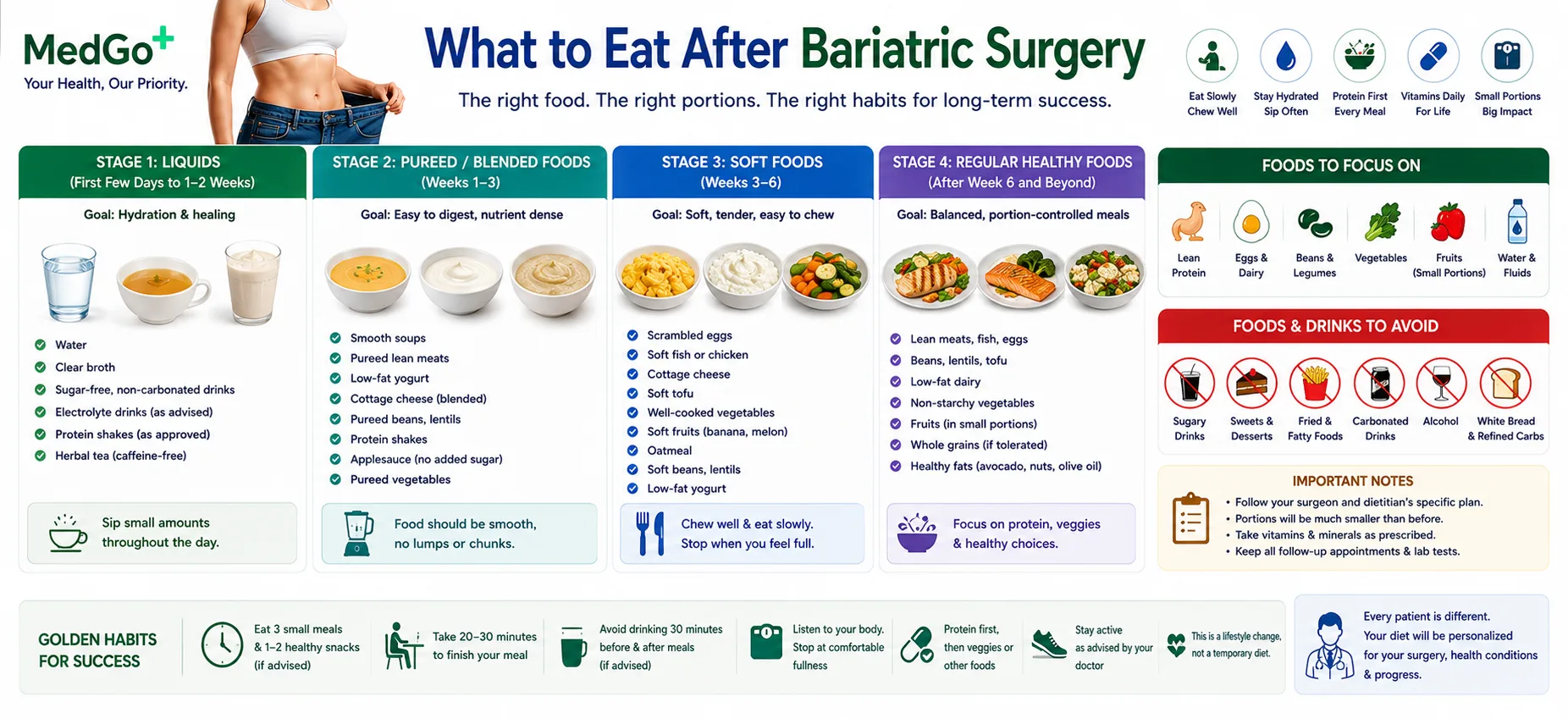
Food choices after bariatric surgery are an important part of recovery and long-term weight management. Because the stomach is smaller and, with some procedures, the digestive pathway has been changed, you cannot immediately return to your previous eating pattern.
Most bariatric programs gradually progress patients from liquids to pureed or blended foods, then soft foods and eventually regular-texture foods. The exact timing varies according to the procedure, surgeon and individual recovery.
The goal is not simply to eat less. Your diet needs to provide enough protein, fluids, vitamins and minerals while allowing your digestive system to heal and helping you develop sustainable eating habits.
The Basic Bariatric Diet Rules
- Eat very small portions.
- Eat slowly.
- Chew food thoroughly before swallowing.
- Prioritize protein as your diet advances.
- Drink fluids regularly throughout the day.
- Follow the diet stage prescribed by your bariatric team.
- Take prescribed vitamins and minerals consistently.
- Avoid high-sugar drinks and foods when instructed.
- Avoid overeating even if a food feels easy to tolerate.
- Do not advance your diet faster than your surgical team recommends.
Bariatric Surgery Diet Stages
Although protocols vary, a common progression is liquids → pureed foods → soft foods → regular healthy foods. Your program may use different names or timing for these stages.
- Stage 1: Liquids.
- Stage 2: Pureed or blended foods.
- Stage 3: Soft foods.
- Stage 4: Regular healthy foods.
Do not move to the next stage simply because you feel hungry or because another patient progressed more quickly. Your digestive system needs time to heal.
Stage 1: What to Drink After Bariatric Surgery
Immediately after surgery, most patients begin with a prescribed liquid diet. The purpose is to maintain hydration while allowing the newly operated stomach and digestive system to recover.
Examples May Include
- Water or approved clear fluids.
- Sugar-free or low-sugar fluids when recommended.
- Clear broth.
- Approved electrolyte fluids.
- Prescribed protein drinks.
- Other liquids specifically approved by your bariatric team.
The exact liquid choices depend on your hospital and bariatric program. Do not assume that every commercially available drink is appropriate immediately after surgery.
How Much Should I Drink After Bariatric Surgery?
Hydration is one of the most important priorities during early recovery. Because your stomach can only comfortably hold small amounts, drinking usually involves frequent small sips rather than large glasses at once.
- Sip fluids regularly throughout the day.
- Do not wait until you are extremely thirsty.
- Keep an approved drink nearby.
- Increase intake gradually as tolerated.
- Follow the fluid target provided by your bariatric team.
ASMBS patient guidance commonly emphasizes approximately 64 ounces of fluid or more per day, but your individual target may differ. Follow the specific target given by your healthcare team.
Stage 2: Pureed and Blended Foods
Once your surgeon or dietitian allows the next stage, foods may be blended or pureed into a smooth consistency. This stage helps your digestive system transition from liquids toward more substantial nutrition.
Possible Foods
- Smooth low-fat yogurt.
- Pureed cottage cheese.
- Blended lean protein.
- Pureed fish.
- Pureed beans or lentils.
- Smooth soups without large pieces.
- Pureed vegetables.
- Approved protein shakes.
Foods should be smooth and easy to swallow. Avoid pieces, chunks, tough textures or foods that your bariatric team has not yet approved.
Stage 3: Soft Foods
As healing progresses, soft foods are gradually introduced. These foods should be tender and easy to chew.
Good Soft-Food Choices
- Soft scrambled eggs.
- Tender fish.
- Soft cooked chicken when tolerated.
- Low-fat yogurt.
- Cottage cheese.
- Soft tofu.
- Well-cooked vegetables.
- Soft beans or lentils.
- Smooth soups.
Even soft foods should be eaten slowly and chewed thoroughly.
Stage 4: Regular Healthy Foods
Eventually, most patients transition to regular-texture foods in small portions. The goal is not to return to the old diet but to establish a healthier eating pattern that can be maintained long term.
- Lean protein.
- Fish and seafood.
- Eggs.
- Low-fat dairy when tolerated.
- Beans and lentils.
- Tofu and other protein-rich foods.
- Non-starchy vegetables.
- Small portions of fruit.
- Whole grains when appropriate and tolerated.
Protein: The Most Important Nutrient After Surgery
Protein deserves special attention after bariatric surgery because your body needs protein for healing and because rapid weight loss can include loss of muscle mass.
Many bariatric programs recommend approximately 60–100 grams of protein per day, depending on the patient and procedure. Your surgeon or dietitian should provide your individual target.
Protein-Rich Foods
- Eggs.
- Fish.
- Chicken or other lean meats when tolerated.
- Greek yogurt or other approved dairy.
- Cottage cheese.
- Tofu.
- Beans.
- Lentils.
- Protein supplements when prescribed or recommended.
What Should You Eat First: Protein, Vegetables or Carbohydrates?
As you progress to regular foods, many bariatric programs recommend prioritizing protein first because portion sizes are small and protein requirements are important.
After protein, patients can gradually incorporate appropriate vegetables and other nutrient-dense foods according to their dietary plan.
Your dietitian can help determine the right balance for your procedure and nutritional needs.
Vegetables After Bariatric Surgery
Vegetables provide fibre, vitamins, minerals and other nutrients. They are usually introduced gradually as your diet advances.
- Start with well-cooked vegetables when instructed.
- Choose soft textures initially.
- Avoid tough or fibrous vegetables until they are tolerated.
- Eat slowly and chew thoroughly.
- Introduce one new food at a time when appropriate.
Fruit After Bariatric Surgery
Fruit can be part of a healthy long-term bariatric diet, but it is usually introduced gradually and in small portions.
- Choose whole fruit rather than sugary fruit drinks.
- Start with soft, easily tolerated options.
- Pay attention to portion size.
- Avoid adding large amounts of sugar.
- Follow your dietitian’s carbohydrate recommendations.
Are Eggs Good After Bariatric Surgery?
Eggs can be an excellent protein source once they are permitted by your bariatric diet progression.
Soft scrambled or other appropriately prepared eggs may be easier to tolerate during the transition to solid foods. Avoid adding large amounts of butter, cream or high-fat sauces.
Are Dairy Products Allowed After Bariatric Surgery?
Many patients can tolerate low-fat dairy products such as yogurt, cottage cheese and other protein-rich options. However, lactose intolerance can occur or become more noticeable after surgery in some patients.
Choose products according to your dietitian’s recommendations and stop or modify foods that consistently cause discomfort, diarrhea or bloating.
What Foods Should You Avoid After Bariatric Surgery?
- Sugary drinks.
- Large amounts of sweets or desserts.
- High-calorie beverages.
- Carbonated drinks when prohibited by your program.
- Deep-fried foods.
- Very fatty meals.
- Tough or dry meats during early recovery.
- Large portions.
- Foods that are difficult to chew.
- Frequent grazing between meals.
- Alcohol unless your healthcare team specifically advises otherwise.
Why Should You Avoid High-Sugar Foods?
High-sugar foods and drinks provide a large amount of calories without much nutritional value and can interfere with long-term weight management.
After gastric bypass, large amounts of rapidly absorbed sugar may also contribute to dumping syndrome, which can cause symptoms such as abdominal discomfort, sweating, weakness, dizziness or rapid heartbeat.
If you develop repeated symptoms after eating, discuss them with your bariatric team.
Why Should Carbonated Drinks Be Avoided?
Many bariatric programs recommend avoiding carbonated drinks because they can cause discomfort, bloating or pressure and may make it harder to follow the intended eating and drinking pattern.
Follow the specific beverage recommendations from your bariatric program.
Can I Drink Coffee After Bariatric Surgery?
Coffee may be restricted during the early recovery period depending on your program. Caffeine can also be irritating for some patients and may make hydration more difficult if consumed excessively.
Ask your bariatric team when coffee can be reintroduced and whether you should choose decaffeinated options initially.
Can I Drink Juice After Bariatric Surgery?
Fruit juice is often limited because it can contain substantial amounts of rapidly absorbed sugar without the fibre of whole fruit.
Water and other approved low-sugar fluids are generally preferred for hydration.
How Should You Eat After Bariatric Surgery?
- Eat slowly.
- Take small bites.
- Chew thoroughly.
- Stop when you feel comfortably full.
- Do not force yourself to finish a portion.
- Avoid eating while distracted.
- Follow your recommended meal schedule.
- Avoid continuously grazing throughout the day.
Why Is Eating Slowly So Important?
After bariatric surgery, the stomach can hold much less food. Eating too quickly or taking large bites can cause pressure, discomfort, nausea or vomiting.
Eating slowly also gives your body time to recognize fullness.
How Much Food Can You Eat After Bariatric Surgery?
Portion size is significantly reduced after bariatric surgery, particularly during the early recovery period. The exact amount changes as healing progresses.
Do not use another patient’s portion size as your target. Your surgeon and dietitian will guide you through appropriate portions as your stomach adapts.
Should You Drink Water With Meals?
Many bariatric programs recommend separating fluids from meals. The exact timing varies by program.
The important principle is to maintain hydration throughout the day without overwhelming your smaller stomach during meals.
Vitamins and Minerals After Bariatric Surgery
Food alone may not provide all the vitamins and minerals needed after bariatric surgery. Lifelong supplementation is generally required, with the exact regimen depending on the procedure and individual laboratory results.
- Bariatric multivitamin.
- Vitamin B12.
- Iron when indicated.
- Calcium.
- Vitamin D.
- Additional vitamins or minerals depending on the procedure and blood tests.
Patients who undergo procedures with greater intestinal bypass may have greater nutritional risks and therefore require particularly careful supplementation and laboratory monitoring.
Foods for Gastric Sleeve Patients
After sleeve gastrectomy, patients generally progress through the same broad dietary stages: liquids, pureed foods, soft foods and eventually regular healthy foods.
Because sleeve gastrectomy does not bypass the intestine, the nutritional considerations differ from gastric bypass, but lifelong supplementation and follow-up remain important.
Foods for Gastric Bypass Patients
Gastric bypass patients also progress gradually through dietary stages, but the operation changes nutrient absorption and can produce dumping syndrome after high-sugar meals.
- Prioritize protein.
- Maintain adequate hydration.
- Limit high-sugar foods and drinks.
- Take prescribed vitamin and mineral supplements.
- Follow laboratory monitoring recommendations.
- Introduce foods gradually and identify individual intolerances.
What About Duodenal Switch Diet?
Duodenal switch has greater effects on nutrient absorption than sleeve gastrectomy or gastric bypass. Patients therefore need particularly careful attention to protein, vitamins, minerals and laboratory monitoring.
The diet should be individualized by a bariatric dietitian because nutritional requirements can be substantially different from those after less malabsorptive procedures.
What If a Food Makes You Sick?
Food tolerance varies after bariatric surgery. A food that one patient tolerates well may cause discomfort in another.
- Stop eating if you develop significant discomfort.
- Do not force yourself to finish the food.
- Record foods that repeatedly cause symptoms.
- Reintroduce foods only according to your dietitian’s guidance.
- Seek medical advice if vomiting or swallowing difficulty persists.
What If You Have Trouble Swallowing?
Difficulty swallowing can occur if food is eaten too quickly, in portions that are too large or without adequate chewing. However, persistent or severe difficulty swallowing requires medical assessment.
Stop eating if food feels stuck and contact your bariatric team if symptoms continue, particularly if you cannot maintain adequate fluid intake.
How to Prevent Dehydration
- Keep water or an approved drink available throughout the day.
- Take frequent small sips.
- Carry fluids when leaving home.
- Monitor your urine output and color.
- Increase fluid intake according to your medical team’s advice.
- Seek medical advice if you cannot keep fluids down.
Signs You May Not Be Getting Enough Nutrition
Persistent weakness, fatigue, hair changes, swelling, numbness, poor wound healing or other unusual symptoms may sometimes be associated with nutritional deficiencies, although they can have many other causes.
Do not self-treat suspected deficiencies with high-dose supplements. Contact your bariatric team for appropriate blood tests and treatment.
Sample Bariatric-Friendly Meal Pattern
Once you have progressed to regular foods, your dietitian may help you create meals around protein and nutrient-dense foods.
Breakfast
An approved protein-rich option such as eggs or Greek yogurt.
Lunch
A small portion of lean protein with appropriately prepared vegetables.
Snack
An approved protein-rich snack if recommended by your dietitian.
Dinner
A small portion of fish, chicken, tofu, beans or another suitable protein with vegetables.
This is only an example. Portion sizes and food choices should be individualized.
Foods That Support Long-Term Weight Loss
- Lean protein.
- Fish and seafood.
- Eggs.
- Beans and lentils.
- Low-fat dairy when tolerated.
- Tofu and other plant proteins.
- Vegetables.
- Whole fruits in appropriate portions.
- Whole grains when tolerated and recommended.
Foods and Habits That Can Work Against Your Results
- Sugary beverages.
- Frequent desserts.
- High-calorie coffee drinks.
- Frequent snacking or grazing.
- Large portions.
- Eating very quickly.
- Eating without chewing properly.
- Regular fried or highly processed foods.
- Drinking calories instead of eating nutrient-dense foods.
- Skipping prescribed vitamins and follow-up care.
What About Alcohol After Bariatric Surgery?
Alcohol should be discussed with your bariatric team. After some bariatric procedures, particularly gastric bypass, alcohol may be absorbed and metabolized differently.
Because alcohol provides calories, can affect judgment and may have stronger or longer-lasting effects after surgery, many bariatric programs recommend avoiding it or following strict individualized guidance.
What to Do If You Overeat
Eating beyond your comfortable capacity can cause pain, pressure, nausea or vomiting.
- Stop eating when you feel comfortably full.
- Do not force yourself to finish the meal.
- Slow down your eating pace.
- Use smaller portions.
- Review the episode with your dietitian if overeating happens repeatedly.
What If You Vomit After Eating?
Occasional vomiting may occur if food is eaten too quickly, portions are too large or a food is poorly tolerated. Repeated vomiting, however, is not something to ignore.
Contact your bariatric team if vomiting persists or prevents you from drinking enough fluid. Persistent vomiting can cause dehydration and nutritional problems and may sometimes indicate a postoperative complication.
The Long-Term Bariatric Eating Pattern
The long-term goal is not a temporary “post-surgery diet.” It is a sustainable eating pattern that provides adequate nutrition in smaller portions.
- Protein-focused meals.
- Adequate hydration.
- Small portions.
- Slow eating.
- Thorough chewing.
- Vegetables and nutrient-dense foods.
- Limited added sugar.
- Limited highly processed foods.
- Regular vitamins and minerals.
- Regular physical activity.
- Long-term bariatric follow-up.
Important: Your Diet Depends on Your Surgery
Sleeve gastrectomy, gastric bypass, adjustable gastric band and duodenal switch do not have identical nutritional requirements.
Gastric bypass and duodenal switch alter intestinal anatomy and nutrient absorption more substantially, so vitamin, mineral and protein management can require additional attention.
Your bariatric surgeon and dietitian should provide the final diet plan for your specific procedure.
When Should You Contact Your Doctor?
Contact your bariatric team if you have persistent vomiting, difficulty swallowing, inability to maintain fluids, severe abdominal pain, significant dizziness, worsening weakness or other concerning symptoms.
Severe abdominal pain, chest pain, significant breathing difficulty, fainting, major bleeding or rapidly worsening symptoms require urgent medical evaluation.
How MedGoPlus Can Help
Nutrition is one of the most important parts of long-term bariatric care. Patients may need support with diet progression, protein intake, hydration, vitamins, food intolerance, weight management and follow-up.
MedGoPlus can help patients connect with qualified healthcare professionals for consultations and postoperative guidance through available consultation services.
Medical Disclaimer
This article is for general health education and does not replace individualized medical advice. Bariatric diet protocols vary according to the procedure, surgeon, hospital and patient. Always follow the diet and supplement plan provided by your bariatric surgeon and registered dietitian.
Take Control of Your Health with MedGoPlus
Book doctor consultations, manage your health needs, and access convenient healthcare services anytime, anywhere with the MedGoPlus App.
Scan to download
Download the MedGoPlus App