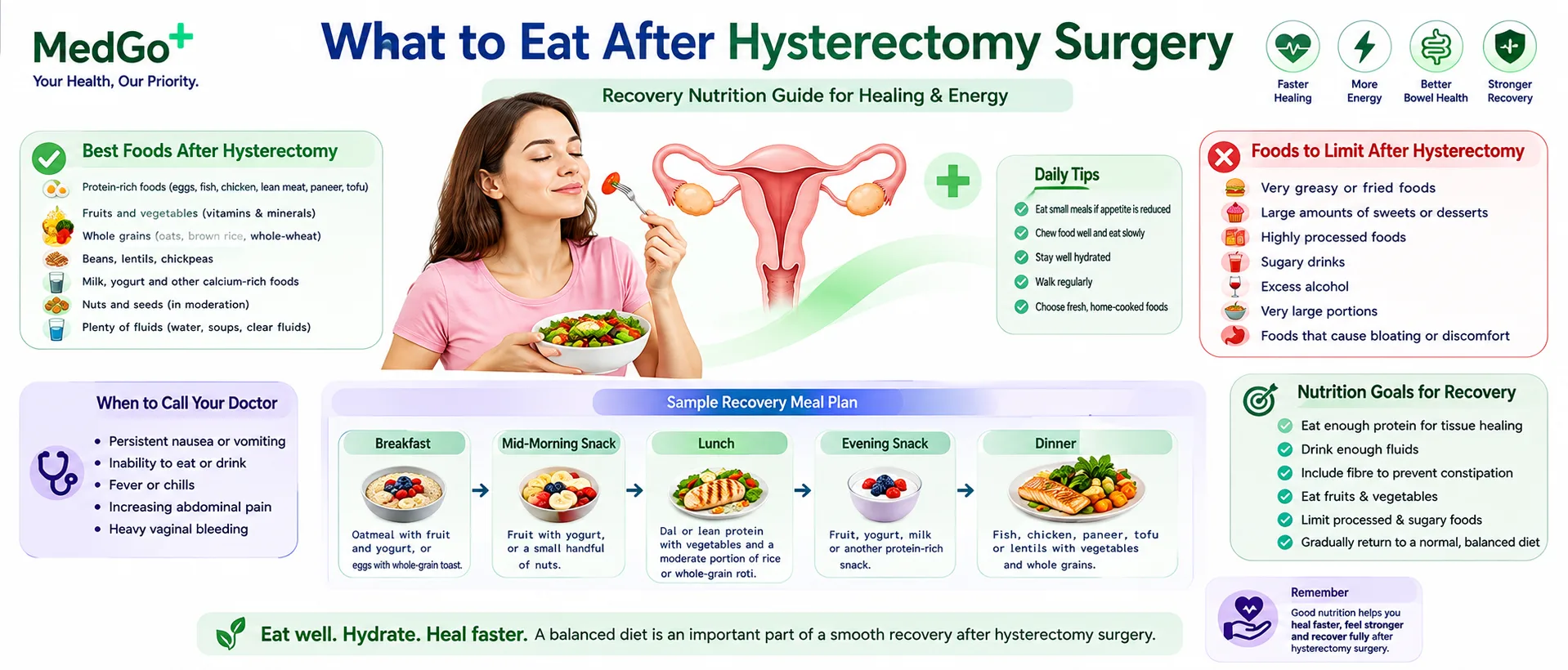
Good nutrition is an important part of recovery after hysterectomy. Your body needs enough energy, protein, fluids, vitamins and minerals to repair tissues, maintain strength and return to normal activity.
There is usually no special lifelong diet required simply because you have had a hysterectomy. Instead, the focus during recovery is on a balanced diet that supports wound healing, maintains bowel function, prevents dehydration and helps you regain your energy.
Your appetite may be lower during the first few days because of anesthesia, pain medicines, nausea or reduced activity. Starting with smaller meals and gradually returning to your normal diet is often easier to tolerate.
The Main Nutrition Goals After Hysterectomy
- Eat enough protein to support tissue healing.
- Drink enough fluids to maintain hydration and support bowel function.
- Eat fibre-rich foods to help prevent constipation.
- Include fruits and vegetables for vitamins, minerals and fibre.
- Include iron-rich foods when appropriate, especially if you had anemia or significant blood loss.
- Choose nutritious foods rather than relying mainly on processed or sugary foods.
- Eat smaller meals if your appetite is reduced.
- Gradually return to your usual balanced diet as tolerated.
What Should I Eat Immediately After Hysterectomy?
Once your surgical team says it is safe to eat and drink, you can usually begin with fluids and light foods and then progress toward your normal diet as tolerated.
- Water and other approved fluids.
- Clear or light soups.
- Yogurt.
- Soft eggs.
- Oatmeal or other soft cereals.
- Toast or other easily tolerated foods.
- Rice or other simple carbohydrates if tolerated.
- Soft fruits and cooked vegetables.
- Protein-rich foods in small portions.
If nausea is present, smaller portions and slower eating may be easier than trying to eat a large meal.
Protein: One of the Most Important Nutrients
Protein provides amino acids that the body uses to repair tissues and support recovery. Including a source of protein at meals can help you meet your nutritional needs while your body is healing.
Good Protein Sources
- Eggs.
- Fish.
- Chicken.
- Lean meat.
- Milk.
- Yogurt.
- Cottage cheese.
- Paneer in appropriate portions.
- Tofu.
- Beans.
- Lentils.
- Chickpeas.
- Nuts and seeds in appropriate portions.
If your appetite is poor, a protein-rich snack or nourishing drink may be easier to consume than a large meal.
Why Protein Matters for Surgical Recovery
Protein supports wound healing, maintenance of muscle and overall recovery. Eating enough protein becomes especially important when you are eating less than usual after surgery.
If you have kidney disease or another condition requiring protein restriction, follow the dietary advice provided by your doctor or dietitian rather than increasing protein on your own.
High-Fibre Foods After Hysterectomy
Constipation is common after surgery because of reduced activity, changes in diet and the use of some pain medicines. Fibre, fluids and gentle movement can help support normal bowel function.
Good Sources of Fibre
- Oats.
- Whole-grain cereals.
- Whole-wheat bread.
- Brown rice.
- Fresh fruits.
- Vegetables.
- Beans.
- Lentils.
- Chickpeas.
- Nuts and seeds.
If you are not used to eating much fibre, increase it gradually and drink enough fluids. Suddenly adding very large amounts of fibre can worsen bloating or gas in some people.
Foods That Can Help Prevent Constipation
- Oatmeal.
- Prunes or prune-based foods when appropriate.
- Pears.
- Apples with the skin when tolerated.
- Kiwi.
- Vegetables.
- Beans and lentils.
- Whole grains.
- Adequate fluids.
Walking regularly also supports bowel movement and recovery. If your surgeon has prescribed a stool softener or laxative, take it according to the instructions.
Why Hydration Is Important After Hysterectomy
Adequate fluid intake helps prevent dehydration and supports normal bowel and bladder function. It is particularly important if you are eating more fibre.
- Water.
- Clear soups.
- Milk when tolerated.
- Unsweetened beverages.
- Other fluids recommended by your healthcare team.
Many postoperative programs encourage roughly 1.5 to 2 litres of fluid per day, but your individual requirement may be different. Follow your doctor’s advice, especially if you have heart, kidney or other conditions that affect fluid intake.
Iron-Rich Foods After Hysterectomy
Some patients undergo hysterectomy because of heavy menstrual bleeding and may already have iron-deficiency anemia before surgery. Blood loss during surgery can also affect hemoglobin levels.
Foods That Contain Iron
- Lean red meat.
- Chicken.
- Fish.
- Eggs.
- Lentils.
- Beans.
- Chickpeas.
- Spinach and other leafy greens.
- Iron-fortified cereals.
- Nuts and seeds.
If you were diagnosed with anemia, food alone may not be enough. Your doctor may recommend an iron supplement and blood tests depending on your hemoglobin and iron levels.
Vitamin C and Recovery
Vitamin C is involved in collagen formation and normal tissue repair. Fruits and vegetables are good sources and can be included as part of a balanced recovery diet.
- Oranges.
- Guava.
- Kiwi.
- Strawberries.
- Papaya.
- Bell peppers.
- Tomatoes.
- Broccoli.
Best Fruits After Hysterectomy
- Papaya.
- Oranges.
- Guava.
- Apples.
- Pears.
- Kiwi.
- Berries.
- Bananas.
Choose whole fruit more often than sugary fruit drinks. If constipation is a problem, fruits containing fibre can be particularly useful.
Best Vegetables During Recovery
- Carrots.
- Broccoli.
- Beans.
- Spinach.
- Pumpkin.
- Sweet potato.
- Peas.
- Cauliflower.
- Bottle gourd.
- Other seasonal vegetables.
If your stomach feels unsettled during the first few days, cooked vegetables may be easier to tolerate than large amounts of raw vegetables.
Are Eggs Good After Hysterectomy?
Yes. Eggs are a convenient source of high-quality protein and can be useful during recovery.
- Boiled eggs.
- Soft scrambled eggs.
- Egg omelet with vegetables.
- Eggs added to a balanced meal.
Choose preparation methods that are comfortable for you and avoid excessive oil or very heavy meals if your appetite is reduced.
Can I Eat Chicken After Hysterectomy?
Chicken can be an excellent protein source during recovery. Choose tender, well-cooked chicken and avoid very greasy or heavily fried preparations.
If chewing or appetite is difficult during the first few days, softer preparations such as soup or shredded chicken may be easier to tolerate.
Can I Eat Fish After Hysterectomy?
Fish provides protein and, depending on the type, beneficial fats such as omega-3 fatty acids. Baked, steamed or lightly cooked fish can be a good choice during recovery.
Vegetarian and Indian Food Options
A vegetarian diet can provide adequate nutrition after hysterectomy when meals are planned around protein, fibre and nutrient-rich foods.
- Dal.
- Moong dal.
- Masoor dal.
- Chickpeas.
- Rajma when tolerated.
- Paneer.
- Curd or yogurt.
- Tofu.
- Soy products.
- Vegetable soups.
- Khichdi.
- Oats.
- Vegetable upma.
- Whole grains.
During early recovery, choose less oily and less spicy preparations if your stomach is sensitive.
Should I Eat Small Meals After Hysterectomy?
If your appetite is reduced, smaller meals with healthy snacks can be easier than three large meals. This can help you maintain nutrition without feeling overly full.
- Eat slowly.
- Do not force yourself to finish a large portion.
- Choose nutrient-dense foods.
- Include protein regularly.
- Drink fluids throughout the day.
What to Eat If You Feel Nauseated
Nausea can occur after anesthesia and may continue briefly after surgery. If you feel nauseated, small portions and simple foods may be easier to tolerate.
- Plain toast.
- Crackers.
- Rice.
- Oatmeal.
- Banana.
- Applesauce.
- Plain yogurt if tolerated.
- Light soup.
If nausea or vomiting prevents you from drinking or eating adequately, contact your healthcare team.
Foods to Limit During Early Recovery
- Very greasy or fried foods.
- Large heavy meals.
- Excessively spicy foods if they cause discomfort.
- Highly processed foods.
- Large amounts of sweets.
- Sugary beverages.
- Excess alcohol.
- Foods that consistently cause gas, bloating or diarrhea.
There is no universal list of foods that every hysterectomy patient must completely avoid. Individual tolerance and your overall medical condition matter.
Should I Avoid Spicy Food After Hysterectomy?
Spicy food does not normally interfere with the surgical healing process. However, some patients find spicy meals uncomfortable when their appetite or digestion is unsettled after surgery.
If spicy food causes heartburn, nausea, diarrhea or abdominal discomfort, avoid it temporarily and reintroduce it when you feel better.
Should I Avoid Rice After Hysterectomy?
Rice can generally be part of a normal balanced diet after hysterectomy. Choose an appropriate portion and combine it with protein and vegetables rather than relying on a large portion of refined carbohydrates alone.
Can I Drink Tea and Coffee After Hysterectomy?
Tea and coffee may be acceptable for many patients once they can tolerate normal fluids. However, excessive caffeine may worsen stomach discomfort, sleep problems or urinary symptoms in some people.
If your healthcare team has given you specific restrictions, follow those instructions.
Can I Drink Milk After Hysterectomy?
Milk can provide protein and calcium and may be included if you tolerate dairy products.
If milk causes bloating, diarrhea or abdominal discomfort, consider lactose-free alternatives and discuss persistent symptoms with your healthcare professional.
Can I Drink Coconut Water After Hysterectomy?
Coconut water can contribute to fluid intake, but it should not replace a balanced diet or all of your daily fluids. Choose unsweetened options when possible.
Patients with kidney disease or conditions requiring potassium restriction should ask their doctor before consuming large amounts.
What About Supplements After Hysterectomy?
Most patients do not automatically need a large collection of supplements simply because they underwent hysterectomy. Supplements should be based on nutritional deficiencies, blood-test results, medical conditions and advice from your healthcare team.
- Iron may be recommended for iron-deficiency anemia.
- Vitamin D may be recommended when levels are low.
- Calcium may be important for bone health in appropriate patients.
- Other supplements may be prescribed based on individual needs.
Do not start high-dose vitamins or iron supplements without discussing them with your doctor.
Nutrition If Your Ovaries Were Removed
If both ovaries were removed before natural menopause, surgical menopause can occur because ovarian hormone production falls abruptly.
Long-term health discussions may then include bone health, cardiovascular health, weight management and hormone treatment when appropriate.
- Adequate calcium from food or prescribed supplements.
- Adequate vitamin D when recommended.
- Protein-rich foods.
- Vegetables and fruits.
- Whole grains and other high-fibre foods.
- Regular physical activity when medically cleared.
Diet alone does not replace medical evaluation or hormone therapy when hormone treatment is clinically indicated.
A Simple One-Day Recovery Meal Plan
Breakfast
Oatmeal with fruit and yogurt, or eggs with whole-grain toast.
Mid-Morning Snack
Fruit with yogurt, or a small handful of nuts if tolerated.
Lunch
Dal or lean protein with vegetables and a moderate portion of rice or whole-grain roti.
Evening Snack
Fruit, yogurt, milk or another protein-containing snack.
Dinner
Fish, chicken, paneer, tofu or lentils with cooked vegetables and an appropriate portion of whole grains.
This is an example only. Meal choices should be adjusted for allergies, diabetes, kidney disease, digestive problems, vegetarian preferences and other medical conditions.
Foods That Support Wound Healing
- Eggs and other protein-rich foods.
- Fish and lean meats.
- Milk, yogurt and other suitable dairy foods.
- Beans and lentils.
- Nuts and seeds.
- Fruits rich in vitamin C.
- Leafy green vegetables.
- Whole grains.
- Adequate fluids.
No single food can make a surgical wound heal faster. Consistent overall nutrition is more important than focusing on one “healing food.”
How to Reduce Bloating and Gas
- Eat slowly.
- Choose smaller meals.
- Avoid very large portions of beans or high-fibre foods initially if they cause significant gas.
- Limit carbonated drinks if they worsen bloating.
- Walk gently after meals when comfortable.
- Increase fibre gradually rather than suddenly.
Food and Constipation: An Important Connection
Constipation can be uncomfortable after hysterectomy and excessive straining should be avoided while internal tissues heal. Fibre, fluids, movement and appropriate medicines can help.
If you have not passed stool or gas, have significant abdominal swelling, or are experiencing worsening abdominal pain, contact your healthcare team rather than repeatedly increasing fibre on your own.
What If I Have Diabetes?
If you have diabetes, your postoperative diet should balance recovery nutrition with blood-glucose management.
- Prioritize protein-rich foods.
- Choose high-fibre carbohydrates.
- Limit sugary drinks.
- Avoid large portions of sweets.
- Monitor glucose according to your medical plan.
- Follow medication instructions from your healthcare team.
Your diabetes medicines may need temporary adjustment around surgery, so follow the plan provided by your doctor.
What If I Have Kidney or Heart Disease?
Fluid, potassium, sodium and protein requirements may need to be modified in people with kidney, heart or other chronic conditions.
Do not automatically follow a high-protein or high-fluid recovery plan without checking with your doctor if you have a condition that affects your diet.
What If I Am Not Hungry After Surgery?
Reduced appetite is common during early recovery. Instead of forcing yourself to eat large meals, try smaller portions more frequently.
- Choose protein-rich foods first.
- Use nourishing snacks between meals.
- Drink adequate fluids.
- Choose calorie- and nutrient-dense foods when appropriate.
- Treat nausea if your doctor has prescribed medication for it.
If you cannot eat or drink adequately, contact your healthcare team.
Foods and Drinks to Limit Long Term
- Excess sugary drinks.
- Frequent sweets and desserts.
- Highly processed foods.
- Excess fried foods.
- Large amounts of alcohol.
- Very large portions.
- Frequent high-calorie snacking.
These foods do not necessarily need to be permanently forbidden for every patient, but limiting them supports overall health, weight management and cardiovascular health.
Alcohol After Hysterectomy
Alcohol can interact with pain medicines and other medications and may impair judgment during recovery. It is safest to avoid alcohol while taking medicines that interact with it and until your surgeon says it is appropriate.
Long-term alcohol intake should also be discussed in the context of your overall health and medications.
How Long Should I Follow a Special Diet?
Most patients do not need a permanently restricted diet after an uncomplicated hysterectomy. Once nausea settles and bowel function returns, patients can generally work toward a normal balanced diet.
The principles of adequate protein, fibre, fluids, fruits, vegetables and moderate portions remain useful long after the surgical recovery period.
When Should You Contact Your Doctor?
Contact your healthcare team if you cannot eat or drink adequately, have persistent nausea or vomiting, severe abdominal swelling, worsening abdominal pain or are unable to pass gas or have a bowel movement.
Also seek medical advice if you develop fever, heavy vaginal bleeding, foul-smelling discharge or other concerning postoperative symptoms.
How MedGoPlus Can Help
Good nutrition can make recovery more comfortable and help your body rebuild strength after hysterectomy. Patients with anemia, diabetes, kidney disease, poor appetite or other medical conditions may benefit from individualized nutritional advice.
MedGoPlus can help patients connect with qualified healthcare professionals for consultations and postoperative guidance through available consultation services.
Medical Disclaimer
This article is for general health education and does not replace individualized medical advice. Dietary requirements can vary based on the type of hysterectomy, medical conditions, medications, nutritional status and complications. Always follow the instructions provided by your surgeon, doctor or registered dietitian.
Take Control of Your Health with MedGoPlus
Book doctor consultations, manage your health needs, and access convenient healthcare services anytime, anywhere with the MedGoPlus App.
Scan to download
Download the MedGoPlus App